
- Muneeb ur Rehman
- September 24, 2026
Talal Chaudhry says no Islamabad roads closed, warns KP police law could undermine command structure
-

- WEB DESK
- September 24, 2026
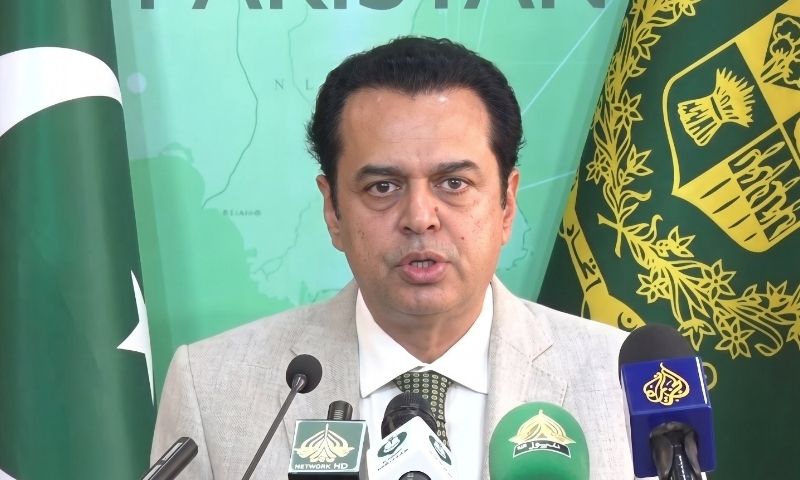
Minister of State for Interior Talal Chaudhry on Thursday said no road in Islamabad had been closed as of noon despite reports of restrictions ahead of a planned protest, while warning that the Khyber Pakhtunkhwa (KP) government’s proposed Police Act could undermine the police command structure and morale amid the province’s ongoing terrorism threat.
“You are looking at an old WhatsApp status, not the original situation,” Chaudhry said. “As of 12 noon today, no road was closed.”
He claimed that all 125 routes leading into Islamabad remained open, adding that authorities would take measures when required to comply with court orders and protect lives and property.
“Attackers cannot be allowed to attack here,” he said.
Chaudhry’s remarks came during a media interaction in which he also strongly criticised the proposed KP Police Act, arguing that the provincial government was seeking to gain excessive control over police appointments, transfers, postings and promotions.
The KP cabinet has approved a draft Police Act 2026 proposing significant changes to the appointment of the provincial police chief and giving the provincial government greater authority over police policy, operational and financial matters.
‘You have destroyed the entire command structure’
Chaudhry said police and law and order were provincial subjects after the 18th Amendment but argued that provinces did not have unlimited powers to legislate in areas governed by the federal constitutional framework.
“Provinces are not absolutely free to make any legislation they want,” he said, arguing that established federal rules governing the Police Service of Pakistan (PSP) could not simply be overridden through provincial legislation.
He said the proposed changes went beyond reducing the powers of the inspector general of police (IGP) and could affect the entire police command structure.
“You have not only taken back the powers of the IG; you have destroyed the entire command structure,” Chaudhry said.
According to him, powers over appointments and postings ranging from Grade-17 DSPs to senior police officers were being shifted towards the chief minister and the provincial government.
“From the appointment of a Grade-17 DSP to the appointment of an IG, you have somehow tried to put every authority in the chief minister’s pocket and make it subservient to his political party,” he alleged.
He questioned how police officers would operate if their professional command structure was weakened.
“If you destroy this command and control, will the police fight in the same way?” he asked. “Will they not look towards political people instead of their officers when making decisions?”
“Will discipline remain in the police? Will its morale not be affected?” he added.
‘You cannot destroy a force fighting terrorism’
Chaudhry said the proposed legislation was particularly concerning because the KP police was serving on the frontline of the fight against terrorism.
“You cannot destroy the command structure of a police force that is fighting terrorism and giving sacrifices every day,” he said.
He also criticised what he described as inadequate investment in the KP police, citing bulletproof jackets and vehicles, Safe City systems, forensic laboratories and other modern equipment.
“You had the authority to give them the budget, to invest in them and to provide them what they needed to fight,” Chaudhry said. “You did not do that.”
He argued that modern equipment was essential for counterterrorism operations, saying police could not confront militants equipped with advanced weapons and technology through bravery alone.
“You cannot fight today’s terrorism without Safe City, without forensic laboratories and without equipment,” he said.
Chaudhry also questioned the condition of Counter-Terrorism Department facilities in KP, saying the department had operated from rented buildings despite the province having faced terrorism for 15 to 20 years.
Federal, provincial powers under debate
Chaudhry said the KP cabinet’s approval of the draft did not make it law, as the proposed legislation would still have to be presented before the provincial assembly.
“They should come to their senses,” he said, adding that the federal government had “many options” if the legislation conflicted with federal laws or established PSP rules.
He predicted that the proposed law would face legal challenges and said the federal government could also consider parliamentary legislation if necessary.
Chaudhry stressed that political disagreements were normal but argued that national security matters should remain above partisan interests.
“There is no harm in political disagreement,” he said. “Everyone has their own ideology and their own party, but on matters of national interest there can be no compromise.”
He cited the National Action Plans as examples of security frameworks developed with the participation of political parties and provincial governments.
Minister questions KP government’s performance
Chaudhry also rejected claims that the federal government was using the security situation to justify political intervention in KP, arguing that the provincial government had been in power for years and should take responsibility for its own performance.
“If a provincial government is so helpless, why are you clinging to these chairs?” he asked.
He said the KP government had the authority to govern the province and should focus on its performance instead of blaming other institutions.
Chaudhry also rejected claims that the federal government was seeking to eliminate the PTI, saying the government remained a political administration and had refrained from using certain powers unless necessary.
On the possibility of transferring PTI founder Imran Khan to an Islamabad prison, Chaudhry described the planned facility as a modern prison but did not confirm that Khan would be moved there.
The minister’s comments came amid heightened political tensions ahead of a planned PTI protest, with the government maintaining that any measures taken in Islamabad would be aimed at protecting public safety and enforcing applicable court orders.
KP Police act draft
Under the proposed legislation, the federal government would provide a panel of three officers for appointment as inspector general of police (IGP). The provincial government would then have the authority to select one of the nominees or reject the entire panel.
The draft also proposes shifting powers over the transfer and posting of regional police officers (RPOs) and district police officers (DPOs) to the chief minister and the Home Department.
Financial matters concerning the police budget would also come under the provincial finance department under the proposed framework.
Information Minister Shafi Jan said the draft was approved after amendments were made to an earlier version based on proposals put forward by police authorities. However, he did not provide details of the changes incorporated into the revised draft.
The proposed Police Act 2026 would replace the existing Police Act 2017, which was introduced during the tenure of former KP chief minister Pervez Khattak.
The 2017 law was introduced to provide a legal framework for police reforms and strengthen institutional mechanisms governing the provincial police force.
The new draft is aimed at revising the legal and administrative framework under which the police operate, particularly regarding appointments, transfers, postings and financial oversight.
The draft is expected to be presented before the Khyber Pakhtunkhwa Assembly during its next session. It will require approval from the provincial legislature before becoming law.
The proposed changes could alter the balance between federal and provincial authorities in police administration, particularly in the appointment of the IGP and the management of senior police officers.
The legislation is likely to draw differing views over the extent of provincial government oversight and the operational autonomy of the police force. Supporters may view the changes as strengthening provincial control, while critics could raise concerns about their implications for police independence.
You May Also Like
- WEB DESK
- September 24, 2026
Rana Sanaullah says talks with PTI hinge on postponement of long march
- Reuters
- September 24, 2026
