- WEB DESK
- October 4, 2026
Tarar questions PTI’s role in countering terrorism in KP after Afridi kicks off Islamabad march
-

- WEB DESK
- October 4, 2026
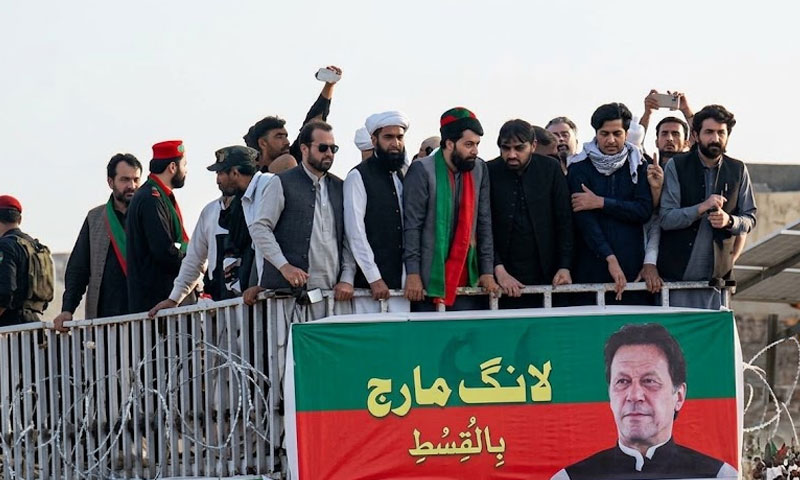
Federal Information Minister Attaullah Tarar has criticised Pakistan Tehreek-e-Insaf (PTI) leadership for rejecting the final draft agreed during negotiations with the government, questioning the party’s role in countering terrorism in Khyber Pakhtunkhwa as Chief Minister Sohail Afridi kicked off the party’s long march towards Islamabad.
In a post on X, Tarar said the federal government had shared its proposals with PTI but received no response, accusing the party of using calls for consultation and dialogue as delaying tactics.
He also alleged that PTI’s narrative favoured terrorists and questioned the steps being taken by the Khyber Pakhtunkhwa government to counter terrorism.
Tarar questioned why the Khyber Pakhtunkhwa government had not attended meetings of the federal apex committee or convened its own, while also asking why the provincial cabinet had not publicly condemned terrorism or implemented the National Action Plan.
He further questioned PTI leaders’ absence from the funerals of security personnel killed in terrorist attacks and asked why they had not visited security checkposts to express solidarity with the armed forces.
Tarar said PTI’s call for consultation and a joint strategy had come only after the KP government became politically weak.
He said that the provincial government’s policies were encouraging the spread of terrorism and blamed PTI for the worsening security situation in the province.
Tarar also said the federal government had already put forward proposals but PTI had failed to respond, adding that the state would no longer allow people to be misled through what he described as outdated political rhetoric.
Government-PTI talks end in deadlock
The PTI leadership rejected the proposed negotiation draft after a second round of talks chaired by National Assembly Speaker Ayaz Sadiq at National Assembly speaker’s chamber on Sunday night.
The government team included Interior Minister Mohsin Naqvi, Talal Chaudhry, Aamir Muqam, Tariq Fazal Chaudhry, Rana Sanaullah, Sherry Rehman and Naveed Qamar, while the opposition delegation included Senate Opposition Leader Allama Raja Nasir Abbas, Asad Qaiser, PTI Chairman Barrister Gohar and other lawmakers.
The deadlock came despite marathon discussions in which the two sides exchanged proposals and reached an understanding on some issues, according to sources familiar with the negotiations.
The main differences centred on the PTI’s demand for access to its founder Imran Khan and the government’s insistence on assurances regarding the Khyber Pakhtunkhwa government’s cooperation in the fight against terrorism.
According to sources, both sides had agreed on the draft, but progress stalled after Afridi launched the PTI’s long march towards Islamabad on October 4.
The breakdown came after two days of negotiations, with counterterrorism policy in KP and access to PTI founder Imran Khan among the key points of disagreement.
Afridi sets six conditions
Following the deadlock, Afridi laid out six conditions for PTI to call off its planned long march.
He said the draft sent to the opposition negotiating committee contained no demand that was “unconstitutional or unlawful”.
Afridi said the demands were aimed at ensuring political stability, supremacy of the Constitution and law, continuity of the democratic process, national unity, peace and order, and resolving political and national issues through consultation and dialogue.
Under the first demand, he called for regular meetings between the prime minister and opposition leaders in both houses of parliament to discuss major political, national, constitutional, legal and democratic issues, with progress towards resolving them within two months.
🔴 LIVE | Long March to Islamabad for Imran Khan’s Release | CM Sohail Afridi Leads from KP https://t.co/ByrasN0hmG
— PTI (@PTIofficial) October 4, 2026
The second demand calls for the formation of a joint political negotiating committee comprising representatives of the ruling coalition, Pakistan Peoples Party (PPP) and opposition parties. The committee would hold regular talks on national and political issues and seek mutually agreed solutions.
Afridi also called for complete freedom for democracy, politics, the judiciary and the media.
The third and fourth demands concern the legal, humanitarian and medical rights of Imran Khan and his wife, Bushra Bibi, including access to medical care, family members, lawyers and authorised associates in accordance with the law and jail rules.
The fifth demand calls for authorities to expedite, where legally possible, appeals and other legal applications filed by Imran, Bushra and other prisoners, particularly women, elderly and sick detainees. Afridi also called for the early humanitarian release of women he described as political prisoners, particularly PTI leader Yasmin Rashid and Bushra Bibi.
The sixth demand focuses on counterterrorism in Khyber Pakhtunkhwa.
Afridi called for “effective, continuous and meaningful consultation” between the federal and provincial governments to eliminate terrorism, protect citizens and establish lasting peace in the province.
He proposed that authorised representatives of both governments meet within 72 hours to review existing counterterrorism policies and formulate a clear and workable strategy for maintaining peace and security.
According to the draft, implementation of the strategy would be the joint responsibility of the federal and provincial governments within the framework of the Constitution and law.
The counterterrorism demand is significant as cooperation between the federal and KP governments was one of the key issues over which the latest round of government-PTI talks broke down.
Government negotiators had sought assurances from the KP government on cooperation with the federal government and security forces in the fight against militancy, while PTI negotiators maintained that counterterrorism measures in the province should be based on consultation and agreement between the two governments.
Naqvi meets Kundi amid escalating standoff
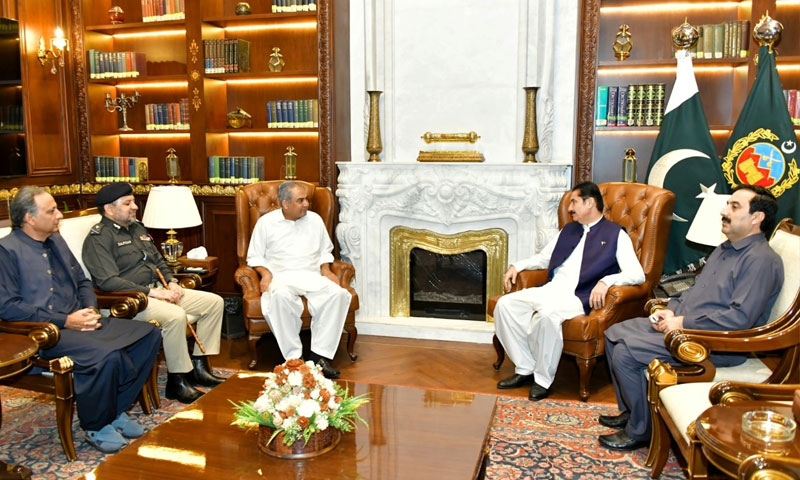
Meanwhile, Naqvi arrived at Governor House Peshawar on Sunday evening to hold a meeting with Khyber Pakhtunkhwa Governor Faisal Karim Kundi amid an escalating standoff between the federal government and the PTI.
The meeting comes hours after government-opposition talks aimed at averting the PTI’s planned October 4 long march on Islamabad ended in deadlock.
Naqvi blamed KP chief minister for the collapse of the talks, claiming that the government and opposition had reached a “win-win” agreement before the chief minister sought changes to the finalised draft.
Naqvi said the draft agreement had been finalised after several rounds of discussions and that Prime Minister Shehbaz Sharif and President Asif Ali Zardari had also gone through it.
He said he had briefed both the prime minister and the president on the negotiations and the final draft.
Government warns against Islamabad protest
The conditions came as PTI prepared to launch its march towards Islamabad after the latest round of negotiations ended without an agreement.
The government has said it will not allow the protest to enter Islamabad, setting the stage for a renewed political confrontation following the failure of the talks.
Interior Minister Mohsin Naqvi said anyone gathering for a sit-in would be dealt with according to the law.
“If the long march has started, we will not let anyone violating the law proceed under any circumstances,” he said.
Naqvi said the government would also not allow a repeat of the May 9 events.
“We will not allow May 9 to happen again under any circumstances,” he said.
He warned that Afridi would be held responsible if anyone lost their life during the confrontation.