
- Web
- 1 Hour ago
Tel Aviv struck by seventh wave of missiles following airstrikes on Iranian gas fields
-

- Web Desk
- Mar 19, 2026
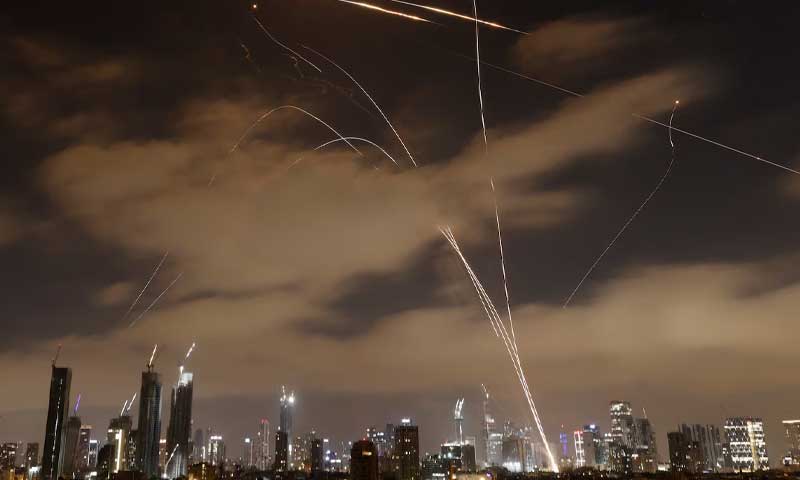
WEB DESK: Central Israel has been targeted by a seventh wave of long-range missile fire since midnight, as the conflict between regional powers enters a volatile new phase.
Air raid sirens sounded across Tel Aviv and the Gush Dan region throughout the afternoon, sending civilians to reinforced shelters while the Israel Defence Forces (IDF) deployed interceptor batteries to meet the incoming volleys, according to CBC news.
The escalation follows a significant strike on Wednesday against Iran’s South Pars gas field the world’s largest natural gas reserve which Tehran has characterised as a “dangerous and irresponsible” targeting of its core civilian energy infrastructure.
While the IDF has not officially confirmed the specific parameters of yesterday’s operation, the strike has triggered a massive retaliatory cycle that is now impacting energy hubs and urban centres across the Persian Gulf and Levant.
Retaliatory strikes and civilian impact
Tehran has framed its recent missile barrages as a direct response to the “economic warfare” of targeting upstream energy assets. The Islamic Revolutionary Guard Corps (IRGC) stated that today’s volleys utilised ballistic missiles equipped with multi-warhead technology.
In Tel Aviv, shrapnel from high-altitude interceptions caused damage to the Savidor Central railway station, forcing a nationwide suspension of rail services.
The humanitarian toll of the exchange is mounting on both sides of the conflict. In the West Bank, Palestinian medical officials reported the first fatalities from Iranian ordnance in the region, with three women killed by missile impacts near Hebron.
Meanwhile, inside Iran, human rights groups estimate that the sustained aerial campaign by U.S. and Israeli forces has resulted in over 3,000 deaths since late February. The strike on South Pars is expected to worsen existing domestic gas and electricity shortages for millions of Iranian civilians as the region enters a period of heightened instability.
Global energy markets in turmoil
The expansion of the conflict to energy infrastructure has sent shockwaves through the global economy. Beyond the strikes on Israel, Iranian drones and missiles have targeted facilities in Qatar, the UAE, and Saudi Arabia, including the Ras Laffan LNG hub and the Samref refinery.
These actions have seen Brent crude prices surge past $115 per barrel, as the Strait of Hormuz a transit point for a fifth of the world’s oil remains virtually impassable.
Diplomatic reactions have been sharp, with the Arab League and several Gulf nations condemning the targeting of energy sites as a threat to global security. In Washington, President Trump claimed the U.S. “knew nothing” of the specific strike on South Pars but warned of a “massive” response should American-aligned assets in Qatar continue to be hit.
As international calls for a moratorium on striking civilian infrastructure grow, the lack of a clear diplomatic path forward suggests the cycle of kinetic “tit-for-tat” strikes may continue to escalate.
You May Also Like