- Web Desk
- 11 Minutes ago
The Azerbaijan corridor: A narrow bridge in the sky
-

- Web Desk
- 4 Minutes ago
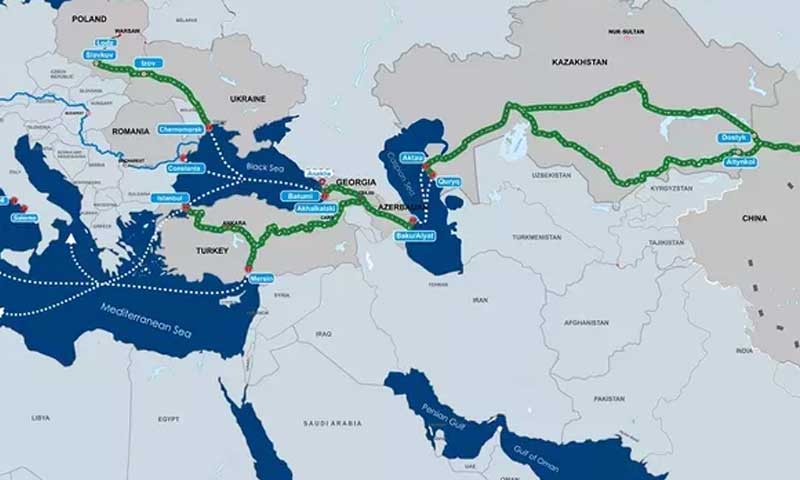
WEB DESK: The map of the world’s flight paths is being squeezed into a tiny bottleneck. Since early March, a narrow strip of sky over Azerbaijan has become the essential bridge for planes travelling between Europe and Asia, according to the New York Times.
Following the start of the latest conflict in the Middle East, vast areas of airspace have been closed, forcing hundreds of daily flights into a corridor that is only 100 miles wide at its tightest point.
With the Russian border to the north already restricted, this thin ribbon of air over Turkey, Georgia, and Azerbaijan is now one of only two remaining routes for long-haul travel.
What used to be a wide-open sky has become a “needle’s eye,” where international jets must queue up to pass through a very specific, limited space to avoid active war zones.
Why this matters for travel
This shift is a massive logistical challenge for the aviation industry. Because the corridor is so narrow, there is very little room for planes to navigate around bad weather or mechanical issues without risking entry into dangerous airspace.
For airlines, this means more complex planning, higher fuel costs, and longer flight times for passengers.
The situation in Azerbaijan is a clear example of how conflict on the ground can instantly reshape the world above.
As long as the surrounding regions remain closed, this 100-mile gap remains the only reliable link between East and West.
It is a fragile connection that keeps global travel moving, even as the geopolitical landscape becomes increasingly difficult to navigate.
You May Also Like