- Aasiya Niaz
- 26 Minutes ago
The “crystal ball” trade: $580 million bet made 15 minutes before Trump’s Iran pivot
-

- Web Desk
- 3 Minutes ago
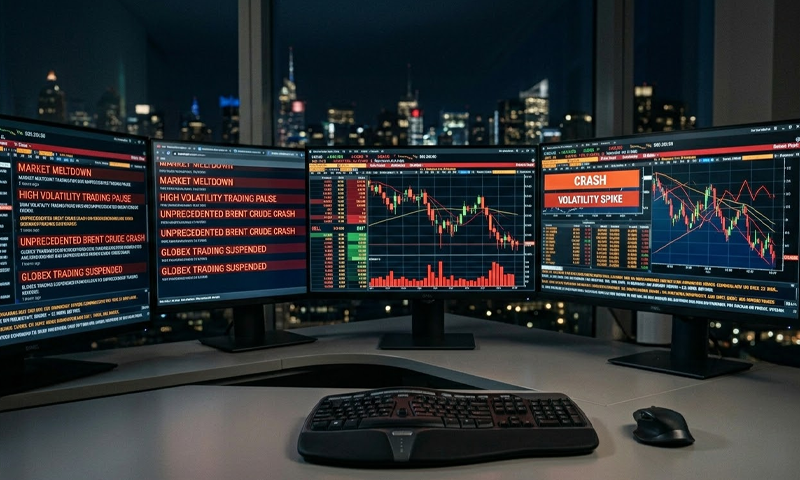
On the morning of Monday, March 23, 2026, the global oil market was a powder keg. Following a weekend of escalating threats, including President Trump’s ultimatum to “obliterate” Iranian power plants if the Strait of Hormuz remained closed, Brent crude was trading at a volatile premium. Then, at 7:04 AM EST, a single post on Truth Social changed everything: the President announced “VERY GOOD AND PRODUCTIVE CONVERSATIONS” with Tehran and a five-day delay on planned military strikes.
While the post sent oil prices into a 14% tailspin within minutes, it is what happened exactly a quarter-hour earlier that has captured the attention of regulators and fueled allegations of “mind-blowing corruption.”
THE 15-MINUTE WINDOW
Market data reveals that between 6:49 AM and 6:50 AM EST, exactly 15 minutes before the President hit “send”, trading volume in oil futures skyrocketed. Approximately 6,200 contracts of Brent and West Texas Intermediate (WTI) changed hands in a single minute.
The notional value of these trades is estimated at $580 million. For context, the average trading volume for that specific time slot over the previous week was just 700 contracts. This wasn’t just a spike; it was a deluge of selling pressure that suggests someone knew the “war premium” on oil was about to evaporate.
ANALYSIS: INTUITION OR INSIDER INFO?
Financial analysts and Nobel Prize-winning economists have been quick to point out the lack of “event risk” at that hour. There were no scheduled economic data releases, no Federal Reserve speakers, and no breaking news on the wires.
The “Front-Run” Theory: Critics, including Senator Chris Murphy, have suggested that individuals with access to the President’s communications, or the draft of the post itself, may have leaked the information to friendly trading desks.
The Algorithmic Defense: Some market defenders argue that sophisticated AI algorithms might have picked up on “chatter” or movements of diplomatic officials. However, the sheer size and specificity of the $580 million bet make the “coincidence” defense difficult to swallow for many veterans. As one hedge fund trader told the Financial Times, “My gut from 25 years in this game says this is really abnormal. Somebody just got a lot richer.”
A GROWING PATTERN
The “Peace Post” trade isn’t an isolated incident. It follows a string of uncanny successes on prediction platforms like Polymarket, where a user nicknamed “Magamyman” reportedly netted nearly $1 million by correctly betting on the exact timing of U.S. and Israeli strikes in February.
THE AFTERMATH
While the trade was immensely profitable, the “peace” it bet on proved fragile. Within hours of Trump’s post, Iranian Parliament Speaker Mohammad Bagher Ghalibaf denied any negotiations had taken place, calling the report “fake news” designed to manipulate markets.
The Commodity Futures Trading Commission (CFTC) and the SEC have been urged to investigate, though with the current administration’s firm grip on regulatory agencies, many analysts remain skeptical that a formal probe will yield names. For now, the $580 million trade remains a glaring example of how, in an era of social-media diplomacy, a few minutes of “inside track” can be worth half a billion dollars.
You May Also Like