
- WEB DESK
- October 6, 2026
The Pakistani dropout building the future of robotics
-

- Zoya Anwer
- May 9, 2026
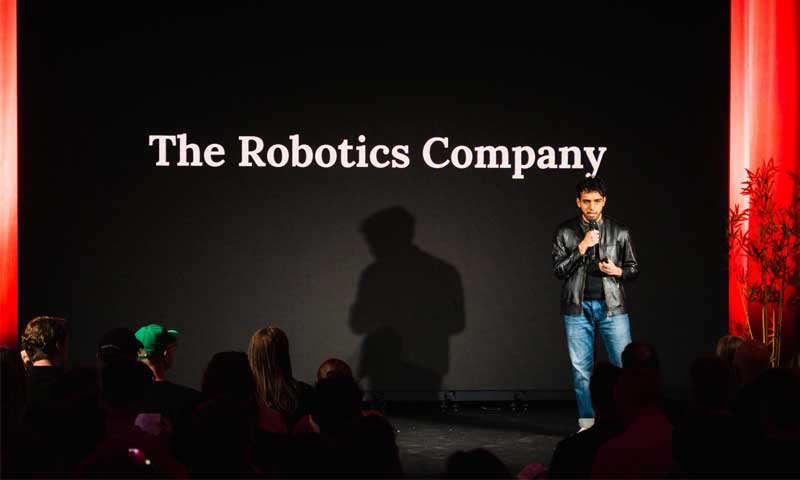
At 16, while most teenagers were adjusting to high school life, a young Pakistani student Muhammad Bilal had already begun university in South Korea. Within just a few years, he would go on to build software adopted by dozens of schools, work with global institutions, conduct research at ETH Zurich, raise funding from some of tech’s biggest names, and launch a robotics startup in San Francisco.
His journey has been anything but conventional.
A startup born during the pandemic
The turning point came during the Covid-19 pandemic.
As universities around the world struggled to move online, he noticed professors at his South Korean university facing a problem that had little to do with teaching ability. They simply lacked the tools and infrastructure to run digital classrooms efficiently.
Instead of waiting for a solution, he built one. What began as a quick internal platform for a handful of instructors rapidly spread across campus. Within six months, more than 20 educational institutions were using the software to host and manage classes remotely.
The platform eventually drew the attention of a major institution, which later acquired it.
That early success fundamentally changed his outlook. “I realised I wanted to build things instead of following a traditional academic route,” he said. At just 18, he dropped out of university for the first time.
From Pakistan to global clients
Returning to Pakistan, he launched a software consultancy that quickly began attracting international clients.
Over the next few years, he helped develop systems used by organisations including the Australian government, the United Nations, and startups across the Middle East and the United States.
The experience sharpened both his engineering and leadership skills, but he still felt there was unfinished business academically.
So he returned to university once again.
Research, reinvention and a second dropout
His academic path eventually led him to Switzerland, where he pursued a master’s degree and conducted research at ETH Zurich, one of Europe’s leading science and technology institutions.
During his time there, he contributed to multiple research labs and published academic work, deepening his expertise in advanced technologies.
But another turning point arrived during a summer programme in Helsinki called FR8.
There, he began exploring a new startup idea that quickly gained momentum. By demo day, the project had already attracted strong interest from investors and operators.
Once again, he made a bold decision: he dropped out of university for the second time to pursue the company full-time.
Building a robotics company
The next stop was Silicon Valley.
He was accepted into a startup accelerator in San Francisco backed by Sam Altman. During the programme, he met investors, mentors who propelled him to greater heights.
At the same time, he assembled a highly technical team featuring talent from MIT, ETH Zurich, and major technology companies including Meta and Google.
The same network also opened the door to a remarkable list of investors and industry leaders, who would back the startup, including the chief product officer of DeepMind, the founder of Hugging Face, the creator of Android, the creator of Google Maps, the CPO of Wolt, and senior robotics executives from Scale AI and other robotics firms.
Now the young founder is betting that simulation technology could transform the future of robotics in the same way synthetic data reshaped artificial intelligence.
His company’s mission is ambitious: to remove the industry’s dependence on slow and costly real-world data collection by creating realistic virtual environments where robots can learn at scale.
With backing from some of the biggest names in global tech and a team drawn from elite institutions and companies, the startup is positioning itself at the centre of a rapidly evolving robotics race.
For someone who dropped out of university, twice, the path has been unconventional. But from building online classrooms during the pandemic to developing cutting-edge robotics infrastructure in Silicon Valley, his journey reflects a growing generation of young founders redefining what a tech career can look like.
You May Also Like


- Reuters
- October 6, 2026
India among seven countries vying for 2036 Olympics, IOC says

- Waqas Buneri
- October 6, 2026