- Web Desk
- 39 Minutes ago
The unfinished business of partition and the question of Jammu & Kashmir
-

- sadia.basharat
- Feb 05, 2026
The Jammu and Kashmir dispute is not merely a territorial contest between two nuclear-armed neighbours; it reflects the unfinished agenda of the Indian subcontinent’s partition. For more than seven decades, Indian control has failed to suppress Kashmiri aspirations or weaken Pakistan’s principled position. In 2026, the legal, moral, and humanitarian dimensions of the conflict remain as pressing as they were in 1947.
A Historic Betrayal
The origins of this conflict lie in a series of conspiracies during the final phase of British rule. Historical records and the region’s natural geography indicate that the people of Jammu and Kashmir had a logical inclination to accede to Pakistan. On July 19, 1947, Kashmiri people passed a resolution to join Pakistan, recognising the shared bonds of faith, culture, and economy.
Often cited by New Delhi as “Instrument of Accession”, the document is widely regarded as fraudulent, allegedly signed under duress by a Maharaja who had already lost control over his territory to a popular uprising. While Pakistan honoured the standstill agreements, India exploited the chaos to launch an unsolicited invasion. This act of aggression remains a primary impediment to a peaceful resolution in South Asia.
Kashmir Solidarity Day: A Covenant of Support
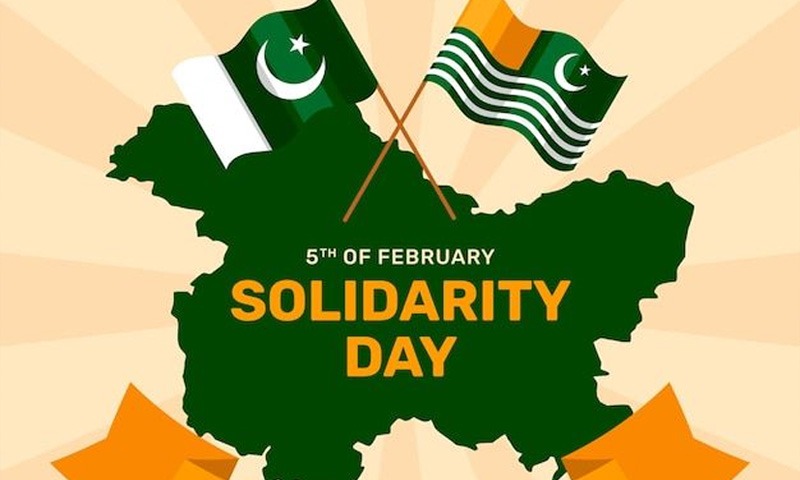
Observed annually on February 5, Kashmir Solidarity Day serves as a symbolic reaffirmation of Pakistan’s enduring support for the people of Kashmir. led by Jamaat-e-Islami in 1990, the observance reflects the aspirations of the Kashmiri population and highlights the ongoing significance of their struggle for self-determination within an international legal and political framework.
The day is marked by coordinated expressions of solidarity across Pakistan and within its global diaspora, stressing nation’s continued political, moral, and diplomatic commitment to advocating for the realisation of the Kashmiri people’s rights, as envisaged under United Nations resolutions.
The Post-2019 Reality: A New Era of Oppression
The situation shifted drastically on August 5, 2019, when the Indian government unilaterally revoked Articles 370 and 35A. This move violated India’s own constitution and contravened UN Security Council resolutions. It represents a systematic attempt to alter the demography of Indian Illegally Occupied Jammu and Kashmir (IIOJK), with efforts to reduce the Muslim majority through the illegal issuance of domicile certificates to non-locals, a clear tactic of settler-colonialism.
By 2024 and 2025, the situation had grown even more precarious. India attempted to project “normalcy” through staged Legislative Assembly elections, which the Kashmiri leadership dismissed as a facade. Elections held under the shadow of nearly a million occupation troops, with genuine pro-freedom voices jailed, cannot substitute for the UN-mandated plebiscite.
The Escalation of 2025: A Nuclear Flashpoint
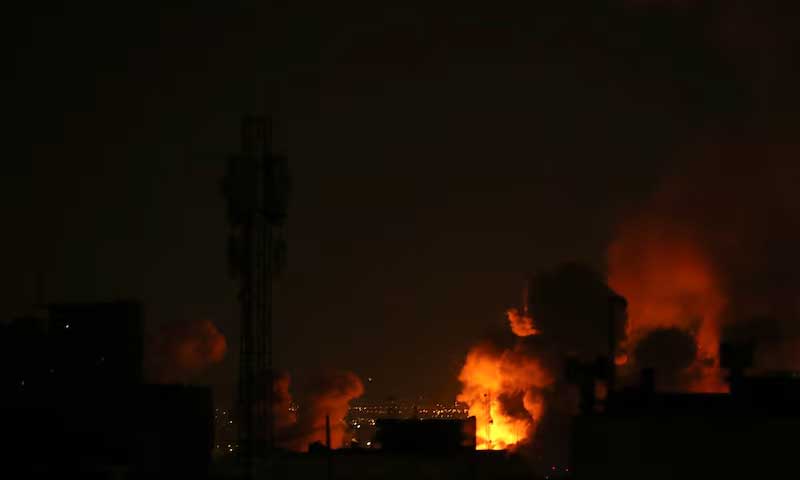
Regional security reached a breaking point last year. Following localised incidents in the valley, India again resorted to blame-game diplomacy, using events as a pretext for military posturing. Subsequent missile strikes, claimed to target “infrastructure” but documented as hitting civilian areas, brought the two nations to the brink of full-scale conflict.
Pakistan’s response has been measured yet resolute. Beyond military skirmishes along the Line of Control (LoC), significant diplomatic steps have been taken. India’s threats to weaponize water and bypass the Indus Waters Treaty are viewed as acts of war. As a lower riparian state, Pakistan’s agriculture depends on these rivers, and any unilateral diversion threatens the livelihoods of millions.
The Humanitarian Crisis
Reports of “health and environmental crimes” in the region form part of a broader pattern of state-sponsored violence. Documentation from late 2025 and early 2026 highlights extrajudicial killings and the use of draconian laws that foster a culture of impunity for occupation forces.
The international community can no longer remain passive. A glaring double standard persists in global politics: while international law is invoked elsewhere, it is often ignored in Kashmir. The parallels between struggles for self-determination worldwide reveal a global crisis of accountability.
Sovereignty and Self-Determination
Pakistan remains committed to a peaceful resolution through the framework of the United Nations. However, recent crises underscore the need for negotiations from a position of national strength, which requires both military preparedness and a consolidated national policy impervious to domestic shifts.
The ultimate goal remains unchanged: the conduct of a free and impartial plebiscite as envisioned by the UNSC. Until the Kashmiri people are granted their right to self-determination, peace in South Asia will remain fragile. Pakistan will continue to be the voice for the Kashmiri cause, reminding the world that the map of the subcontinent remains incomplete until the valley is truly free.
You May Also Like