- Web Desk
- Yesterday
The US-Iran two-week ceasefire: A diplomatic masterstroke or a fragile pause in the shadow of power?
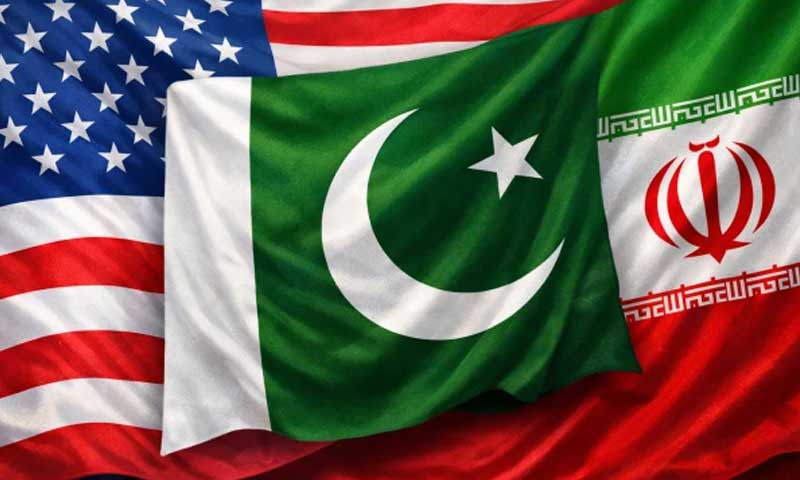
In relation to the geopolitical nature of the region, the current state of affairs is the volatility of the geopolitics within the region and the recent announcement of a ceasefire between the US and Iran, with Pakistan acting as an intermediary not only as a temporary strategic step towards easing tensions, but as an important development within the framework of the new world order, which goes beyond the unipolar world system. The strategic decision by US president Donald Trump of calling off a planned attack on Iran contingent on the latter ensuring the safety of movement through the Strait of Hormuz is a relatively unusual step under such volatile circumstances.
These concessions made by the United States are nothing but exceptionally unique in nature. Some of them include respecting a policy of non-aggression, acknowledging the sovereignty of the Iranian over the Strait of Hormuz, which is a strategically important place for more than 21% of the world’s oil and 25% of liquefied natural gas moves through it every day accepting uranium enrichment in Iran, lifting all direct and indirect sanctions against the country, abolishing all the UN Security Council resolutions and those passed by the Board of Governors of the International Atomic Energy Agency on the matter, compensation for the loss of life caused by years of economic war, removing American soldiers from the region, and stopping hostility from every front.
Pragmatism over escalation: Iran’s strategic shift in leadership
It does not involve the maximalist tactics employed by the previous administration under Donald Trump, where the US withdrew from the JCPOA agreement of 2015 and assassinated General Qasem Soleimani. Nor is it what the Iranians had anticipated in case of an Israel-America strike on the deceased Supreme Leader Ayatollah Ali Khamenei. It is a pragmatic move. The Iranian government has been resilient, using its asymmetric capabilities, including ballistic missiles and proxy forces, particularly Hezbollah, to impose costs that Washington could not afford immediately. Accepting the truce by the new Supreme Leader is an indication of the consistent nature of Iran’s policy approach. Sovereignty and security take precedence before bargaining concessions. While the new leader is known as a hawk with an aggressive nature behind the scenes, he has displayed pragmatism without violating any of the country’s principles.
The last-minute intervention that helped prevent conflict
It is a diplomatic triumph. The presence of the Pakistani Prime Minister Shehbaz Sharif and the Chief of Army Staff, Field Marshal Asim Munir, who urged the conflicting parties to restrain themselves during the last hour before the approaching deadline for launching massive attacks imposed by Trump, proved to be the key factor in preventing a potentially destructive situation. Islamabad possessed the winning trump due to its special position: the state has been always considered a trustworthy security ally for the United States and at the same time is located near Iran, which is interested in regional stability. The current economic hardships in Pakistan make it vulnerable and in need of energy supplies from the Middle East. Any disruption of the Strait of Hormuz could cause unprecedented hikes in prices of crude oil, moreover, the conflict can easily spill into Balochistan, thus turning into a proxy one at our own doorstep.
Iran’s threshold status and the new logic of deterrence
From a strategic perspective, the arrangement highlights the declining hegemonic role of US military power in the multipolar world order. President Trump’s “achieved military objectives” seem more of rhetoric than any decisive action. While precision attacks against the Iranian nuclear facilities will create temporary damage, they will not remove Tehran’s dominant presence within its latency period. The current Iranian enrichment program, now acknowledged by the international community, makes the Islamic Republic move toward a “threshold” status, which acts as a deterrence on its own lines similar to what Pakistan faced after 1998. The removal of secondary sanctions might also allow the export of Iranian oil to the market, which might help in reducing the pressure of energy needs worldwide but will bring competition in the region for the Gulf countries.
Inclusion of Israel in the overall plan is perhaps the most delicate aspect of it. Historically, Israel has considered Iran’s nuclear ambitions and proxy wars as a threat to its survival. In fact, association of Hezbollah with the overall plan suggests that the US is seeking to reach some sort of grand bargain deal with Iran; however, the Netanyahu government might interpret it as capitulation. Indeed, as the history reveals, Israeli spoiling behavior in the form of the Osirak raid of 1981 and others has repeatedly blocked opportunities for diplomacy. Thus, during the 14 days of talks, not only should the US discuss matters with Iran, but also ensure that Riyadh and Abu Dhabi come on board as well.
The criticism that would come out is that this ceasefire is giving Iran a chance for defying international laws. This criticism is partially correct because Iran has managed to extract some concessions without compromising on its nuclear facilities and missile program. But what is being overlooked here is what the consequences of an all-out war would have been – the price of oil would have soared past $150; there would have been refugees from Iran flowing into Pakistan and Turkey, the Axis of Resistance would become fully active, and the help of China-Russia would be forthcoming.
Islamabad as a mediator: Opportunity beyond prestige
The true test will come during the next two weeks.
Talks in Islamabad will have to cover issues such as verifying the process of enrichment limitations, establishing a timeline for lifting sanctions, and confidence-building regarding proxy operations. Pakistan will be able to contribute positively in this context by setting up technical discussions based on our expertise in conducting nuclear negotiations and our impartiality towards both the parties. The benefit of success for Islamabad goes beyond mere prestige as it can secure its energy supply lines and engage in profitable economic interaction with Iran free of sanctions.
Ultimately, this ceasefire is neither a win nor a loss but an acknowledgement of shared fragility. It highlights the reality of the 21st century, where major powers cannot impose their will through the threat of force alone and must come to terms within the realities of geography, economics, and asymmetric deterrence. For Pakistan, this reinforces the belief that behind-the-scenes diplomacy based on national interests and regional connectivity will always remain our strongest tool. Whether this truce develops into a sustainable model like a revamped JCPOA with real teeth or fails due to pressure from both sides will rest on how astutely it is handled by policymakers in Islamabad over the coming fortnight.
You May Also Like