- Web Desk
- 22 Minutes ago
The vanishing safety net: Pakistani delivery riders struggle against soaring petrol prices
-

- Zoya Anwer
- 1 Minute ago
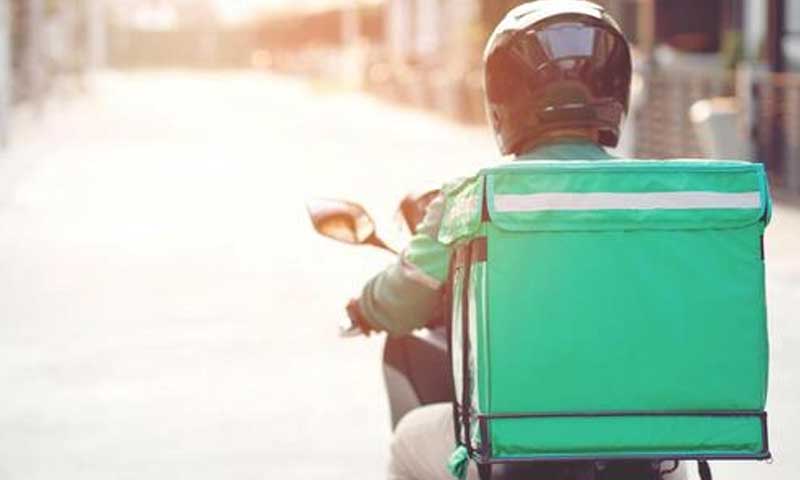
For 19-year-old delivery rider Ehsanullah, the hum of his motorcycle used to signal opportunity and independence. Originally from Mardan, he has worked for a local food delivery business for the past year, initially seeing the gig economy as a stable source of income.
“When I first started, by the grace of God, work was going very well and smoothly,” he recalls. But as Pakistan faces historic inflation and unpredictable fuel costs, the very hum of his bike has become a source of anxiety, marking each journey with financial uncertainty.
The fuel dilemma
The core of the struggle for riders like Ehsanullah lies in the disconnect between corporate policy and the realities of daily work. Delivery platforms suggest fuel limits, but for front-line riders, the numbers do not align with operational needs.
“They have mentioned a limit of approximately 20 litres for the month,” Ehsanullah explains. “We consume 20 litres of petrol in just four to five days.” In other words, what is meant to sustain a rider for a month barely covers a week. Each kilometer traveled now risks pushing them into financial loss rather than earning a livelihood.
Fuel costs are further complicated by daily volatility. “When we go to sleep at night, petrol is at one price, and by morning, it reaches another rate,” he says. Despite these spikes, the compensation for riders remains unchanged, leaving them to shoulder rising costs for rent, food, bike maintenance, and mobile phone bills, essential tools for their work.
Muhammad Abdullah, another delivery rider from Chakwal who has been riding for nine years and alongwith working in Islamabad’s real estate sector for the past five, echoed these concerns. He recalled that when he first arrived in Islamabad, petrol was around 150 rupees per litre, and his daily commute from Rawalpindi spanned roughly 50 km. “Gradually, inflation kept increasing, and according to my daily routine, expenses kept rising,” he said.
Abdullah explained that while his monthly salary is 40,000 rupees, fuel prices have risen to 458 rupees per litre, making daily commuting expensive. “Even if my bike consumes 1.25 litres per day, that alone costs 17,200 rupees a month. With my salary, I cannot manage household expenses and petrol at the same time. It has become very hard to cope,” he added.
He also noted that government relief for riders, set at a reduction of 100 rupees per litre, requires registration through a new app, meaning that many riders will continue to manage the soaring prices on their own until the system actually becomes operational.
The hidden costs: daily struggles and weather woes
Beyond fuel, riders face additional financial pressures. Tips, though sometimes helpful, are unpredictable. “Sometimes someone gives Rs50, sometimes Rs100, it depends on luck,” Ehsanullah says. Small transaction losses add up as well. “If a customer’s bill is Rs1,050 and they give Rs2,000, we might not have Rs950 to return, so we end up leaving Rs50,” he explains.
Weather is another complicating factor. Heavy rain halts work entirely, as mobile phones and bikes, a rider’s livelihood, are at risk of damage. In a profession without paid leave, a rainy day is a day without income.
Supporting families amid economic pressures
Many delivery riders, like Ehsanullah and Abdullah, are responsible for supporting families in their hometowns. Rising living costs and fuel prices severely limit the amount they can remit. “After all these expenses, we are able to send very little money home, making it hard for the household to survive,” Ehsanullah admits. Abdullah agrees: “It has become very hard to manage with my current salary. Every day is a struggle to make ends meet.”
A broader crisis for gig workers
The experiences of Ehsanullah and Abdullah are reflective of the challenges facing thousands of delivery riders in Pakistan’s gig economy. As fuel prices climb and inflation affects daily life, motorcycle-dependent workers are among the hardest hit.
Without adjustments to pay structures or timely subsidies, many riders fear that continuing in this line of work will become unsustainable. For now, they continue to navigate the city streets, balancing orders, expenses, and hope. Ehsanullah sums up the sentiment shared by many: “May Allah create some ease for us.”
You May Also Like