- WEB DESK
- October 26, 2026
Thousands of trucks stuck as partial Iran-Pakistan trade resumes
-

- AFP
- October 26, 2026
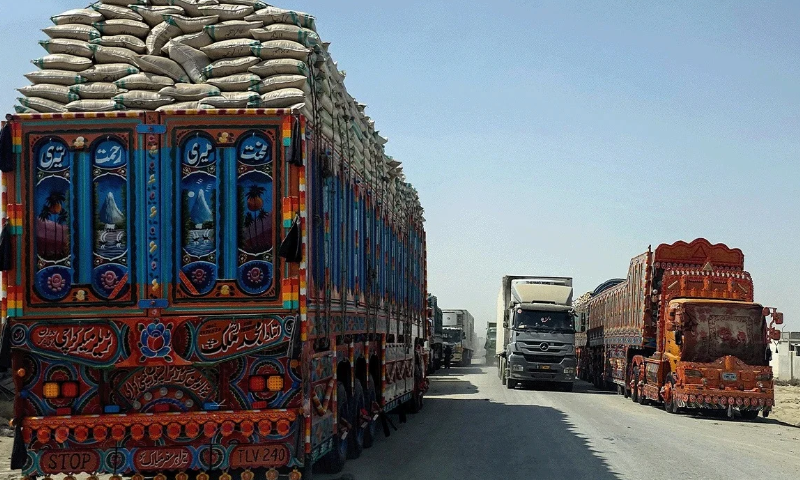
Thousands of trucks remain stranded on both sides of the Iran-Pakistan border despite the resumption of limited overland trade between the two countries, southwest Pakistan business representatives told AFP on Monday.
Mir Naveed Jan Kalmati, president of the chamber of commerce for Gwadar city on Pakistan’s Arabian Sea coast, said the frontier with Iran was “only partially open” to trade, with a vast backlog of vehicles at the border.
There were “three to four thousand trucks on the Iranian side and two to three thousand trucks on the Pakistani side,” Kalmati said.
Only certain vehicles were being allowed across the border to clear the backlog after a week-long closure, he said.
Iran’s ambassador to Pakistan Reza Amiri Moghadam said on X on Sunday there were no restrictions on the Iranian side, including for the export of liquefied petroleum gas (LPG).
Clarification Regarding Reports on the Closure of Iranian Borders to Pakistan With regard to reports concerning the closure of Iranian borders to Pakistan, I would like to clarify a few important points here: First, there are currently no restrictions on the Iranian side on the export of Iranian goods to Pakistan, including LPG. Iran’s borders with all its neighboring countries remain open. Naturally and rationally, under the prevailing circumstances, it would be neither logical nor in the interests of either side for Iran to close its borders to its immediate neighbors, particularly brotherly Pakistan. Second, changes in the implementation of Pakistan’s E-Form procedure for imports from Iran have created a situation in which traders are effectively and literally unable to dispatch cargo from Iran to Pakistan. Consultations with the Pakistani side are currently underway to address this issue. Third, according to reports, several hundred trucks carrying LPG have crossed the Rimdan border into Gabd on the Pakistani side. However, despite having remained there for several weeks, these trucks have yet to be unloaded or cleared, further complicating the movement of goods and the smooth flow of bilateral trade. Finally, I would like to emphasize that cross-border trade between Iran and Pakistan is an integral part of the bilateral agreements reached at the highest levels. It serves the mutual interests of both countries and their people. Iran has made every possible effort, leaving no stone unturned, to facilitate and promote this essential bilateral trade. We remain committed to continuing these efforts in close coordination with our Pakistani counterparts to overcome existing challenges, facilitate the movement of goods, and strengthen economic cooperation between our two brotherly countries.
— Reza Amiri Moghadam (@IranAmbPak) October 25, 2026
He blamed the closures on “changes in the implementation of Pakistan’s E-Form procedure for imports from Iran”, which he said “have created a situation in which traders are effectively and literally unable to dispatch cargo from Iran to Pakistan”.
Kalmati said companies on both sides of the border were urging authorities to allow the complete resumption of trade.
He said his members and drivers were “frustrated, they want to go back home, they want to continue their business”.
Fida Ahmad Dashti, a businessman in Kech district in Balochistan province, said he had been told that only vehicles with paperwork prepared before October 16 were being allowed to cross the border.
Two other businessmen based in Balochistan confirmed their drivers had said only vehicles with documents prepared before October 16 were being allowed across the frontier.
The Gwadar Chamber of Commerce said in a statement on Saturday the suspension of the import of LPG and the “abrupt closure of the border” had led to “disrupting the national LPG supply chain, and causing prices to skyrocket”.
You May Also Like