- Web
- 12 Minutes ago
Three decades on: why Fariha Pervez’s ‘Patang Baaz Sajna Se’ still defines Basant
-

- Web Desk
- Feb 05, 2026
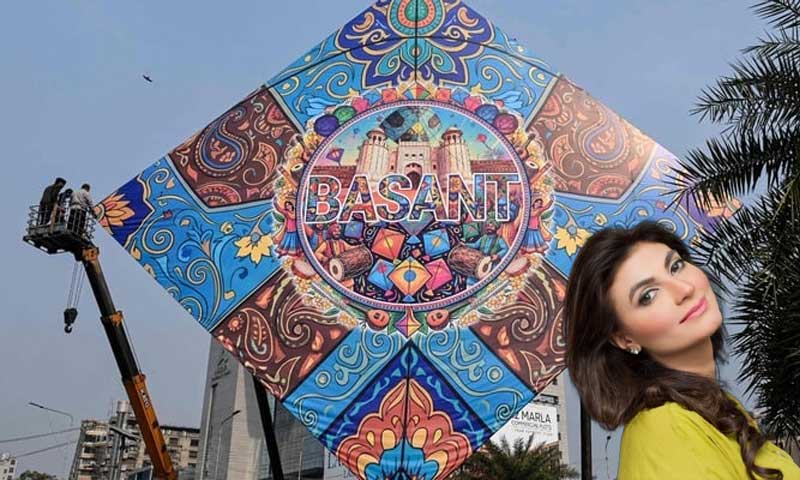
WEB DESK: As Basant fever sweeps through Lahore once again, the city is reaching back to its original soundtrack. Among the songs soaring back into public consciousness is Patang Baaz Sajna Se or otherwise called ‘Bo Kata’ by Fariha Pervez, a track first released in 1996 that has not only survived the tests of time but has entered its third decade with renewed relevance.
Long regarded as the unofficial anthem of Basant, the song is making a fresh return as kites dot Lahore’s skies after years of silence. In an era where the Punjab government has recently banned hundreds of songs over questionable lyrics, Patang Ba Sajna Se stands out as a rare cultural constant, celebratory yet restrained, festive yet rooted in emotion. Its appeal extends beyond Basant, finding space at mehndi ceremonies as well, where its themes of love and longing continue to strike a chord.
While Gen Z audiences may recognise Pervez from her later appearances, including Coke Studio, millennials and boomers remember her from the height of her early career, a time when Patang Ba Sajna Se wasn’t just a song, but the sound of spring itself in Lahore.
A song that grew into a Basant anthem
Reflecting on the song’s resurgence, Fariha Pervez told Hum News Subha Say Agay that it feels as if “Bo Kata” has just been released again, reflecting how strongly the track continues to resonate across generations.
Pervez explained that her long absence from the music scene was largely due to her commitments as an entrepreneur, a phase of life she describes as “trusting the process”. Despite stepping away from active music production, she noted that Patang Ba Sajna remained closely tied to her identity, even becoming widely known as a “Basant anthem” over the years.
Cassettes, colours and instant fame
Recalling the early days of her career, she shared that the song was part of her first-ever album, produced at a time when an advertising agency was overseeing the concept. In the era of cassette tapes, the album was released with “Bo Kata” on one side and Patang Baaz Sajna on the other, a format that defined how audiences consumed music in the 1990s. “That song brought me instant recognition,” she said, adding that it propelled her career to new heights and “changed my life completely.”
Pervez also spoke about her personal connection to Basant, saying she grew up actively participating in kite flying. As the only sister among two brothers, she recalled making her own kites by cutting plastic shopping bags when materials were scarce. She added that the song’s visuals, particularly the yellow dress and green dupatta, became symbolic of Basant celebrations and remain etched in public memory.
Why Basant still matters
Commenting on the cultural importance of the festival, she lamented the lack of public recreational spaces and festivals in the country. “We don’t have many parks or festivals, which is why Basant stands out as such a colourful celebration,” she said, calling it an internationally recognised event that deserves preservation rather than restriction.
Addressing past controversies surrounding the festival, Pervez argued that instead of placing blame elsewhere, society should have focused on improving safety practices. She acknowledged that the government has its limitations, saying “the government can only do so much,” but stressed that collective responsibility is key to keeping cultural traditions alive.
With Basant returning to Lahore’s skies, Pervez believes the renewed love for Patang Baaz Sajna is a reminder of how deeply music and culture remain intertwined, and how some songs never truly fade, they simply wait for the right moment to fly again.
You May Also Like