
- Web Desk Faizan Khan
- 4 Hours ago
Today’s 26th constitutional amendment hearing sees calls for full bench
-

- Ahsan Wahid
- Oct 20, 2025
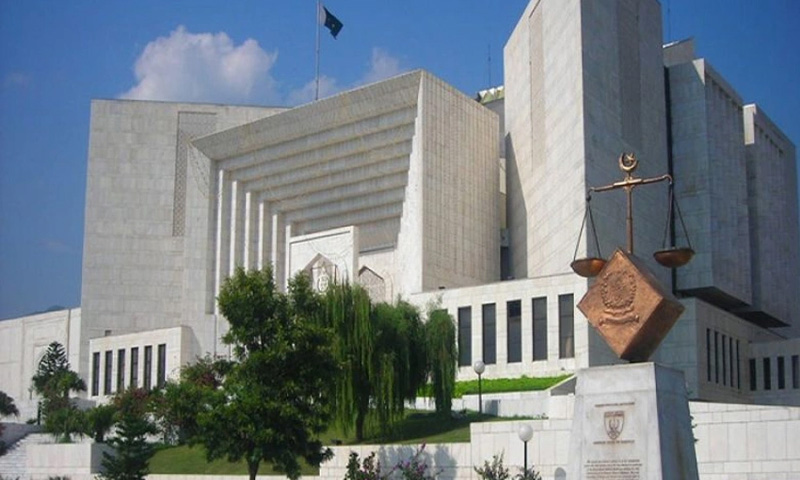
ISLAMABAD: The Supreme Court on Monday heard the high-profile hearing on multiple petitions challenging the 26th Constitutional Amendment. An eight-member constitutional bench, headed by Justice Aminuddin Khan, presided over the proceedings, which saw intense legal arguments and sharp judicial observations over the legitimacy of the bench itself and the constitutional validity of the amendment.
Lawyer Akram Sheikh presented his arguments before the bench, urging the court to declare the 26th Amendment null and void. Sheikh contended that the amendment was brought about to prevent scrutiny and accountability following controversial elections and the formation of a commission. He insisted that the matter should be heard by a full court comprising all 24 Supreme Court judges.
“There is no constitutional bench that can hear the case against the 26th Amendment,” Sheikh argued, adding that even an 8 or 15-member bench lacks the constitutional capacity to adjudicate on the matter. Justice Aminuddin, however, reminded the court that the challenge itself was not considered controversial before the bench.
The composition of the bench remained a recurring point of contention. “Wouldn’t there be a conflict of interest in a full court consisting of 24 judges?” questioned Justice Muhammad Ali Mazhar. Justice Jamal Khan Mandokhail also expressed concern, saying, “A small bench cannot overturn the decision of a larger bench.” He said that while judges serve on constitutional benches, they also function as members of the broader Supreme Court, and roles could change on the directive of the Chief Justice of Pakistan (CJP).
Tensions briefly flared when the court questioned the involvement of senior lawyer Latif Khosa. “Latif Khosa has filed a petition on your behalf,” noted the bench. Akram Sheikh denied any association, saying, “Latif Khosa is not my lawyer.” The court queried whether Khosa filed the petition without consent.
Justice Aminuddin also addressed the need for focused arguments, “If we talk about the Constitution in 15 or 20 minutes, it will be easier,” he remarked, referencing prior vague arguments. He also criticised those who suggested sidelining the Constitution altogether.
After concluding his arguments, Akram Sheikh was succeeded by lawyer Shabbar Raza Rizvi, who began presenting his case. Rizvi urged the bench to proceed. He also referenced the Court’s formation under Articles 176 and 191A, arguing that any bench of the Supreme Court, including the current one, retains the authority to refer the matter to the Chief Justice or a committee.
Discussions also touched upon procedural matters, including whether the current bench could pass an order requesting the formation of a full court. Rizvi maintained that it could, while reiterating the Supreme Court’s structural authority under Article 191A.
After these arguments, the bench postponed the hearing until tomorrow, with Rizvi expected to continue his arguments.
You May Also Like