- WEB DESK
- October 24, 2026
Tribal council deputy chief calls for Afghanistan peace talks after KP emergency
-

- WEB DESK
- October 24, 2026
A senior tribal representative has urged the federal government to authorise a delegation of 15 to 20 elders to travel to Afghanistan for talks with the Afghan Taliban, saying negotiations could help end cross-border attacks and restore peace to Pakistan’s former tribal districts.
The appeal comes after President Asif Ali Zardari approved emergency measures and governor’s rule in Khyber Pakhtunkhwa on October 11, following a recommendation from the federal cabinet. The Centre cited the deteriorating security situation and what it described as inadequate cooperation from the Pakistan Tehreek-e-Insaf (PTI)-led provincial government on counterterrorism. PTI rejected the justification and challenged the measures in court.
The federal government later established an 11-member advisory council and, on October 17, appointed 48 members to a separate council covering 12 terrorism-affected districts of KP following jirga consultations.
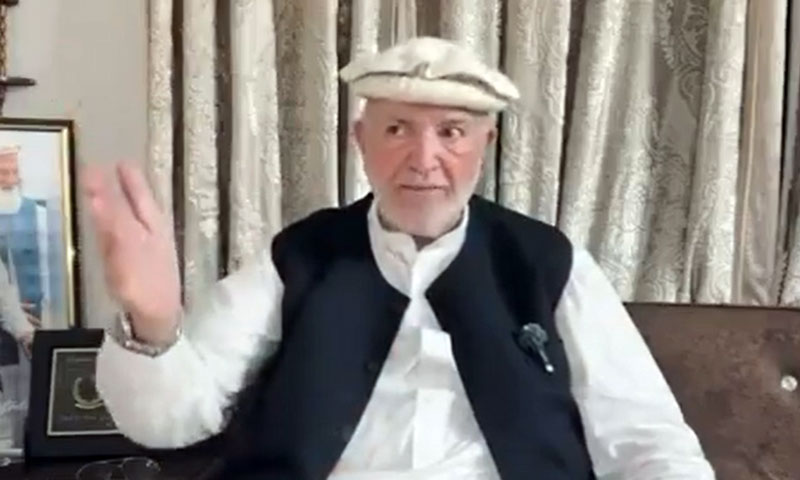
Khan Marjan, deputy chief of the newly formed 48-member Area Representative and Development Council (ARDC), said the proposed delegation should receive official recognition, full negotiating authority and the government’s confidence to pursue a settlement with the Afghan Taliban. The council covers 12 districts, including the merged tribal districts.
“The last time we held negotiations with the Taliban not even a firecracker exploded for 90 days in Pakistan… there is no other way forward except negotiating with the Taliban…. The TTP or Hafiz Gul Bahadar understand the language of love.. I appeal to the top leadership to allow us to go to Afghanistan and talk to them” says Khan Marjan, The Deputy Chief of the Federal Government’s newly formed, 48-member Area Representative and Development Council (ARDC). His reference point is negotiations under former COAS General Bajwa, that the government of Pakistan has stated is responsible for terrorism across the country, officially stated at the National Security Committee .
An emergency was imposed in KP province of Pakistan on the basis that the provincial government was not backing the state of Pakistan’s policy on terrorism. The ARDC oversees 12 districts of Khyber Pakhtunkhwa including the merged tribal districts. The interview was aired two days ago.— Iftikhar Firdous (@IftikharFirdous) October 24, 2026
In a Pashto-language interview aired two days ago, Marjan said the delegation should be allowed to stay in Afghanistan for a week to discuss the concerns of the Tehreek-e-Taliban Pakistan (TTP), Hafiz Gul Bahadur and other militant factions operating across the border.
Pakistan has repeatedly accused the Afghan Taliban government of allowing militant groups to operate from Afghan territory and carry out attacks inside Pakistan. Kabul denies the allegations. Pakistan has also carried out airstrikes inside Afghanistan, saying it targeted militant hideouts, while Kabul has condemned the strikes as violations of its sovereignty.
Tribal elders seek renewed dialogue
“The last time we held negotiations with the Taliban, not even a firecracker exploded for 90 days in Pakistan,” Marjan said, arguing that dialogue was the only way forward.
“The TTP or Hafiz Gul Bahadur understand the language of love,” he said, appealing to the country’s top leadership to allow tribal elders to travel to Afghanistan and engage in talks.
Marjan’s reference to the 90-day period relates to earlier negotiations with the Taliban under former army chief General Qamar Javed Bajwa.
Marjan said a previous initiative involving a jirga of elders from the former Federally Administered Tribal Areas (FATA) had helped address tensions between Pakistan and Afghanistan when the federal government authorised the gathering to pursue negotiations. He said hostilities continued after the jirga was discouraged from proceeding with such efforts.
He urged the government to establish a committee of 15 to 20 trusted tribal elders and grant it a week-long mandate to visit Afghanistan as an official Pakistani delegation. He said the government should take the committee into confidence and empower its members to discuss the concerns of the Taliban and other factions blamed for attacks in Pakistan’s border areas.
“If the federal government genuinely wants this to happen, our efforts will contribute tirelessly to bringing long-awaited peace to the former tribal areas,” he said.
Marjan warned that leaving the situation unchanged would prolong the conflict, while successful negotiations could help end clashes, restore peace and allow residents to resume normal economic activities. He said an empowered delegation could make progress within a week, provided it received a clear mandate and full government support.
Pakistan says dialogue must deliver results
Pakistan has reiterated its willingness to engage in dialogue with Kabul, provided the Afghan government acknowledges terrorist activities originating from its territory and agrees to a verifiable mechanism to prevent them.
Foreign Office Spokesperson Sajjad Haider Khan said during a weekly press briefing that Pakistan was not opposed to negotiations and had been engaged in talks with Kabul since 2021. He said any engagement must deliver concrete results, particularly in addressing cross-border terrorism, and that dialogue without progress on Pakistan’s security concerns would serve little purpose.