
- Monis Siraj
- August 17, 2026
Trump confirms backchannel talks with Iran’s Revolutionary Guards
-

- WEB DESK
- August 17, 2026
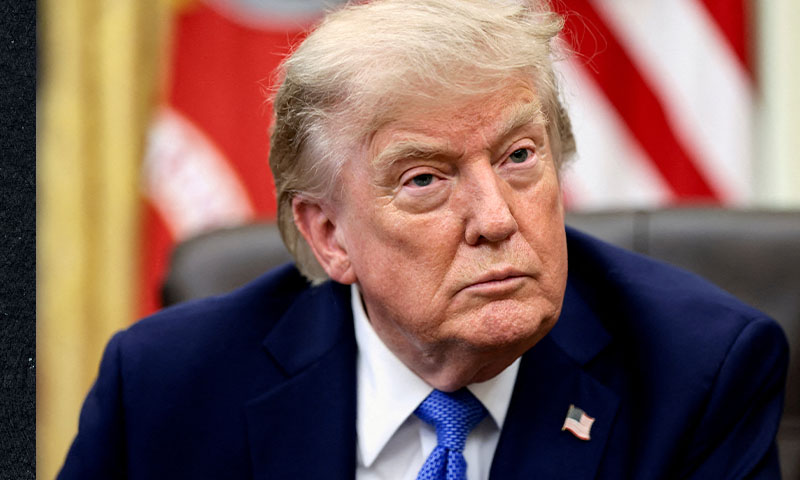
WASHINGTON: US President Donald Trump has confirmed for the first time that his administration is maintaining a direct backchannel with Iran’s Islamic Revolutionary Guard Corps (IRGC), while insisting that Tehran must abandon any pursuit of nuclear weapons as a 60-day negotiating window expires without a comprehensive peace agreement.
In an interview with Fox News on Monday, Trump said the United States was communicating directly with figures inside the IRGC rather than relying solely on Iran’s political leadership or traditional intermediaries.
“We have a back-channel with the Revolutionary Guards,” Trump said, confirming reports of direct contacts with members of the powerful Iranian military organisation.
The disclosure comes as the 60-day period agreed for efforts to negotiate an end to the US-Iran conflict expires, with Washington and Tehran still sharply divided over the terms of any longer-term settlement.
Trump maintained a hardline position on Iran’s nuclear programme, saying his central objective remained preventing Tehran from acquiring a nuclear weapon.
He said Iran should “put up the white flag of surrender”, but at the same time stressed that there was still time for diplomacy and that he was not working to a fixed deadline.
“I’m not in a hurry,” Trump said, indicating that Washington was prepared to maintain pressure on Tehran while leaving the door open to negotiations.
Direct contacts with IRGC
Trump’s confirmation of a backchannel with the IRGC represents a significant development in the diplomatic efforts to end the conflict.
The IRGC is one of the most powerful institutions in Iran and has played a central role in the country’s military and security policy. Trump said US officials were communicating directly with figures within the organisation, bypassing Iran’s conventional diplomatic channels.
The revelation follows reports that the Trump administration had sought a separate channel to communicate with the IRGC leadership as the organisation’s influence over Iran’s wartime decision-making increased. Axios reported that the backchannel was facilitated through intermediaries with connections to the Iranian military establishment.
However, Iranian military officials have publicly rejected Trump’s account, with reports on Monday saying the IRGC denied having direct backchannel negotiations with Washington and dismissed the US president’s claims.
The conflicting accounts underline the deep mistrust between Washington and Tehran even as both sides continue to leave some room for diplomacy.
No agreement on extending ceasefire
The latest developments come as the 60-day negotiating period reaches its end without a clear agreement on an extension.
Iranian officials had said in recent days that there had been no meaningful progress towards reviving the interim peace arrangement. Tehran has also rejected reports that an extension of the 60-day period had been agreed.
A senior Iranian source told Reuters last week that negotiations to revive the collapsed interim agreement had stalled, with Washington and Tehran disagreeing over several core issues. Iran has demanded an end to the US blockade and other measures, while Washington has insisted on conditions including the reopening of the Strait of Hormuz and restrictions on Iran’s nuclear capabilities.
The disagreement has left the future of the ceasefire uncertain, raising fears that military confrontation could resume or intensify.
Oman caught in diplomatic dispute
Trump also issued a strong warning to Oman, which has played a role in regional diplomacy and efforts to facilitate communication between Washington and Tehran.
He warned that the United States could take military action against Oman if it believed the Gulf state was obstructing US efforts in the region.
“If Oman gets in the way, we’ll bomb these out of them,” Trump told Fox News, according to reports.
The warning came as Oman and Iran were reportedly working towards an arrangement concerning shipping through the strategically important Strait of Hormuz.
The waterway has become one of the central flashpoints in the US-Iran confrontation, with disruption to shipping through the strait threatening global energy supplies and adding pressure to international oil markets.
The Associated Press reported on Monday that Iran and Oman were close to finalising a joint arrangement for managing maritime traffic through the strait.
Trump rejects election pressure
Trump also rejected suggestions that his Iran policy was being influenced by the upcoming US midterm elections or the 2028 presidential election.
He said electoral considerations were not driving his decisions and insisted that his approach was based on US national security and preventing Iran from obtaining a nuclear weapon.
The US president has repeatedly presented the nuclear issue as the central objective of Washington’s campaign against Tehran.
Trump also dismissed concerns about pressure on US military stocks as a result of prolonged operations in the Middle East, saying the United States had used only a small proportion of its available weapons.
Gaza and Hamas
In the same interview, Trump addressed the situation in Gaza and said Israel should not be carrying out attacks there.
He also claimed that the United States maintained channels of communication with Hamas and suggested that the group was moving towards laying down its weapons.
Trump said a peace arrangement with Hamas remained possible if the organisation agreed to disarm.
The comments come as separate diplomatic efforts continue over a possible ceasefire in Gaza. The Associated Press reported that Hamas had accepted a US-backed ceasefire roadmap while Israel continued to demand that Hamas disarm before any agreement.
A fragile diplomatic opening
Trump’s confirmation of direct contacts with the IRGC presents a striking contrast between his aggressive public rhetoric and the continued search for a diplomatic route out of the conflict.
While demanding that Iran surrender its nuclear ambitions and warning of further military action, Trump has repeatedly said that negotiations remain possible.
The administration’s decision to maintain a backchannel with the IRGC suggests Washington is seeking to communicate with the Iranian actors it considers capable of influencing military and security decisions, even as formal diplomatic efforts remain stalled.
For Tehran, however, the conflicting public statements and continued US military and economic pressure have made the prospect of a durable agreement more difficult.
With the 60-day window now expiring without a comprehensive settlement, the coming days are likely to determine whether the backchannel contacts can develop into formal negotiations or whether the confrontation moves towards another escalation.
For now, Trump has made clear that Washington is keeping both options open — continued pressure and military readiness on one side, and a potential diplomatic solution on the other.
You May Also Like



- WEB DESK
- August 17, 2026