- Web
- 49 Minutes ago
Trump denies report that Gen. Caine warned against Iran war, calls victory “easily won”
-

- Web Desk
- Feb 24, 2026
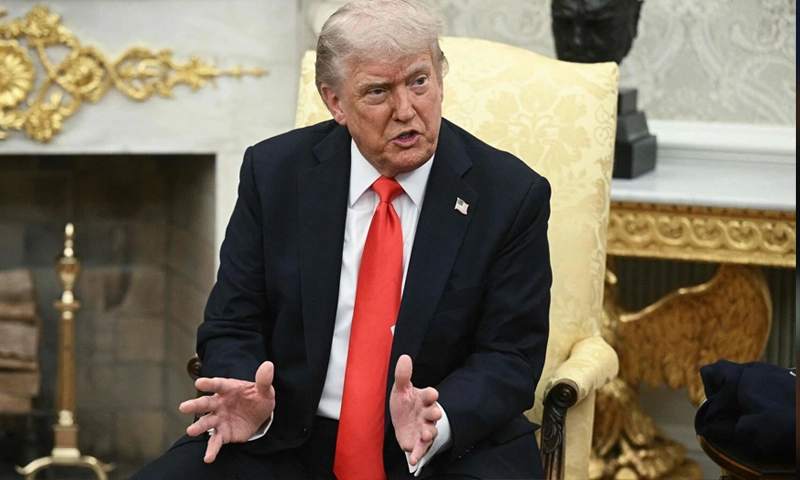
WEB DESK: President Donald Trump on Monday forcefully dismissed media reports suggesting that the Pentagon harbours serious doubts about the feasibility of a military campaign against Iran. Speaking on his social media platform, Truth Social, Trump reaffirmed his preference for a diplomatic resolution to the standoff over Tehran’s nuclear programme, while cautioning of “very bad” consequences should no deal be reached.
Trump described the coverage as “incorrect” and “purposefully misleading”, particularly reports citing alleged warnings from Joint Chiefs of Staff Chairman General Dan Caine regarding potential risks, including munitions shortages, limited allied support, and threats to U.S. personnel in a prolonged conflict.
“Everything that has been written about a potential war with Iran has been written incorrectly, and purposefully so,” Trump wrote. “I am the one that makes the decision. I would rather have a deal than not, but if we don’t make a deal, it will be a very bad day for that country and, very sadly, its people.”
Trump praises military leadership
Trump specifically addressed concerns attributed to General Caine, asserting that the chairman regards any military action against Iran as something that would be “easily won”. He lauded Caine’s leadership, citing the June 2025 strikes on Iranian nuclear facilities codenamed Operation Midnight Hammer which Trump has repeatedly described as having “completely and totally obliterated” key enrichment sites.
“He has not spoken of not doing Iran, or even the fake limited strikes that I have been reading about; he only knows one thing, how to WIN, and if he is told to do so, he will be leading the pack,” the president added.
Media reports of Pentagon concerns
U.S. outlets, including The Washington Post and The Wall Street Journal, had reported that General Caine privately expressed concerns to Trump and other officials about the operational challenges of a major campaign against Iran. These include depleted stockpiles of critical munitions further strained by ongoing support for allies and a lack of robust allied backing, which could increase risks to American forces amid potential Iranian retaliation through proxies such as Hezbollah or the Houthis.
Heightened Military Posture
Tensions in the region remain elevated, underscored by a substantial U.S. military build-up the largest since the 2003 invasion of Iraq including two aircraft carriers, fighter jets, and refuelling tankers deployed across bases in Jordan and elsewhere.
The State Department on Monday ordered the departure of non-essential U.S. government personnel and family members from the embassy in Beirut, Lebanon. A senior official described the move as a temporary precaution following a security assessment, though the embassy remains operational. The decision has sparked speculation of possible Iranian or proxy retaliation should U.S. strikes occur.
Diplomacy Continues
Meanwhile, diplomatic efforts proceed in parallel with military posturing. U.S. special envoy Steve Witkoff and Jared Kushner are set to travel to Geneva for another round of indirect talks with Iranian Foreign Minister Abbas Araghchi on Thursday, mediated by Oman. Speaking over the weekend on CBS’s Face the Nation, Araghchi expressed optimism about a “win-win” diplomatic solution despite the looming threats.
Trump has reportedly given Iran approximately 10 to 15 days to agree to a new nuclear deal, though he has previously extended self-imposed deadlines. U.S. officials remain divided on the scope of any agreement: some, including Secretary of State Marco Rubio, advocate a broad deal addressing Iran’s missile programme, domestic repression, and support for regional proxies, while Trump has indicated a narrower focus on nuclear issues may suffice.
Risks of Escalation
Experts caution that military action during ongoing negotiations could derail progress and trigger a cycle of escalation, including attacks on U.S. bases by Iranian proxies. Iran’s leadership has warned of strong retaliation against any aggression.
Trump is expected to address the situation further in his State of the Union speech on Tuesday. As Witkoff noted in a recent interview, the president remains “curious” as to why Iranian officials have not yet offered major concessions under mounting pressure.
With talks resuming this week and military options on the table, the coming days may prove decisive in determining whether the U.S. and Iran avert conflict or edge closer to confrontation.
You May Also Like