- WEB DESK
- October 6, 2026
Trump says ongoing talks aim to denuclearise Iran
-

- Sadiq Khan
- July 1, 2026
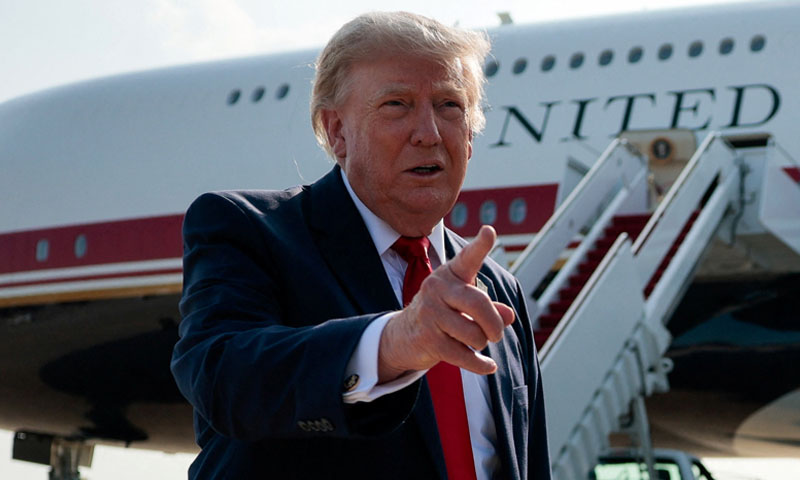
WEB DESK: US President Donald Trump said that talks with Iran have been “going very well,” reaffirming the hardline stance that Iran can not have a nuclear weapon.
President Trump said that discussions on Iran’s nuclear program are going in a positive direction, reiterating his position that Iran must not be allowed to possess nuclear weapons.
“The ongoing talks are mainly focused on de-nuclearisation, and Iran simply cannot have a nuclear weapon.”
Trump also claimed that a major strike had been carried out against Iran last week, while pointing to rising stock markets as a sign that “everyone is making profits.”
He also made remarks on economic and corporate matters, referring to large-scale financial contributions tied to major industries and discussing compensation for US citizens.
Concluding his remarks, the US president said he had good meetings with Iranian officials and that further developments would be seen in the coming days.
Meanwhile, the US and Iran held technical talks in Qatar on Wednesday aimed at securing a lasting peace agreement, restoring normal shipping through the Strait of Hormuz and advancing a ceasefire reached last month, sources familiar with the negotiations said.
The discussions, taking place in Doha under Qatari mediation alongside Pakistan, are based on a 14-point interim agreement signed in June that halted a conflict triggered by US-Israeli strikes on Iran in February and paved the way for 60 days of negotiations on a permanent peace deal.
According to a source with direct knowledge of the talks, US President Donald Trump’s son-in-law Jared Kushner and special envoy Steve Witkoff met Qatar’s prime minister to help lay the groundwork for the negotiations, but are not participating in the technical discussions.
The talks began on Tuesday night and continued on Wednesday, with negotiators and technical experts focusing on key issues, including the future management of the Strait of Hormuz and the release of $6 billion in frozen Iranian assets, an Iranian official said.
The United States is seeking guarantees for the uninterrupted flow of commercial shipping through the strategic waterway, while Iran has publicly stated it wants international recognition of its control over the strait and the authority to levy transit fees on vessels entering or leaving the Gulf.
Shipping traffic through the Strait of Hormuz, which handled about one-fifth of global oil and liquefied natural gas trade before the conflict, has partially resumed, though analysts say conditions remain uncertain.
Iranian state media reported on Wednesday that a foreign container ship ran aground after entering shallow waters outside the shipping lane designated by Iranian authorities.
The interim accord follows weeks of military exchanges between Washington and Tehran over differing interpretations of the agreement.
Oil prices fell more than 1 per cent on Wednesday as markets monitored the progress of the negotiations.
The agreement also includes efforts to de-escalate tensions in Lebanon, where the United States has supported separate talks between Israel and the Lebanese government aimed at ending hostilities involving the Iran-backed Hezbollah group.
A source familiar with the negotiations said intensive diplomatic contacts on Lebanon continued until Tuesday evening.
Both Washington and Tehran are under growing domestic pressure to prevent a renewed escalation. President Donald Trump is seeking to limit the economic fallout from the conflict ahead of November’s US midterm elections, while Iran’s leadership faces mounting public discontent over the country’s struggling economy.