- Web Desk
- 22 Minutes ago
Trump sets stark deadline for Iran to reopen Strait of Hormuz
-

- Web Desk
- 2 Minutes ago
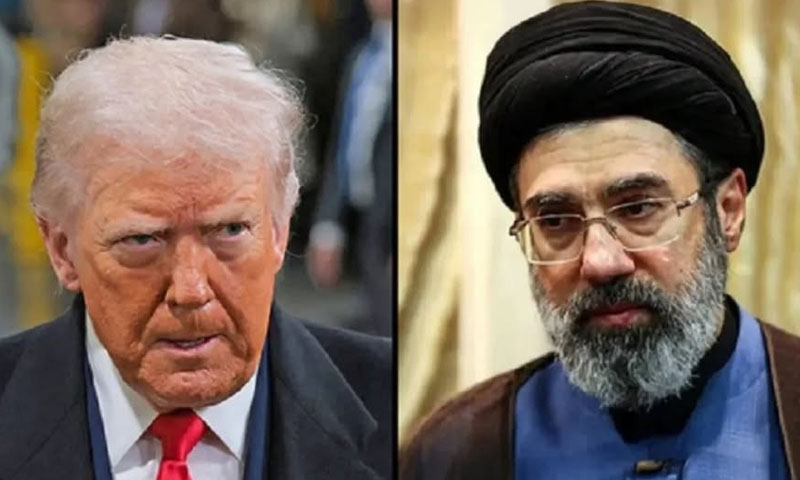
WEB DESK: US President Donald Trump has issued a high-stakes ultimatum to Tehran, demanding the reopening of the Strait of Hormuz by Tuesday evening or face targeted strikes on national infrastructure.
The President’s warning, which specified a deadline of 8:00 P.M. Eastern Time, has sent shockwaves through global energy markets and the halls of international diplomacy, according to Dawn News.
By naming specific potential targets ominously referred to as “Power Plant Day and Bridge Day” Trump has signalled a level of precision and resolve that analysts suggest is intended to force an immediate Iranian retreat.
With roughly 20pc of the world’s traded oil passing through the narrow waterway, the stakes for the global economy could not be higher.
A gamble for global deterrence
The White House appears to be betting that a public, time-bound threat will restore American deterrence in the region.
Supporters of the move argue that allowing the Strait to remain closed risks an unprecedented spike in energy prices, potentially crippling economies across Europe and Asia.
In his second term, Trump may feel less constrained by the traditional diplomatic caution of his predecessors, viewing calibrated strikes as a necessary tool to prove that Washington’s red lines remain inviolable.
However, the strategy is fraught with risk. Scholars and lawmakers warn that failing to follow through on such a specific deadline could fatally undermine US credibility.
Conversely, if the President does authorise strikes, the conflict could quickly spiral. Michael Froman, president of the Council on Foreign Relations, notes that while the US military capacity is vast, the definition of “victory” remains elusive, suggesting that “Iran wins if it does not lose; the United States loses if it does not win.”
The risk of retaliation and economic fallout
The prospect of “Power Plant Day” has met with fierce resistance from domestic critics and international observers who fear a catastrophic Iranian response. Critics, including Senator Brian Schatz, have raised legal concerns, suggesting that strikes on civilian infrastructure could be classified as war crimes.
Beyond the legalities, there is the grim reality of asymmetric warfare; Tehran possesses a sophisticated arsenal of drones and missiles capable of targeting US bases and Gulf oil facilities, potentially dragging the entire region into a protracted conflict.
Economic experts warn that the fallout would be felt far beyond the Middle East. Daniel Byman of the Center for Strategic and International Studies suggests that a surge in gas and fertiliser prices could trigger a global recession, for which the United States might be held responsible.
As the clock ticks down to Tuesday evening, the world is watching to see if this is a genuine prelude to military action or another example of Trump’s signature “maximalist rhetoric” designed to bring an adversary to the negotiating table at the eleventh hour.