- Web
- 9 Hours ago
Trump threatens escalation in Iran war, offers no clear endgame
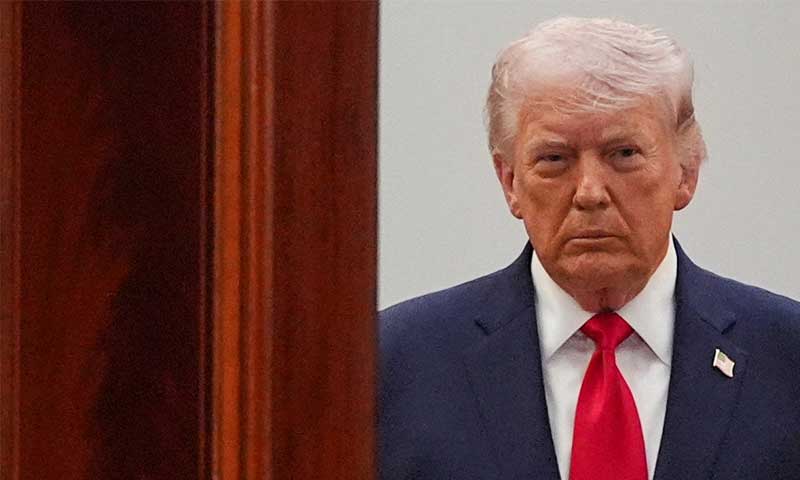
WASHINGTON: In a televised address, Donald Trump vigorously defended his handling of the ongoing U.S.-Israeli conflict with Iran, insisting that military objectives were close to being achieved while warning of further devastating action if Tehran fails to comply with American demands.
Speaking for nearly 20 minutes amid rising global oil prices and declining approval ratings at home, Trump projected confidence in the campaign’s progress but avoided committing to a clear timeline for ending hostilities.
Mixed signals on war trajectory
The president claimed that U.S. forces had severely weakened Iran’s military capabilities, including its navy, air force and missile programme, and pledged continued strikes in the coming weeks. However, he stopped short of outlining when the conflict might conclude, even as he asserted that the mission was advancing rapidly.
Trump also hinted at the possibility of escalation, suggesting that Iran’s energy infrastructure could become a target if negotiations fail. His remarks reflected a broader pattern of shifting rhetoric — alternating between calls for diplomacy and threats of intensified military action — which has contributed to uncertainty in global markets and among the American public.
Strait of Hormuz and global stakes
Addressing the crisis surrounding the Strait of Hormuz, Trump did not clarify whether military operations would continue until the key shipping route is reopened. Instead, he urged other oil-dependent nations to take responsibility for restoring access, emphasising that the United States was less reliant on Gulf energy supplies.
His comments come despite reluctance from Western allies to join a conflict initiated without broad consultation, particularly by Israeli Prime Minister Benjamin Netanyahu and Washington.
Analysts warn that any premature U.S. disengagement could leave Iran with significant leverage over the strait, through which a substantial portion of the world’s energy supplies pass, while also unsettling Gulf partners wary of being left exposed.
Questions over mission success
While Trump highlighted battlefield gains, uncertainty persists over whether the central objective — preventing Iran from developing nuclear weapons — has been achieved. Despite extensive bombardment, Tehran is believed to retain stockpiles of highly enriched uranium, much of it buried deep underground.
In a notable shift, Trump downplayed the importance of securing the material, suggesting surveillance would suffice. At the same time, he warned of further strikes if Iran attempted to move it, without addressing the possibility of deploying ground forces — a move likely to face strong domestic opposition.
Although U.S. and Israeli strikes reportedly eliminated senior Iranian leadership figures, including Supreme Leader Ali Khamenei, the country’s governing structure remains intact, with hardline successors stepping in. Meanwhile, Iran has continued to demonstrate its ability to retaliate using missiles and drones.
Domestic pressures mount
Trump’s address, his first prime-time speech since the conflict began, appeared aimed at reassuring a sceptical public. However, he offered limited acknowledgment of economic concerns, including rising fuel prices, which he attributed to Iranian actions in regional waters.
Despite strong backing from his political base, prolonged economic strain could test that support, particularly with midterm elections approaching. Recent polling indicates a dip in Trump’s approval ratings, reflecting growing unease over the war’s impact.
Financial markets reacted cautiously following the speech, with investors unsettled by the absence of a clear exit strategy and the president’s contradictory messaging.
A subdued performance
The address marked a rare opportunity for Trump to reset the narrative, but his delivery was notably restrained compared to his typically forceful style. Speaking in a dimly lit setting, he largely reiterated familiar points rather than offering new clarity on the rationale behind the conflict or its endgame.
The result was a speech that underscored confidence in military gains while leaving critical strategic and political questions unresolved.
You May Also Like

- Web
- 10 Hours ago
OC and Ana Kasparian clash over US aid to Israel on X

- Web
- 10 Hours ago
SpaceX IPO signals arrival of the space economy