- Web Desk
- 20 Minutes ago
Trump threatens to target Iran oil, power plants if Hormuz remains closed; Iran dismisses US peace proposals
-

- Web Desk
- 2 Minutes ago
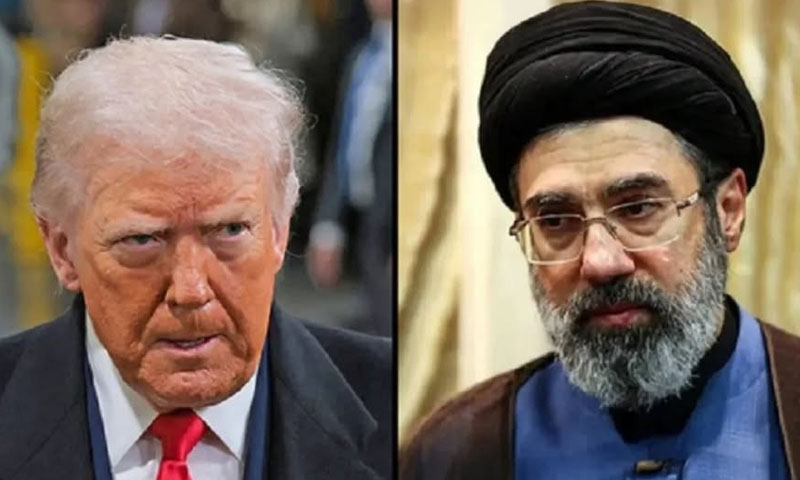
WASHINGTON: US President Donald Trump said on Monday that the United States is engaged in “serious discussions” with what he described as a “new and reasonable regime” aimed at ending US military operations in Iran.
In a post on his social media platform Truth Social, Trump said “great progress” had been made in the talks but warned of possible escalation if an agreement is not reached.
He said the United States could target key Iranian infrastructure, including power plants, oil wells and Kharg Island, if negotiations fail or if the Strait of Hormuz is not reopened to global shipping.
“We will conclude our lovely ‘stay’ in Iran by blowing up and completely obliterating all of their Electric Generating Plants, Oil Wells and Kharg Island … if the deal is not shortly reached,” Trump wrote, adding that such action would also be in response to past attacks on US personnel.
Trump did not provide further details on the reported negotiations or identify the parties involved in the talks.
The remarks come amid heightened tensions between the United States and Iran, with concerns growing over potential escalation in the region and its impact on global energy supplies.
Iran rejects talks
On the other hand, Iran on Monday dismissed US proposals to end a month-long war in the Middle East as “unrealistic, illogical and excessive,” while launching fresh missile strikes on Israel as the conflict intensified across the region and pushed oil prices higher.
The escalation comes as Yemen’s Iran-aligned Houthis entered the conflict, raising fears of attacks on key shipping routes and adding pressure to global energy markets.
Israel’s military said it intercepted two drones launched from Yemen on Monday, two days after the Houthis fired missiles at Israel for the first time since the war began. Lebanon’s Hezbollah also fired rockets towards Israel the same day, further widening the conflict.
In response, the Israeli military said it carried out strikes targeting what it described as military infrastructure in Tehran and Hezbollah-linked facilities in Beirut, sending thick black smoke over the Lebanese capital.
U.S. President Donald Trump also issued a warning to Iran, urging it to reopen the Strait of Hormuz — a vital route for global oil and gas shipments — or face possible strikes on its energy infrastructure.
Iranian Foreign Ministry spokesperson Esmaeil Baghaei said Tehran had received messages through intermediaries suggesting US willingness to negotiate, following a meeting of foreign ministers from Pakistan, Egypt, Saudi Arabia and Turkey in Islamabad aimed at mediation.
However, Baghaei rejected Washington’s proposals, saying Iran was focused on defence amid what it called military aggression.
“Our position is clear. We are under military aggression. Therefore, all our efforts and strength are focused on defending ourselves,” he said.
A Pakistani security official said direct US-Iran talks this week appeared unlikely, though efforts were underway to facilitate dialogue.
Baghaei also said Iran’s parliament was reviewing a possible withdrawal from the Nuclear Non-Proliferation Treaty, under which countries agree not to pursue nuclear weapons while developing peaceful nuclear energy.
Trump has cited preventing Iran from obtaining nuclear weapons as a key reason for US actions, while Tehran has repeatedly denied any such ambitions.
Rising regional tensions
The month-long war has expanded across multiple fronts, disrupting energy supplies and raising fears of broader military escalation.
Iran has fired on several Arab Gulf states during the conflict, while fighting with Hezbollah has intensified in Lebanon. A UN peacekeeper from Indonesia was killed and another critically injured in southern Lebanon after a projectile struck a peacekeeping position.
Brent crude prices rose sharply, reflecting market concerns over supply disruptions and potential attacks on key maritime routes, including the Bab el-Mandeb Strait.
Analysts said markets were increasingly pricing in the risk of further escalation, with little expectation of a near-term diplomatic breakthrough.
Continued strikes
Iran confirmed the death of Revolutionary Guards Navy Commander Alireza Tangsiri, one of several senior figures killed since the conflict began.
Despite weeks of heavy bombardment, Iran continued to launch missiles and drones, while regional clashes persisted.
Kuwait said an Indian national was killed in an Iranian attack on a power and desalination plant, though Iran denied involvement.
In Israel, debris from intercepted missiles damaged an industrial building and a fuel tank near a naval base in Haifa, with Hezbollah later claiming responsibility for targeting the site.
Israel has also signalled plans to establish a buffer zone in southern Lebanon, raising concerns over further displacement and instability in the region.
According to human rights group HRANA, thousands have been killed in Iran since the start of the war, while official figures from Lebanon and other sources point to heavy casualties across the region, including civilians and fighters.
The conflict, now in its fourth week, continues to expand with no immediate signs of de-escalation.
You May Also Like