- Web
- 31 Minutes ago
Trump: US strong in Mideast, Shehbaz a key partner
-

- Web
- 3 Minutes ago
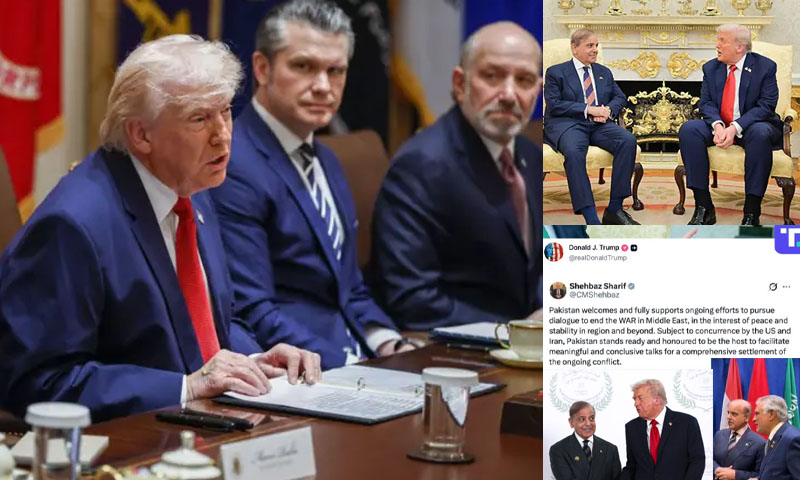
WASHINGTON: US President Donald Trump, in a cabinet meeting, stressed America’s strategic actions in the Middle East while praising Pakistan’s Prime Minister as a key regional partner. Speaking in a wide-ranging address, Trump emphasised the US role in resolving conflicts and maintaining stability across the region.
Trump said the United States had “stopped eight wars” and stressed that the country carefully chooses its engagements, noting that even the Ukraine war “was not our war.” He added that under his leadership, a conflict that had lasted 32 years was brought to an end in a single day.
On Pakistan, Trump lauded the Prime Minister, calling him “a very good man,” and pointed out that avoiding a war between India and Pakistan, both nuclear-armed nations, had been crucial for regional security.
Trump also discussed ongoing negotiations with Iran, noting that the country allowed eight oil tankers, later increased to ten, to pass through the Strait of Hormuz as a goodwill gesture. He said the US has effectively neutralised 99 per cent of Iran’s military capabilities while continuing to monitor potential threats in the region.
Concluding, Trump emphasised America’s energy dominance, claiming that US oil production now surpasses Saudi Arabia and Russia, reinforcing the country’s influence on global energy markets.
Trump on Iran’s oil tankers
Meanwhile, US President Donald Trump revealed that Iran allowed ten oil tankers, including some flying the Pakistan flag, to pass through the Strait of Hormuz as a goodwill gesture during negotiations. Speaking at a White House Cabinet meeting, Trump called the move a “present” from Iran. “They said, to show you that we’re real and solid, we’re going to let you have eight boats of oil… It ended up being ten boats,” he said.
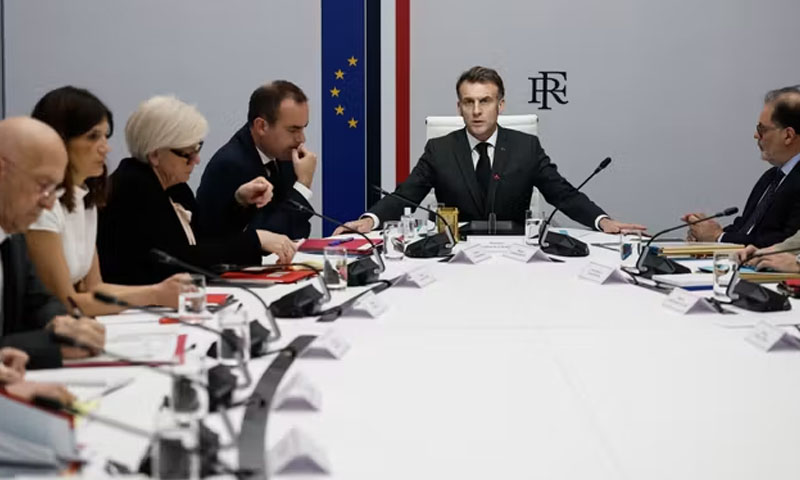
Meanwhile, French officials held video calls on Thursday as part of a multinational effort to coordinate the safe resumption of maritime traffic through the Strait of Hormuz, one of the world’s most strategically important shipping lanes.
The French Defence Ministry did not disclose which countries participated but stressed that the initiative is strictly defensive and separate from ongoing military operations in the region. “Its purpose is to organise the resumption of shipping through the Strait of Hormuz once hostilities have ceased,” the ministry said. The videoconference underscores France’s ambition to play a central role in securing a chokepoint vital for global energy supplies.
Why the Strait of Hormuz matters
The Strait of Hormuz connects the Persian Gulf to the Gulf of Oman and the Arabian Sea, handling 20–21 million barrels of oil per day—around 20–25% of the world’s seaborne oil trade. Major exporters include Saudi Arabia, Iraq, Kuwait, the UAE, and Iran. The strait also carries significant LNG shipments from Qatar and other Gulf states. Any disruption can push global oil prices higher and impact major importers like China, India, Japan, and South Korea, while regional trade worth trillions of dollars depends on the route.
Turkey and Pakistan’s diplomatic efforts
Turkey has also been active in stabilising the region. Foreign Minister Hakan Fidan has conducted high-level diplomatic visits to Riyadh, Abu Dhabi, and Doha to coordinate de-escalation efforts.
Meanwhile, Pakistan Prime Minister Shehbaz Sharif has reaffirmed his government’s commitment to promoting peace between the US and Iran, highlighting Pakistan’s role as a regional mediator.
Iran’s conditions
Despite these international efforts, Iran has set strict conditions for negotiations, demanding concessions linked to the losses it suffered during US-Israel strikes that killed several of its key officers. The Iranian stance remains a significant hurdle in reaching a peaceful resolution.
You May Also Like