- Web Desk
- 35 Minutes ago
Trump warns Iran as internet shutdown deepens amid nationwide protests
-

- Web Desk
- Jan 10, 2026
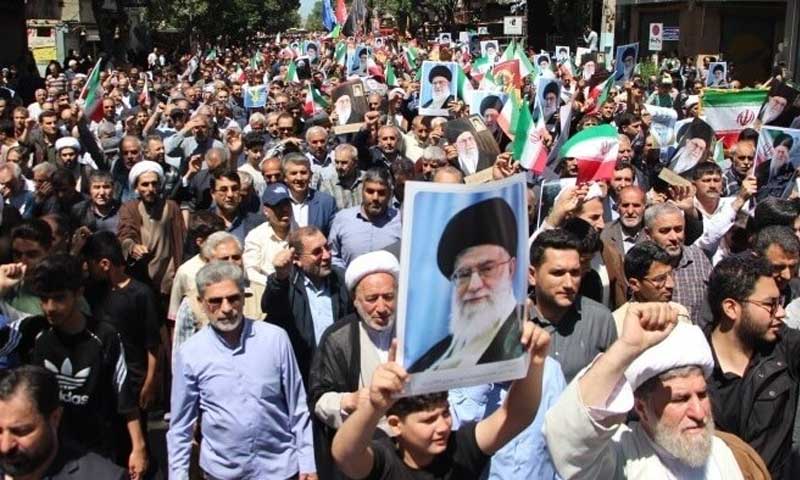
WEB DESK: U.S. President Donald Trump on Friday issued a fresh warning to Iran’s leadership as anti-government protests spread across the country and authorities imposed widespread internet and communications restrictions to contain unrest.
Videos circulating online before the blackout showed demonstrations in several cities, while Iranian officials confirmed that mobile networks and internet services had been curtailed on security grounds. Flights between Iran and several regional destinations were also cancelled, according to airport schedules.
Trump, who ordered air strikes on Iran last year, warned Tehran against using lethal force against demonstrators. “They should think very carefully before opening fire,” he said, adding that the situation was becoming increasingly dangerous for protesters. He said he hoped demonstrators would remain safe.
Rights groups say dozens of people have been killed since protests erupted late last month. Iran-based monitoring organisations reported at least 62 deaths, including 48 demonstrators and 14 members of the security forces. Iranian media outlets showed images of burning vehicles, damaged infrastructure and clashes between protesters and police, while the semi-official Tasnim news agency said several police officers were killed overnight.
Iran’s Supreme Leader Ayatollah Ali Khamenei adopted a defiant tone in a televised address, accusing protesters of acting at the behest of foreign powers, particularly the United States. He said the Islamic Republic would not retreat in the face of what he described as violent unrest. Iran’s public prosecutor warned that those accused of sabotage or attacks on security personnel could face capital punishment.
Iran’s communications ministry said the decision to restrict internet access was taken by security authorities due to the prevailing situation. The blackout has sharply reduced the flow of information from inside the country, with international phone calls largely failing to connect.
The demonstrations are widely seen as the most serious internal challenge to Iran’s leadership in several years, unfolding amid a deep economic crisis, high inflation and lingering fallout from last year’s conflict involving Israel and the United States. While protests initially focused on economic grievances, including the sharp decline of the rial and rising living costs, chants have increasingly targeted the country’s leadership.
European leaders reacted with concern, with France, Britain and Germany issuing a joint statement condemning the killing of protesters and urging restraint. The United Nations also expressed alarm over the loss of life, stressing that peaceful protest is a fundamental right and that governments are obligated to protect civilians.
Despite calls from Iran’s exiled opposition groups for sustained demonstrations, Trump signalled caution over backing any particular figure. He said he was not inclined to meet Reza Pahlavi, the son of Iran’s former shah, suggesting Washington was waiting to see how the crisis develops.
Iranian officials have accused the United States of stoking unrest. Tehran’s ambassador to the United Nations said Washington’s actions were destabilising and blamed it for turning demonstrations violent. Iran’s foreign minister, Abbas Araqchi, played down the prospect of foreign military intervention, describing it as unlikely, and confirmed that Oman’s foreign minister was expected to visit Tehran for talks.
Iran has faced repeated waves of unrest over the past two decades, including protests in 1999, 2009, 2019 and the nationwide demonstrations in 2022 following the death of a young woman in police custody. While previous movements were ultimately suppressed, analysts say public anger has deepened, driven by economic hardship and political disillusionment.
You May Also Like