- Web Desk
- 5 Hours ago
Trump’s Iran strikes mark his biggest foreign policy gamble
-

- Web Desk
- Feb 28, 2026
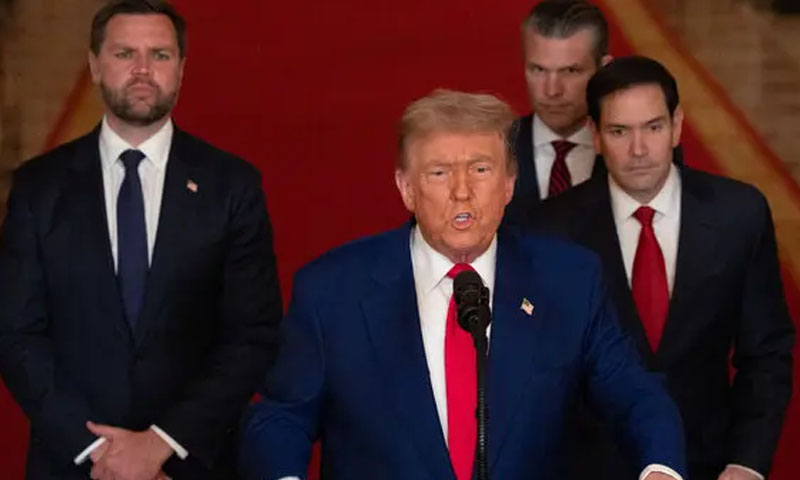
WASHINGTON: US President Donald Trump has launched a large-scale military operation against Iran in what analysts are calling the biggest foreign policy gamble of his presidency. Saturday’s strikes, coordinated with Israel, target Iran’s top military and political leadership, as well as its nuclear and ballistic missile capabilities.
Trump described the operation as “massive and ongoing” and said it aims to eliminate what he called imminent threats to the United States while offering the Iranian people a chance to “take over your government,” a statement interpreted by experts as an indirect call for regime change in Tehran.
Military Objectives
According to Trump, the campaign’s key goals include destroying Iran’s missile capabilities; neutralising Iran’s navy; disrupting Iran-backed armed groups across the region and preventing Iran from obtaining a nuclear weapon.
The Pentagon has named the operation “Epic Fury”, marking the first public acknowledgement of the strikes. A US official indicated that the operation is expected to last several days and acknowledged potential casualties among American forces.
Strikes and Iranian Response
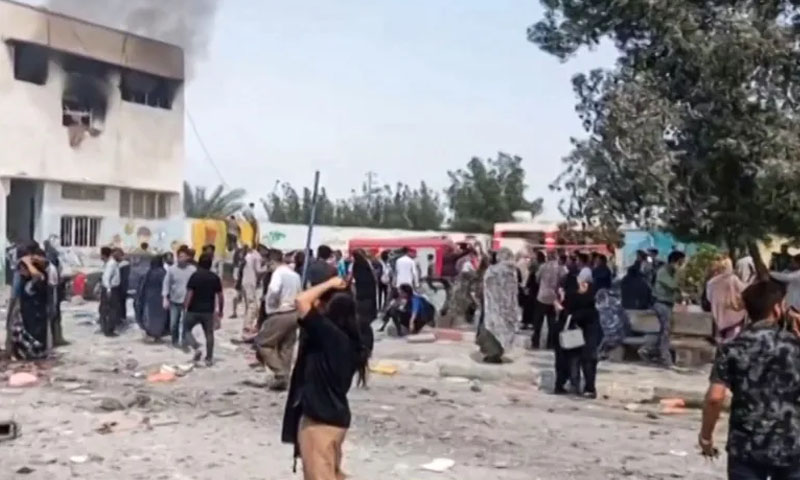
The first wave of attacks reportedly targeted Iranian officials. Ali Khamenei, Iran’s Supreme Leader, was not in Tehran at the time and was transferred to a secure location. Several senior commanders in the Islamic Revolutionary Guard Corps and political officials have reportedly been killed, according to sources close to the Iranian establishment.
Iran has retaliated by firing missiles at northern Israel and US military bases in the Gulf, including locations in Qatar, Kuwait, the UAE, Bahrain, and Saudi Arabia. The attacks have raised fears of a wider regional conflict.
Political and Strategic Risks
Experts caution that Trump’s push for regime change through air strikes is unlikely to succeed without ground support. “It’s hard to change the government from the air. It’s hard to change the minds of Iranians through the air,” said Jon Alterman, of the Center for Strategic and International Studies. Tyson Barker, former US official and Atlantic Council analyst, added that calls for Iranians to rise up could put civilians at risk without altering the regime.
Even if senior leaders are removed, analysts warn it could lead to chaos or even a military-led government more resistant to the West.
Trump’s approach represents a dramatic shift from his previous preference for quick, limited operations, such as the January raid in Venezuela that captured President Nicolas Maduro. Experts note that Iran is a far more formidable opponent, with more advanced missile and air defence capabilities than Venezuela, raising the stakes for prolonged regional conflict.
Intelligence and Diplomacy
Trump has justified the strikes by claiming Iran poses an immediate missile threat to the United States, though multiple intelligence reports dispute this assessment. Analysts also note that Iran has repeatedly denied any intention of developing nuclear weapons.
Saturday’s attacks have dashed hopes for diplomacy, coming after a round of nuclear talks in Geneva failed to produce a breakthrough. Trump’s aides had previously suggested that force could pressure Tehran into concessions, but Iran’s swift missile retaliation indicates that military strikes alone may not achieve political objectives.
Domestic and Regional Implications
Trump’s focus on Iran has overshadowed domestic issues, including inflation and economic concerns, ahead of the November midterm elections. The operation has also heightened tensions in the oil-rich Middle East, where US allies and bases are at risk.
Analysts are divided on whether the campaign will achieve its goals. Mark Dubowitz, CEO of the Foundation for the Defense of Democracies, said degrading Iran’s nuclear and missile programs could be considered a victory even if the government remains intact. Others warn that miscalculations could ignite a broader conflict across the region.
Conclusion
Saturday’s strikes mark a turning point in Donald Trump’s foreign policy, with his legacy now tied to a high-risk military gamble that could reshape US-Iran relations and the broader Middle East. While the full consequences remain uncertain, experts agree that the strikes have escalated tensions and placed the region on edge, potentially defining Trump’s international legacy for years to come.
You May Also Like