- WEB DESK
- November 4, 2026
Trump’s midterm setback: What analysts and commentators are saying
-

- WEB DESK
- November 4, 2026

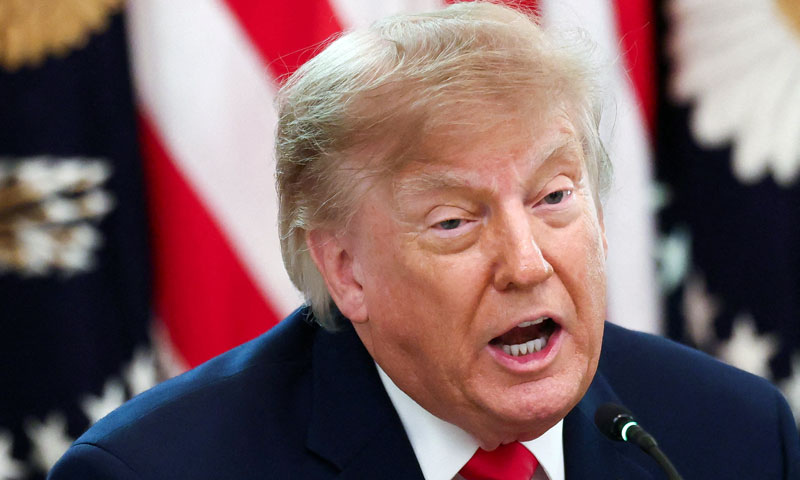
The scale of the Democrats’ victory in the November 3 US midterm elections has prompted a wave of sharp reactions from political commentators, with the party’s capture of both chambers of Congress being read as more than a setback for Republicans: it is a warning about the limits of President Donald Trump’s political influence and the strength of the coalition that returned him to office.
Democrats made significant gains in traditionally Republican states, taking Senate seats in Kansas, Texas, Ohio, Iowa and South Carolina, among others, while also winning control of the House. The results were driven in part by voter frustration over the cost of living, the war with Iran and the administration’s record. The outcome will leave Trump facing a Congress controlled by his opponents for the final two years of his term. Reuters described the results as a sweeping rebuke, while NPR’s analysis highlighted the prospect of intensified congressional scrutiny of the administration.
Conservative commentator Erick Erickson focused on what he saw as the political consequences of refusing to accept electoral reality. In a post on X, he wrote that the constitutional system had worked as designed, accusing Republicans of repeating a pattern of self-deception by blaming their defeat on gas prices and the war rather than confronting the wider reasons voters turned against them. His remarks suggested that explaining away the result could prevent the party from understanding the scale of its losses.
CNN commentator Van Jones described the 2026 midterm results as a major repudiation of President Donald Trump and his political movement, celebrating what he portrayed as a demonstration of American democracy’s ability to reject leaders who overreach. He said voters had rejected Trumpism just 24 months after it came to power, contrasting the outcome with countries where kleptocratic rulers consolidate power for decades.
Jones used the analogy of the Jonestown mass suicide to criticise Republicans for remaining loyal to Trump despite what he characterised as violations of the law and attacks on democratic institutions. He argued that by failing to challenge the president’s conduct, Republican politicians had tied their political fortunes to him and were now paying the price as their candidates lost races across the country.
“If you join a cult, at some point the cult leader takes you to Jonestown and tries to get you to drink the Kool-Aid,” Jones said, describing the election as a moment of reckoning for the Republican Party. He repeated that Republicans had reached this point because they had not stood up to Trump when he was “doing things that were wrong” and “running over our system”.
His remarks prompted an exchange with fellow CNN commentator Scott Jennings, who was sitting alongside him. After an unidentified host jokingly suggested Jennings check what was in his glass, Jennings responded that he could hear everything Jones was saying and was present throughout the discussion.
Jennings acknowledged the scale of the Republican losses, saying he would not “sugarcoat it” and describing the results as a “country-ass whooping” across the board.
The prospect of a weakened Trump presidency also drew attention. A former Trump administration official, Alyssa Farah Griffin, warned that the country might not be prepared for a “lame duck Donald Trump”, adding: “Buckle up, folks.” The remark captured concerns about how the president might respond to losing the congressional majorities that had largely allowed him to advance his agenda with limited resistance.
The role of billionaire Elon Musk in the election also became a subject of commentary. Mehdi Hasan highlighted a post by journalist Susan Glasser noting that Musk had spent nearly half a billion dollars on the election, apparently without securing the political outcome he sought. Hasan mocked Musk’s political record, linking the result to the setbacks associated with his earlier government efficiency initiative, DOGE.
Hasan also looked beyond the immediate election results, suggesting that Democratic victories in Georgia and Ohio could strengthen the national profiles of Jon Ossoff and James Talarico as potential contenders for the 2028 presidential race. Their victories, alongside Democratic gains in state-level contests, point to a party beginning to consider its next generation of leadership.
The campaign’s cultural and identity politics also featured in post-election discussion. A Zeteo discussion hosted by Hasan examined Vivek Ramaswamy’s defeat in Ohio through the lens of race, religion and assimilation, questioning whether financial success and efforts to appeal to Republican voters had overcome resistance to a Hindu Indian candidate. The discussion reflected broader debates about who is accepted within the Republican coalition, although it offered an interpretation rather than proof of voters’ motivations.
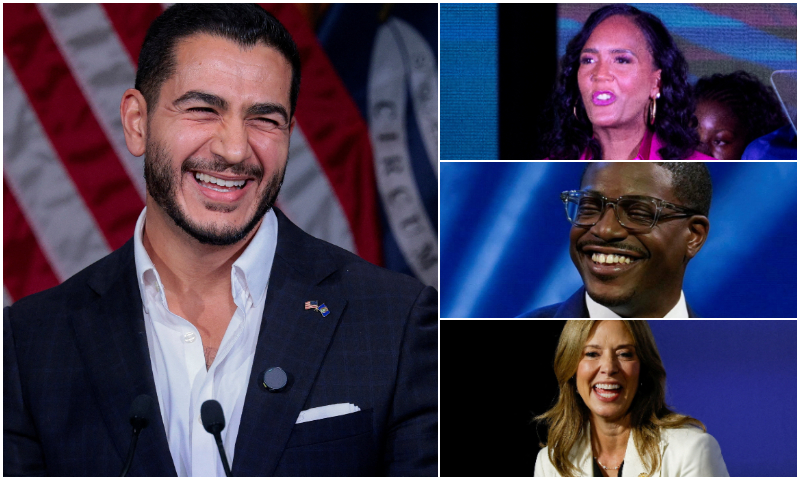
Meanwhile, the Michigan Senate contest between Democrat Abdul El-Sayed and Republican Mike Rogers illustrated how national ideological disputes shaped individual races. The candidates offered sharply different positions on healthcare, Israel and Gaza, artificial intelligence and economic policy, while both sought support beyond their traditional voter bases.
Some analysts also argued that President Donald Trump’s involvement in Republican primaries contributed directly to the party’s Senate defeats. Thomas Kahn, a professor at American University, said Trump’s intervention in Texas had cost Republicans a seat they could have retained, arguing that incumbent Senator John Cornyn would have been a strong candidate for re-election.
North Carolina was another example, Kahn said. Republican Senator Thom Tillis had opted not to seek another term after falling out with Trump, who threatened to support a primary challenger when Tillis opposed Medicaid cuts in the president’s tax-and-spending bill. Kahn said Tillis’s departure effectively handed the seat to Democrats, adding that Democratic candidate Roy Cooper would not have entered the race had the incumbent stayed on.
Former North Carolina Governor Pat McCrory also blamed Trump’s primary interventions for deepening divisions within the Republican Party. He pointed to South Carolina, where the president’s disputes with two local congressmen had further fractured the party.
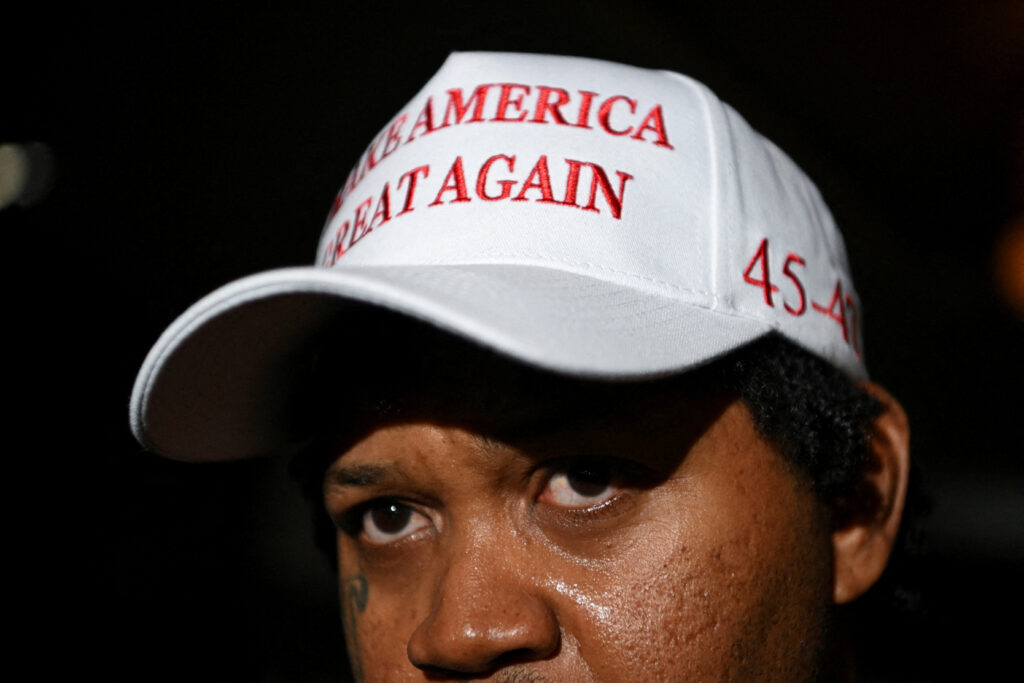
McCrory said Trump had also lost touch with the working-class voters who once formed the backbone of his support. “I think President Trump’s greatest strength was he had a common touch with the working class people,” he said. “He lost that skill. He better regain that skill for the good of the country.”
Taken together, the reactions point to a political landscape transformed by the midterms. Democrats now have the congressional power to block legislation, scrutinise the administration and challenge presidential nominations. For Republicans, the immediate question is whether they will treat the result as a temporary protest over prices and foreign policy or confront a broader loss of confidence in Trump’s leadership. The answer could shape not only the remainder of his presidency but also the contest for the Republican Party’s future.
You May Also Like
- WEB DESK
- November 4, 2026
Pakistani leaders react to Trump’s crushing midterm defeat
- AFP
- November 4, 2026