- Aasiya Niaz
- 16 Minutes ago
Trump’s Pearl Harbor remark stuns Japanese PM during White House meeting
-

- Aasiya Niaz
- 4 Minutes ago
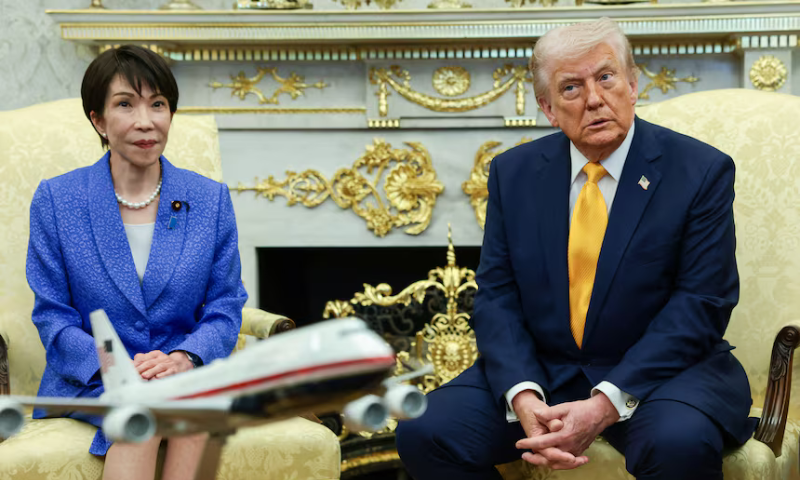
US President Donald Trump has sparked criticism after making a Pearl Harbor remark during a meeting with Japan’s Prime Minister Sanae Takaichi, referencing one of the most sensitive moments in US-Japan history.
The comment came during discussions at the White House on Thursday, when Trump was asked why the United States had not warned allies ahead of strikes on Iran last month.
"Why didn't you tell me about Pearl Harbour?"
— Sky News (@SkyNews) March 19, 2026
Donald Trump replies to a reporter, after he is questioned about why he did not tell U.S. allies about his plan to strike Iran, during his meeting with Japan's PM
Read more: https://t.co/P2JDaUI1jo
📺 Sky 501 and YouTube pic.twitter.com/yNRWwqpcw3
“Who knows better about surprise than Japan? Why didn’t you tell me about Pearl Harbor?” Trump said, invoking the 1941 attack.
The remark, made in front of the Japanese prime minister, drew attention for its tone and timing, with reports suggesting it prompted a visible reaction in the room.
According to a Japanese journalist present, Takaichi appeared taken aback, with her expression shifting as the reference was made. Observers noted her discomfort, highlighting the sensitivity of the issue in a diplomatic setting.
While some laughter was heard among those present, the comment also triggered unease, particularly given the historical weight of Pearl Harbor, where Japan’s surprise attack on 7 December 1941 killed more than 2,300 US military personnel and led to the United States entering World War II.
Despite the wartime past, the US and Japan have since become close allies, with leaders from both countries often emphasising reconciliation rather than revisiting historical tensions in public remarks.
Trump’s comment, however, briefly brought that history back into focus during talks that were expected to centre on regional security and tensions involving Iran.
Public reaction has also reflected that divide. Some observers described the moment as inappropriate given the setting, while others viewed it as a typical off-the-cuff remark from the US president.
Neither the White House nor Japanese officials immediately issued detailed responses to the exchange.
The episode adds to a pattern of unscripted comments by Trump during high-level meetings that have drawn scrutiny, particularly when referencing historically sensitive events.
You May Also Like