- Web
- Mar 18, 2026
TTP serious threat to Central, South Asia, receives support from Afghan Taliban: UN told
-

- Web Desk
- Nov 20, 2025
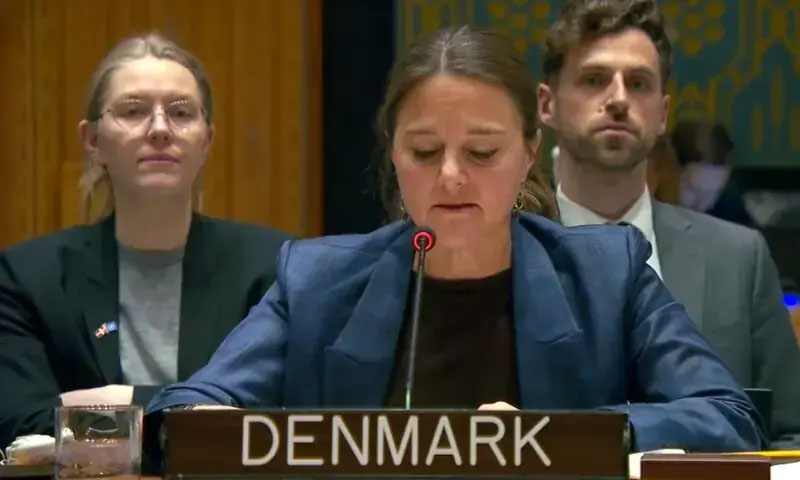
NEW YORK: Denmark has termed the presence of the banned Tehreek-e-Taliban Pakistan (TTP) in Central and South Asia a “serious threat,” stating that the militant group is receiving logistical and financial support from Afghanistan’s interim authorities (Taliban).
Denmark shared these findings on Thursday during a meeting in its capacity as chair of the UN Security Council committee overseeing sanctions against ISIS and al-Qaeda.
The presence of TTP militants in Afghanistan has long been a point of contention between Islamabad and the Taliban administration. After the Taliban returned to power in Kabul in 2021, Pakistan accused them of sheltering thousands of TTP fighters, who have intensified attacks on Pakistani security forces, particularly in Khyber Pakhtunkhwa and Balochistan.
Denmark’s Deputy Permanent Representative Sandra Jensen Landi told the meeting that TTP has around 6,000 fighters and poses another serious threat to the region, receiving logistical and financial backing from Afghanistan’s interim authorities.
She said that TTP has carried out multiple major attacks in Pakistan from Afghan territory, some of which resulted in mass casualties.
Jensen Landi also presented an assessment of the growing threats from ISIS, al-Qaeda and their affiliates, based on the latest findings of the Analytical Support and Sanctions Monitoring Team.
She said that the ISIS, the al-Qaeda and their partner groups remain active in the region, with the highest intensity observed in Africa. These groups continue to glorify violence on social media, recruit young people, and raise funds, while the use of cryptocurrency poses an increasing challenge to the enforcement of sanctions.
Jensen Landi noted that after suffering losses in the Middle East, the ISIS has shifted its centre of gravity to Africa, where the Islamic State West Africa Province (ISWAP) has expanded its activities and propaganda.
She said that the ISIS-K is among the most serious threats in Central and South Asia, with at least 2,000 fighters under the leadership of Sanaullah Ghafari, targeting Shias, Afghan interim authorities, and foreign nationals.
According to her, the movement of foreign terrorist fighters between Syria, Africa and Central Asia remains a constant concern for member states.
Jensen Landi also said the core leadership of al-Qaeda remains weak and largely ineffective, while affiliate groups, including Jama’at Nusrat al-Islam wal-Muslimeen, have used local grievances to their advantage. Al-Qaeda in the Arabian Peninsula also remains active in incitement and fundraising.
She said that overall, ISIS and al-Qaeda have proven themselves resilient, adaptive and opportunistic, exploiting regional instability, weak governance and modern technology to maintain influence. This underscores the need for continued monitoring and multilateral cooperation under the 1267 sanctions regime.
After her briefing, Pakistan’s Deputy Permanent Representative Usman Jadoon told the meeting saying that the global terrorism landscape is constantly evolving, adapting to a rapidly changing world where new and emerging threats are rising under the shadow of fast-paced technological advancements.
Jadoon said long-standing unresolved conflicts, external interventions and the root causes of terrorism continue to persist, sustaining the threat.
He said that as a frontline state against terrorism, Pakistan has made immense sacrifices in efforts to eradicate it, including losing more than 80,000 lives and suffering billions of dollars in economic losses.
Jadoon stated that al-Qaeda was largely dismantled due to Pakistan’s efforts.
He said Pakistan’s brave security and law enforcement agencies are confronting terrorism challenges emanating from Afghanistan, where ISIS-K, the banned TTP and their affiliates, including the banned BLA and the Majeed Brigade, operate under the patronage of their hosts and with the support of Pakistan’s major adversary.
Jadoon stressed that the 1267 sanctions regime—the Security Council’s framework for imposing sanctions on ISIS and al-Qaeda—must reflect ground realities.
He said its scope should be broadened to list individuals and entities irrespective of religion, race or nationality.
He added that listing and delisting matters must be handled transparently, fairly and impartially, free from political influence.
Jadoon further said that to adopt a zero-tolerance approach toward terrorism, the UN’s counter-terrorism architecture must also have the tools to identify violent, ultra-nationalist, far-right, Islamophobic and other extremist groups worldwide.
You May Also Like