- Web
- 7 Hours ago
Turbulent week for US airlines: smoky scare in Delta, broken windshield in United
-

- Web Desk
- Oct 20, 2025
A smoky odor onboard a Delta Air Lines plane triggered a wave of unexpected flight cancellations leading to major disruption for travelers on Monday, October 20. That in turn caused delays, confusion, and growing frustration across the US aviation network.
Reports of grounded flights poured in from key Delta hubs including Atlanta’s Hartsfield-Jackson International Airport and Minneapolis-St. Paul. According to live tracking data from FlightAware, over 110 flights were cancelled in a matter of hours, with more than 450 delays at Atlanta alone by mid-afternoon.
Although Delta has not issued a comprehensive explanation, aviation analysts suggest a combination of cascading operational failures may be to blame. The Federal Aviation Administration (FAA) has acknowledged that ongoing staffing shortages – exacerbated by a partial federal government shutdown – are contributing to widespread air traffic delays and interruptions.
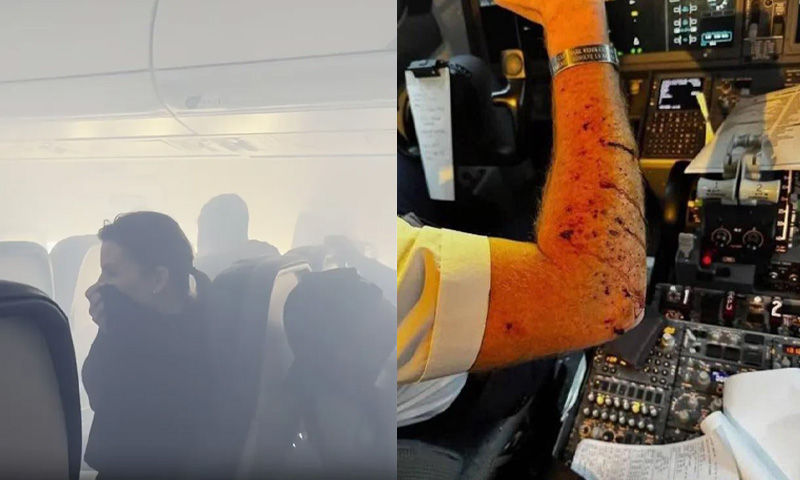
Earlier, passengers aboard a Delta flight reported a strong smoky smell mid-flight, adding to concerns over the airline’s recent run of mishaps. No injuries were reported, but the incident has intensified scrutiny of Delta’s operations in recent weeks.
UNITED AIRLINES FLIGHT GOT HIT BY ‘DEBRIS’
Meanwhile, United Airlines is also under the microscope after a Boeing 737 Max 8 en route from Denver to Los Angeles was forced to divert to Salt Lake City on Thursday, October 16, when a windshield cracked mid-air.
United Flight 1093 landed safely with 134 passengers and six crew members onboard. A replacement aircraft was dispatched to complete the journey, while the affected jet is undergoing inspection. The National Transportation Safety Board (NTSB) has launched an investigation and confirmed that the damaged cockpit windshield has been sent to its labs for further analysis.
Although officials haven’t confirmed any injuries, photos shared with local media appeared to show a crew member with minor forearm injuries, and exterior images of the plane revealed significant damage to the windshield’s upper corner.
Upon landing, the pilot allegedly informed ground crews that the object resembled “space debris.” Although fragments from defunct satellites or rockets can travel at speeds over 25,000 kilometers per hour, they almost never descend into commercial flight altitudes. Aviation experts remain skeptical of this theory, with the Federal Aviation Administration (FAA) estimating the odds of being injured by falling space debris at less than one in a trillion.
You May Also Like