- Muhammad Faizan Khan
- October 31, 2026
Turkish FM dismisses Indian disinformation, says Makkah defence pact will be ‘game changer’
-

- WEB DESK
- October 31, 2026
Turkiye’s Foreign Minister Hakan Fidan has described the defence agreement signed by Turkiye, Pakistan and Saudi Arabia as a potential “game changer”, dismissing what he called disinformation campaigns by India, Israel and other countries aimed at undermining the emerging alliance.
Responding to a question about criticism of the Makkah Joint Defence Agreement (MJDA) in an interview, Fidan said attempts to discredit the initiative through media campaigns and misinformation reflected how significant its potential impact was.
“When we look at the countries you mentioned, Israel, India, Greece, etc., we actually realise how significant and impactful a move the Makkah alliance really is,” he said.
He added that the efforts to undermine the agreement, signed only three months ago, appeared aimed at stopping the initiative before it could develop.
“That was signed only three months ago, and the fact that it is taking such rapid steps is clearly an attempt to end something before it even starts,” Fidan said.
The Turkish foreign minister said the criticism also indirectly demonstrated the threat perception among countries opposed to the alliance.
“Actually, what you are mentioning is an approach that indirectly reflects the threat perception they see here,” he said, adding that Ankara was aware of the criticism but did not consider it serious.
“We see these, we look at them, but they are really not things to be taken seriously,” he said.
Expressing confidence in the agreement’s future, Fidan said the alliance would emerge as an influential regional platform.
“You will see that the Makkah alliance will be a game-changing platform, God willing,” he said.
Makkah Joint Defence Agreement (MJDA)
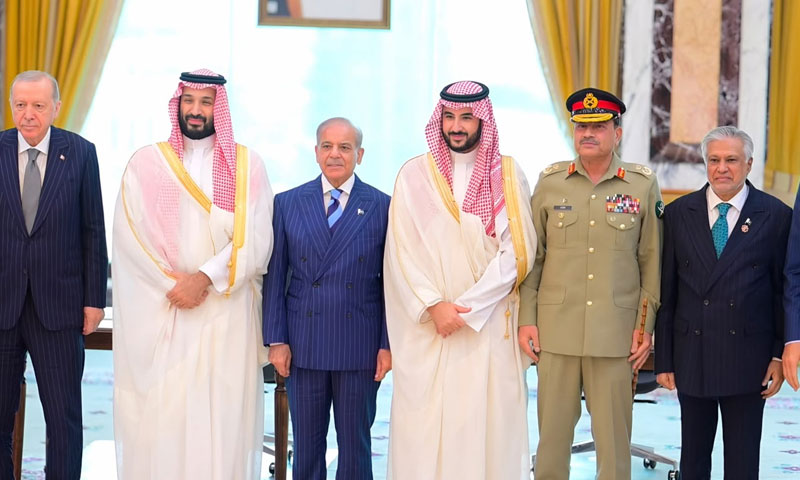
The Makkah Joint Defence Agreement was signed by Pakistan, Saudi Arabia and Türkiye on August 7, 2026, at Al-Safa Palace in Makkah during a summit attended by Prime Minister Shehbaz Sharif, Turkish President Recep Tayyip Erdogan and Saudi Crown Prince and Prime Minister Mohammed bin Salman. The accord, announced by Pakistan’s Foreign Office, aims to strengthen collective security, expand defence cooperation and promote regional stability.
A central provision of the agreement states that an armed attack against any one of the three signatories will be treated as an attack against all three, committing them to collective deterrence against aggression. It also provides for broader cooperation across defence sectors, building on the countries’ longstanding military ties and shared security interests.
The pact followed nearly a year of negotiations and was signed amid heightened instability in the Middle East, particularly following the conflict involving Iran, the United States and Israel. The three countries have increasingly sought closer coordination in response to changing regional security challenges.
The agreement builds on decades of military cooperation. Pakistan has provided Saudi Arabia with military training and technical assistance, while Islamabad and Ankara have expanded collaboration in naval, aerospace and defence industries. Saudi Arabia has also strengthened its defence partnership with Türkiye, including through a major procurement agreement for Turkish armed drones in 2023.
The three signatories bring substantial military and strategic capabilities to the arrangement. Türkiye is a major NATO military power, Saudi Arabia is a leading Arab military and economic force, and Pakistan is the only nuclear-armed country in the Muslim world.
The agreement has been presented by the three governments as a framework for closer security coordination, collective deterrence and wider defence collaboration, rather than a replacement for their existing bilateral partnerships.