- Web Desk
- 1 Minute ago
Turning Point halftime show: why Trump’s alternative Super Bowl event became a flashpoint
-

- Aasiya Niaz
- Feb 09, 2026
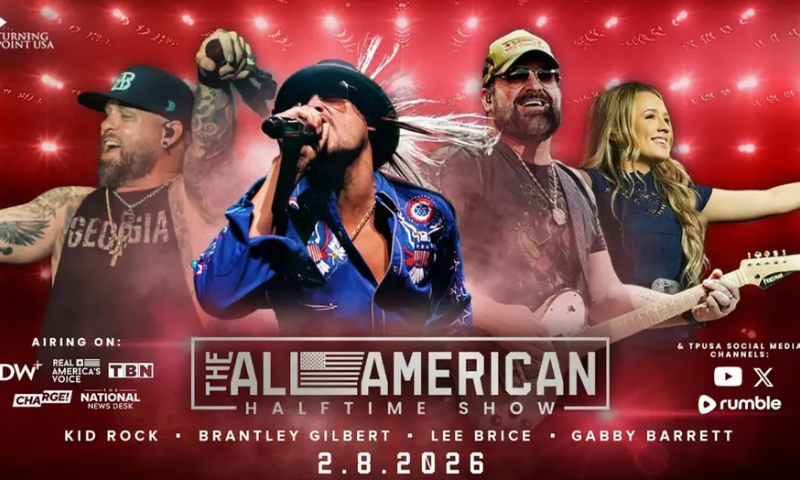
The Turning Point halftime show became one of Super Bowl weekend’s most polarising side stories, not because it challenged the NFL’s official halftime spectacle, but because it turned the game into a cultural battleground.
Officially branded The All-American Halftime Show, the event was organised by Turning Point USA as counter programming to the Super Bowl halftime performance headlined by Bad Bunny. In the lead-up to the game, conservative figures criticised the NFL’s choice of a Spanish-language Puerto Rican artist, laying the groundwork for an alternative show framed as a patriotic response.
That tension escalated after Donald Trump publicly slammed Bad Bunny’s performance as “one of the worst, ever”, amplifying interest in the Turning Point event and pushing it into wider public debate.
How many people watched the Turning Point halftime show?
Turning Point USA has not released independently verified ratings, but publicly visible livestream figures suggest the show drew several million viewers online, primarily through YouTube. That audience was a fraction of the Super Bowl halftime show’s reach, which typically exceeds 100 million viewers worldwide.
Still, the comparison itself became part of the controversy, with searches for how many people watched the Turning Point halftime show spiking alongside queries about Bad Bunny’s viewership.
Who performed and why the lineup mattered
The show was headlined by Kid Rock, alongside country artists Brantley Gilbert, Lee Brice and Gabby Barrett.
Kid Rock’s involvement drove much of the attention. His long-standing alignment with conservative politics made him a lightning rod, pulling the event beyond music coverage and into culture-war territory.
Where it aired and why that fuelled confusion
Despite widespread searches asking what channel the Turning Point halftime show was on, the event did not air on television. It streamed digitally, primarily via Turning Point USA’s YouTube channel and affiliated platforms, which only increased curiosity and post-halftime searches.
Why it mattered
Founded by Charlie Kirk, Turning Point USA framed the show as a cultural statement rather than simple entertainment. That positioning turned it into a proxy fight over language, identity and who the Super Bowl stage represents.
The result was a familiar imbalance. The Turning Point halftime show did not dominate viewership, but it dominated conversation. By sitting at the intersection of politics, entertainment and America’s biggest sporting event, it became one of the most argued-over moments of Super Bowl weekend, long after the final whistle.
You May Also Like