- WEB DESK
- September 14, 2026
Two years after landslide win, Starmer suffers major election blow
-

- Sadia Basharat
- May 8, 2026
WEB DESK: Prime Minister Sir Keir Starmer is facing the gravest crisis of his premiership today as early local election results signal a seismic shift in the British political landscape.
Just two years after a historic landslide victory, the Labour Party has suffered “soul-destroying” losses across its traditional heartlands, sparking immediate questions over Starmer’s authority and long-term future at Number 10.
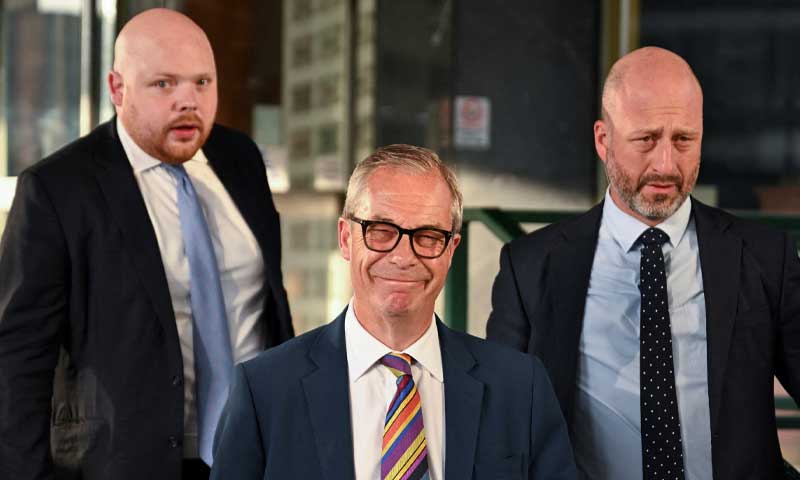
The electoral map of England turned turquoise in the early hours of Friday morning as Nigel Farage’s Reform UK capitalised on widespread voter disillusionment, according to Reuters.
In a series of results that shocked Westminster, Labour was “wiped out” in several of its most dependable strongholds.
The party lost control of Tameside council for the first time in nearly half a century, while in the former mining hub of Wigan, Reform candidates successfully seized every single seat Labour was defending.
With the Green Party also making gains on the left, the results underscore a dramatic fracturing of the UK’s traditional two-party system.
A ‘Historic Change’ as reform UK sweeps former strongholds
The scale of the defeat has been described by Britain’s leading pollster, Sir John Curtice, as “as bad as anyone expected for Labour, or worse.”
While mid-term blues are common for incumbent governments, the flight of voters to Reform UK suggests a deeper cultural and political de-alignment.
Nigel Farage hailed the results which saw his party gain over 300 council seats as a “historic change” that could see Reform become the official opposition in both Scotland and Wales.
For many in the Labour “Red Wall,” the anger appears rooted in a perceived lack of direction and a series of high-profile government missteps.
Critics point to Starmer’s frequent policy U-turns and the controversial appointment of Peter Mandelson as US Ambassador who was subsequently dismissed over his links to Jeffrey Epstein as key factors eroding public trust.
Labour MP Rebecca Long-Bailey described the losses in her Salford constituency as “soul-destroying,” reflecting a growing anxiety among backbenchers that the party is losing touch with its working-class base.
Leadership doubts loom despite cabinet support
Despite the electoral drubbing, the Prime Minister’s allies have been quick to circle the wagons. Defence Minister John Healey insisted that Starmer remains the right man to “turn it round,” arguing that the British public has no appetite for the “potential chaos” of a leadership contest.
For now, Starmer is shielded by Labour’s historical reluctance to oust its own leaders and the fact that potential successors, such as Andy Burnham or Angela Rayner, are not currently positioned to launch an immediate challenge.
However, the pressure is unlikely to subside. If the final tallies from Scotland and Wales confirm a complete collapse in support, calls for Starmer to set out a “timetable for departure” are expected to intensify.
With the next general election scheduled for 2029, the Prime Minister now faces a grueling battle to convince both his party and the country that his government can still deliver on the promise of stability that won them power only two years ago.
You May Also Like


- WEB DESK
- September 14, 2026
Petrol price rises by Rs4.42, diesel by Rs6.10 per litre

- WEB DESK
- September 14, 2026