- Reuters
- October 16, 2026
UN frontrunner Grynspan says UN has become ‘too risk-averse’
-

- Reuters
- October 16, 2026
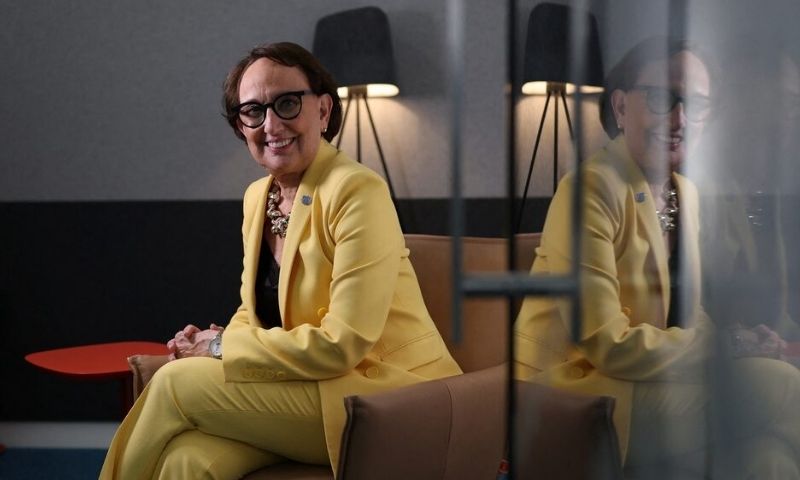
UNITED NATIONS: United Nations secretary-general frontrunner Rebeca Grynspan has said the organisation has become “too risk-averse” and must be willing to face diplomatic failures and try again to advance peace efforts.
In an interview with Reuters on Thursday, the Costa Rican economist said the UN’s next leader must be prepared to take risks, particularly through quiet diplomacy when major powers are at war.
“I think that the UN has become too risk-averse,” Grynspan said. “You are the one that has to take the cost of rejection, the cost of failure, and try again. That’s the job of the UN.”
Her remarks came ahead of a Security Council poll scheduled for Friday to assess support for candidates seeking to succeed Secretary-General Antonio Guterres, whose second five-year term ends on December 31.
Grynspan also called for job cuts, reduced bureaucracy and an end to duplication among UN agencies. She argued that cost-cutting alone would not restore the organisation’s effectiveness as it faces shrinking resources and declining political influence.
The former Costa Rican vice-president and current head of the UN Conference on Trade and Development is considered a leading contender for the position. Her comments highlight the challenges facing the next secretary-general as the organisation seeks to strengthen its diplomatic role and make better use of limited resources.
She urges a more proactive UN
Grynspan, 70, a former Costa Rican vice president, called for a more proactive UN after the 193-member body was largely sidelined in wars in Ukraine and the Middle East and as it faces pressure from US President Donald Trump’s administration to cut costs.
“Cost cutting is not enough. Yes, you can cut costs and make everything worse. If you don’t reform, you will do everything worse than before. That’s why I talk about refocusing,” Grynspan, an economist, told Reuters.
Pointing to her tenure as head of the UN Conference on Trade and Development, Grynspan said she cut 20% of posts while sharpening its focus.
US Ambassador to the UN Mike Waltz has criticised what he called bureaucratic “bloat” and duplication at the UN and called for a clearer focus on peacekeeping.
Grynspan said she shared Waltz’s concerns: “Some consolidation and rethinking of how to carry a mandate is necessary in many of the fields that have been expanding in the UN.” She said she would appoint a person inside her office to “impose the discipline that is necessary for mandate implementation.”
Grynspan pointed to her role in negotiations over the 2022 Black Sea Grain Initiative as a model for handling conflicts involving a permanent Security Council member. Russia withdrew from the agreement in 2023 and complained that key parts of the deal were never implemented.
“We didn’t go to the press … It was quiet diplomacy that worked,” she said. “This is not about being able to have total harmony in the international affairs … it’s about doing good.”
Grynspan said the UN already had the expertise, information and presence on the ground needed to play a larger diplomatic role but needed leadership capable of bringing those resources together.
“Peacemaking has to be at the center of the efforts of the UN,” she said, citing a rise in deadly interstate conflicts and calling for greater emphasis on mediation as well as prevention.
Grynspan also called for greater flexibility in peacekeeping, saying the secretary-general should work closely with the Security Council’s five permanent members to find alternative models when traditional peacekeeping is not viable.
Pointing to the multinational support mission in Haiti, she said: “Why should we be so defensive? Why should it be only a UN peacekeeping force? … Let’s try to make Haiti work and learn from the experience.”
‘Game not over’
Grynspan, who will become the first female secretary-general in the UN’s history if she wins, has come out ahead in four out of five informal straw polls, obtaining nine votes in favor last week, according to diplomats close to the process.
Securing the recommendation requires at least nine positive votes out of the 15 countries, and no “discourage” votes from the five permanent members: the US, China, Russia, France, and Britain. Friday’s poll will for the first time use color-coded ballots revealing whether a veto power opposes a candidate.
Grynspan said she was the only candidate who has consistently reached nine votes in her favor, but she “wouldn’t be surprised” if she got a discouraging vote from a veto power. She said such opposition has been overcome in past races.
Diplomats at the UN say several senior figures, including former and current foreign ministers and country leaders, are seriously considering entering the race.
Grynspan said she expected new names could enter the race after the Friday vote and added: “The game is not over, we will have to continue working.”
You May Also Like