- Web
- 6 Hours ago
UN marks Islamophobia Day, warns of rising hate and discrimination against Muslims
-

- Web Desk
- Mar 17, 2026
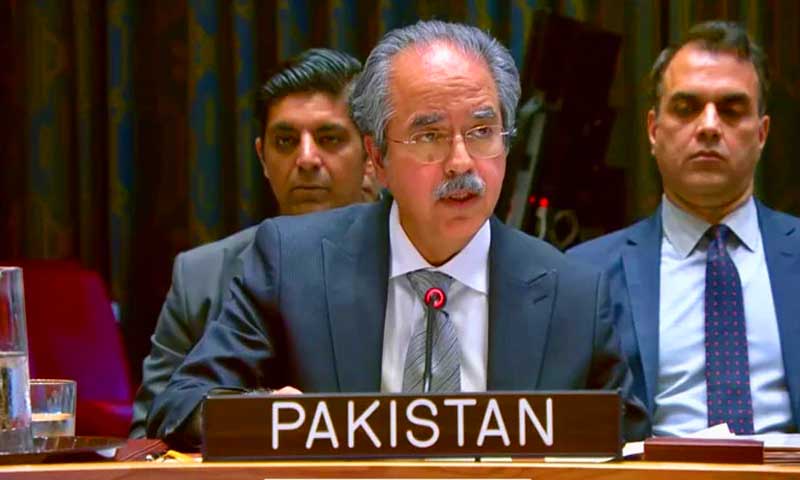
WEB DESK: Pakistan, which led the 2022 UN resolution establishing the observance, stressed that anti-Muslim hatred is worsening globally, with political rhetoric, digital platforms and mainstream discourse all contributing to its spread.
This year’s observance comes against a backdrop of heightened global instability, particularly the ongoing conflict involving Iran, which analysts say has fuelled a renewed surge in Islamophobic narratives.
Reports point to a rise in online hate speech and dehumanising rhetoric directed at Muslims, reinforcing a broader climate of intolerance that the UN and its partners have increasingly warned about.
Marked annually on 15 March, the International Day commemorates the victims of the Christchurch mosque attacks, in which 51 worshippers lost their lives.
The day was designated by the United Nations General Assembly (UNGA) following the adoption, by consensus, of a resolution introduced by Pakistan on behalf of the Organisation of Islamic Cooperation (OIC). At a high-level UN event on 16 March, the OIC reiterated that Islamophobia has reached “unprecedented” levels, pointing to its normalisation in political discourse and its amplification through emerging technologies, including artificial intelligence.
At a separate event at UN headquarters in New York, Secretary-General António Guterres urged countries to “work together” to counter the growing tide of anti-Muslim hatred. Calling for a rejection of “narratives of fear and exclusion”, he warned that even “subtle biases” can “shape lives, erode trust, and send a clear message about who is seen as belonging and who is not”.
“The consequences are painfully real,” he said, citing harassment, intimidation, vandalism, threats and attacks targeting Muslims and places of worship as an “assault on the values that underpin peaceful, inclusive societies everywhere”.
UNGA President Annalena Baerbock highlighted the role of technology in exacerbating the problem, noting that platforms designed to connect people are now “accelerating the spread of misinformation and prejudice at an unprecedented speed”. She stressed that tackling Islamophobia is essential to safeguarding “our shared humanity”.
Saudi Arabia’s ambassador to the UN, Abdulaziz Alwasil, called for decisive international action, emphasising the need for stronger legal protections, education and enhanced cooperation among states to combat anti-Muslim discrimination.
Türkiye, which co-organised the UN event, underscored the importance of a “common and resolute stance against intolerance, discrimination and violence targeting Muslims”, calling for collective global action.
Pakistan’s Permanent Representative to the UN, Asim Iftikhar Ahmad, warned that “Islamophobia today is not simply prejudice against a religion”.
“It is the systematic stigmatisation of a people, the denigration of an identity, and the normalisation of hostility towards a community of nearly two billion human beings,” he said.
He added that such narratives translate into tangible discrimination, including barriers to employment, unequal access to education, and profiling in law enforcement and immigration practices.
The Pakistani envoy urged the international community to “move beyond expressions of concern to collective and decisive action”, backing a comprehensive global plan to counter Islamophobia.
Global response
In the United States, the debate around Islamophobia has gained fresh urgency after Republican Representative Andy Ogles of Tennessee drew criticism for claiming that Muslims “don’t belong in American society”.
Civil rights groups and Democratic lawmakers condemned the remarks, describing them as part of a troubling pattern of political Islamophobia.
The US government has also reiterated its support for broader international efforts, emphasising that extremism should not be linked to any particular faith.
In Britain, lawmakers have taken steps to address the issue. Parliament recently adopted an advisory definition of anti-Muslim hostility to help authorities identify and tackle discrimination, following record levels of hate crime with nearly 45pc of religious hate offences in the year to March 2025 targeting Muslims.
At the European level, the Council of the European Union reaffirmed that everyone has the right to practise their religion or belief free from discrimination or violence.
The Council urged member states to take action against intolerance while promoting peaceful coexistence and mutual respect.
You May Also Like