- Reuters
- September 18, 2026
UNESCO hails restoration of Lahore Fort’s historic Picture Wall
-

- Zafar Ali
- June 26, 2026
By Umer Sadique
LAHORE: UNESCO has hailed the completion of the conservation of the northern section of Lahore Fort’s historic Picture Wall as a landmark achievement in heritage preservation, describing it as one of the most ambitious conservation projects undertaken in Pakistan.
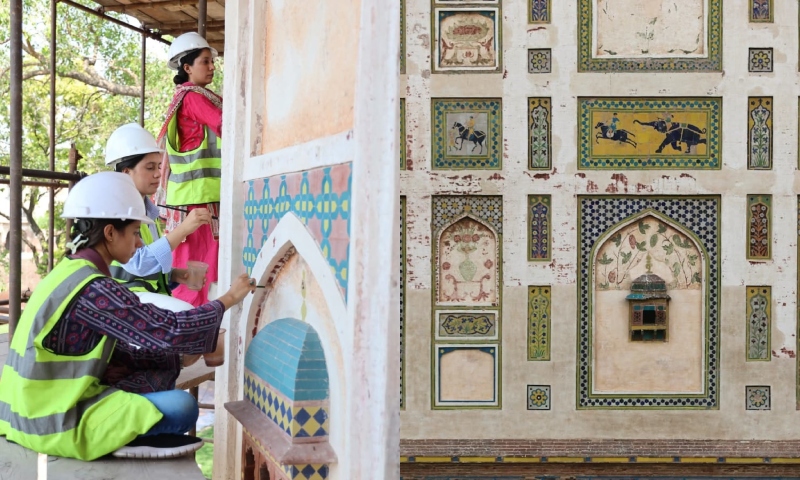
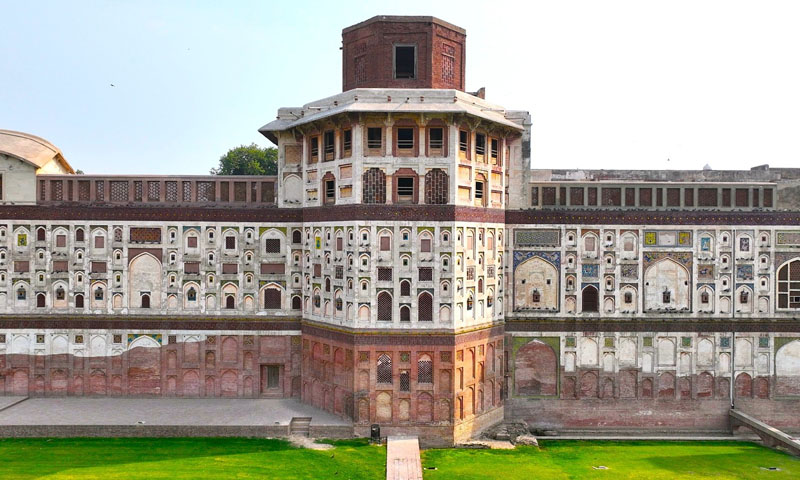
The Picture Wall, one of the world’s largest and most intricate mural walls, stretches nearly half a kilometre along Lahore Fort and tells a 400-year-old story through approximately 2,000 decorated panels arranged across three tiers.
Constructed during the reigns of Mughal emperors Jahangir and Shah Jahan in the 17th century, the wall features depictions of flora, fauna, hunting scenes, royal processions, angels, demons, animals, birds, geometric designs and floral motifs inspired by Indo-Persian folklore.
Its decorative elements were created using a range of traditional techniques, including glazed tile mosaic known as Kashikari, fresco painting, marble and red sandstone jali work, and terracotta relief.
The conservation project brought together multiple stakeholders, including the Aga Khan Cultural Service-Pakistan (AKCS-P), the Walled City of Lahore Authority (WCLA), UNESCO and several international donors.
The government of Punjab, through WCLA, provided institutional support, while the Royal Norwegian Embassy, the German Federal Foreign Office through the German embassy, and the United States Ambassadors Fund for Cultural Preservation contributed funding for the project.
The AKCS-P served as the implementing agency and carried out onsite conservation and restoration work throughout the initiative.
UNESCO Country Representative to Pakistan Fuad Pashayev described the completion of the project as a testament to the impact of scientific conservation and international cooperation.
“UNESCO is proud to have witnessed this journey and to see that the conservation work has been recognized as strengthening the Outstanding Universal Value of this exceptional World Heritage property,” Pashayev said.
“We encourage Pakistan to carry this model of excellence forward.”
Scientific Conservation Effort
The project was initiated in 2015 and formally launched for conservation in 2018 through a phased programme of scientific restoration. Conservation work was completed in April this year.
Before restoration began, the Picture Wall had suffered from extensive deterioration, including structural cracks, moisture damage caused by ineffective drainage systems, fungal growth, surface soiling and the loss of decorative sections due to detachment.
Conservation experts focused on preserving the wall’s authenticity rather than redesigning damaged sections.
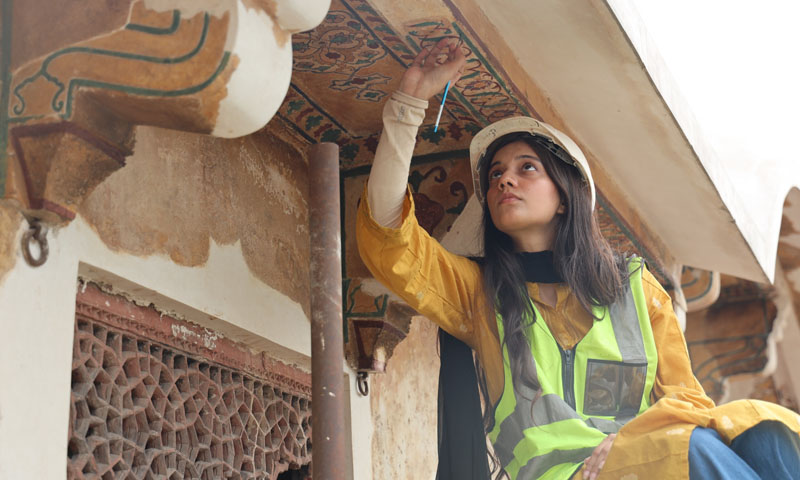
The restoration process included removing later-added plaster, treating biological growth, consolidating tile mosaics and glazes, reintegrating fresco work and applying compatible plaster to restore visual coherence while retaining historical integrity.
The project also involved excavating sections beneath the wall to reveal the original ground level.
Prior to physical conservation, specialists carried out comprehensive documentation of the entire Picture Wall using advanced technologies, including 3D laser scanning, Electronic Distance Measurement (EDM) devices and high-resolution ortho-rectified photography.
Officials said it was the first heritage conservation project in Pakistan to undertake scientific research and analysis on such a scale before restoration work commenced.
Training a New Generation
The initiative also contributed to the development of local expertise in heritage conservation by training a new generation of Pakistani conservators, architects, engineers, artists and craftspeople.
Project officials highlighted the significant participation of women, including conservation architects, archaeologists, chemists, ceramists and skilled artisans.
Traditional crafts such as Kashikari tilework and Naqqashi fresco painting were revived through apprenticeship programmes and specialised training workshops, strengthening long-term conservation capacity in Lahore and beyond.
AKCS-P Chief Executive Officer Tausif Khawaja described the Picture Wall as a key component of Lahore Fort’s UNESCO World Heritage status.
“This project has proven that world-class heritage conservation is achievable in Pakistan,” Khawaja said.
“Each panel was carefully considered through extensive discussion on what should be restored and what should remain untouched.”
To celebrate the completion of the conservation project, AKCS-P and WCLA plan to organise a grand opening ceremony that will welcome visitors and dignitaries from Pakistan and abroad.
You May Also Like


- WEB DESK
- September 17, 2026