- Web Desk
- 13 Minutes ago
Unity in Senate, discord in NA as Parliament confronts security and politics
-

- Web Desk
- Jan 20, 2026
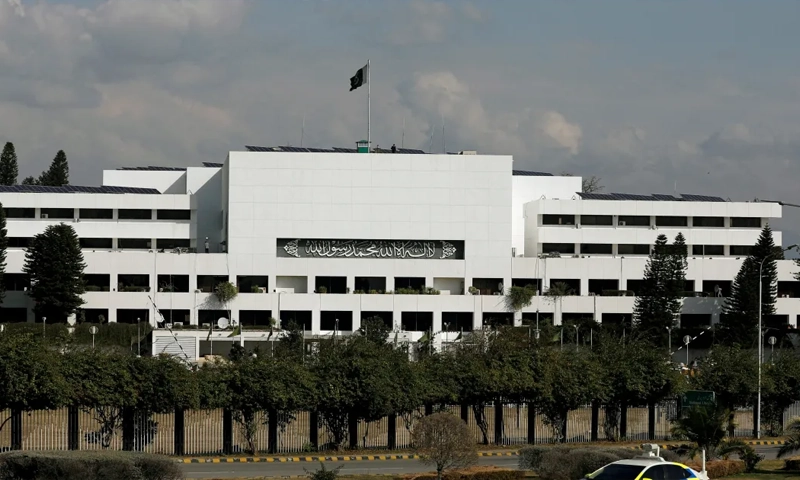
ISLAMABAD: Parliamentary proceedings on Tuesday unfolded across both houses with contrasting tones, as the Senate witnessed rare consensus and legislative progress, while the National Assembly remained sharply divided over security policy, governance failures and political accountability.
Senate: Consensus, legislation and a new opposition leader
The Senate session opened on a notably positive note following the appointment of Allama Raja Nasir Abbas as the new Leader of the Opposition. Law Minister Azam Nazeer Tarar said the development set a constructive tone for proceedings, stressing that political disagreement should not erode democratic decorum.
Tarar said the opposition leader conveyed a message of respect and cooperation towards government benches, adding that a healthier political environment was visible in the House. The Senate chairman later suspended Question Hour to facilitate proceedings.
In a show of cross-party unity, the Senate unanimously passed two major pieces of legislation, the Export Development Fund (Amendment) Bill 2026 and the National Tariff Commission (Amendment) Bill 2026. Both bills were presented by the law minister and cleared without debate, underscoring rare legislative harmony.
Security remained a key theme, with Minister of State for Interior Talal Chaudhry defending the implementation of the National Action Plan (NAP). He warned that creating confusion around NAP was “dangerous” and said all political parties had earlier agreed to the framework.
Chaudhry said intelligence-based operations were being carried out daily and criticised the Khyber Pakhtunkhwa government for what he described as administrative failure. He insisted counterterrorism measures would not be slowed to accommodate political interests.
Speaking for the opposition, Allama Raja Nasir Abbas said he would not compromise on principles, pledging to prioritise public relief and justice in the Senate. He warned that political instability and public mistrust could not be resolved without fairness, constitutionalism and accountability. Abbas also demanded the release of PTI’s founding chairman, saying past wrong decisions had inflicted lasting damage on the country.
National Assembly: Sharp exchanges over security, KP and political conduct
In the National Assembly, debate was far more confrontational, particularly over counterterrorism policy and provincial governance.
PTI leader Asad Qaiser questioned why the National Action Plan had not been fully implemented despite political consensus. He criticised the withholding of funds from Khyber Pakhtunkhwa and asked whether commitments made during past jirgas had been honoured. Qaiser called for a joint parliamentary session to discuss the deteriorating regional security situation.
Federal Information Minister Attaullah Tarar defended the government’s position, stressing the importance of responsible journalism and constructive criticism. He warned against what he termed “performative politics” on social media and said action would be taken against elements spreading unrest. Tarar also questioned the KP chief minister’s commitment to combating terrorism, noting that the province had borne heavy losses over the years.
PML-N Senator Rana Sanaullah, speaking later, said opposition viewpoints should be respected but urged political actors to move forward rather than remain trapped in past controversies. He called for dialogue on electoral reforms and greater consensus to strengthen democratic institutions.
Meanwhile, PPP leader Abdul Qadir Patel launched a scathing attack on MQM and Jamaat-e-Islami, blaming them for Karachi’s governance failures and challenging both parties to a public debate.
Tragedy, condolences and broader context
Outside legislative debate, members across party lines expressed concern over the deadly Gul Plaza fire in Karachi. The number of missing persons has risen to 85, according to officials. Leaders from PPP, MQM and the KP government offered condolences, while questions were raised over emergency response and safety compliance.
Despite political divisions, Tuesday’s proceedings highlighted a striking contrast between the two houses, with the Senate projecting cooperation and legislative momentum, and the National Assembly reflecting the deep political and security fault lines shaping Pakistan’s governance debate.
You May Also Like