
- Web Desk
- 32 Minutes ago
Unmanned hydrogen-powered aircraft completes maiden flight in China
-

- Web Desk
- 3 Minutes ago
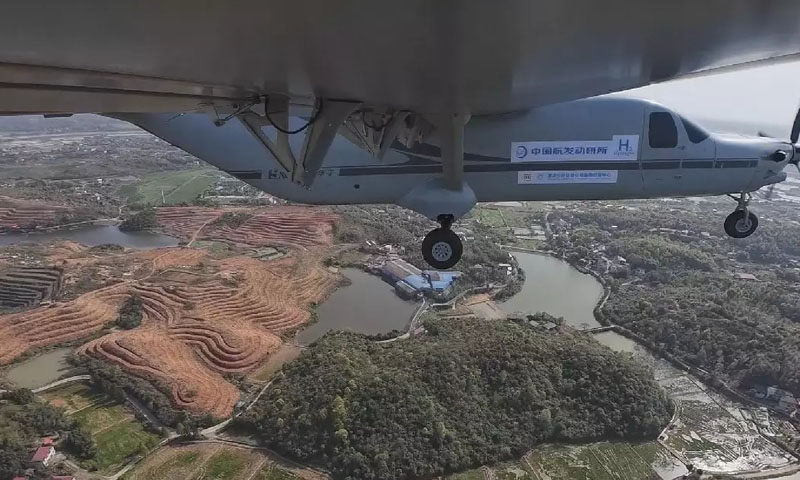
BEIJING: China has successfully completed a maiden flight of a hydrogen-powered turboprop engine, marking what developers say is a world first and a major step in the race to develop low-carbon aviation technologies.
A 7.5-metric-tonne unmanned cargo aircraft powered by the AEP100, a megawatt-class hydrogen-fueled turboprop engine developed by the Aero Engine Corporation of China (AECC), flew for about 16 minutes on Saturday from an airport in Zhuzhou, Hunan province. The aircraft covered roughly 36 kilometres at about 220 km/h and reached an altitude of around 300 metres before returning safely, state media reported.
The test marks the first time an engine of this class — capable of generating more than one megawatt of power — has been flown on a hydrogen fuel system, underscoring China’s ambitions to build a complete hydrogen aviation technology chain from core components to full flight-worthy systems.
Experts at AECC said the successful flight demonstrates a leap from technological development to engineering application for hydrogen-fueled aviation engines, laying groundwork for future industrial use. Hydrogen’s high energy content and zero carbon emissions make it an attractive option for reducing aviation’s environmental footprint, although challenges remain in storage, infrastructure and commercial scaling.
The AEP100 engine and its hydrogen variant have been under development for months. Prior to the flight, AECC completed ground tests of the engine and its hydrogen-fuelled variant, which met performance and stability benchmarks, according to industry reports.
Hydrogen-powered aircraft — which can use liquid hydrogen either in combustion engines or fuel cells — are seen by some analysts as a long-term route to decarbonise aviation. Research suggests hydrogen propulsion could begin to appear in niche sectors such as unmanned logistics and regional transport before wider adoption in commercial passenger aircraft later in the 2030s or beyond.
China’s successful flight comes amid a broader push to expand renewable energy and hydrogen industries as part of its long-term climate and industrial strategy, which includes commitments to expand low-carbon energy capacity and build new energy systems through 2030 and beyond.
While hydrogen aviation is still at an early stage globally, China’s achievement highlights growing interest and competition in clean aircraft propulsion technology.
You May Also Like