
- Web Desk
- Mar 24, 2026
UNSC: Pakistan strongly condemns India’s suspension of Indus Waters Treaty
-

- Web Desk
- Nov 07, 2025
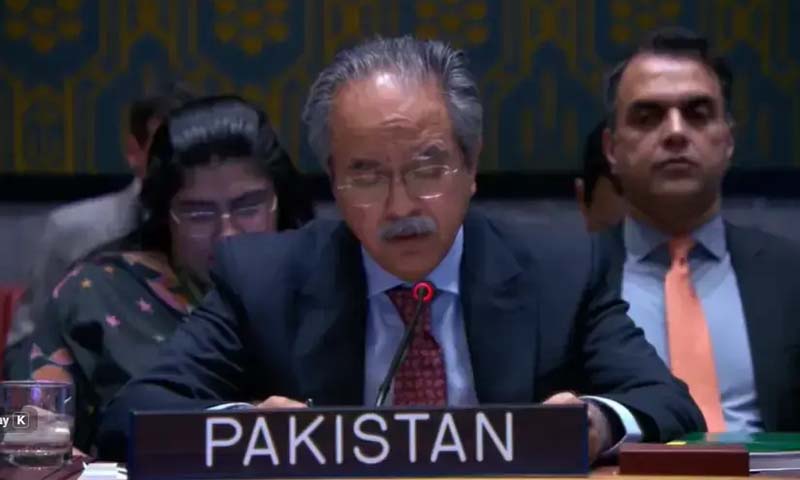
NEW YORK: Pakistan has strongly condemned India’s unilateral suspension of the Indus Waters Treaty, saying that such actions set a dangerous precedent of using natural resources as instruments of pressure.
Speaking at the United Nations Security Council, Pakistan’s Permanent Representative to the UN, Asim Iftikhar Ahmad, expressed concern over the growing trend of weaponising shared natural resources. He cited India’s suspension of the Indus Waters Treaty as a prime example.
In his address, Ambassador Ahmad warned that India’s move should be a matter of grave concern for every member of the Security Council and the international community.
“For over six decades, this treaty has stood as a model of cooperation, ensuring fair and predictable distribution of the Indus waters between Pakistan and India—even during times of war,” he said.
Ahmad added that India’s unlawful and unilateral decision violates both the letter and spirit of the treaty, endangers ecosystems, disrupts data sharing, and jeopardises the lives of millions who depend on the Indus waters for food and energy security.
He stressed that such actions harm not just one country but undermine trust in international water law, setting a perilous precedent of resource-based coercion in other regions of the world.
The Pakistani envoy reiterated that the Indus Waters Treaty contains no provision that allows either party to unilaterally suspend or alter it. He called for full implementation of the treaty and restoration of normal cooperation through established mechanisms.
According to Pakistan’s mission at the UN, Ambassador Ahmad also highlighted the link between environment and security, emphasising the need for a shift toward sustainable and preventive peacebuilding. He urged the international community to integrate environmental considerations into conflict prevention, peacekeeping, and post-conflict recovery efforts.
He further called on the Security Council to fulfil its Charter responsibility by addressing threats to global peace and security at their inception.
“Environmental destruction during conflicts is not merely collateral damage—it fuels instability,” the ambassador cautioned.
He reaffirmed Pakistan’s commitment to collective action for environmental restoration, upholding international law, and turning shared natural resources into tools of cooperation rather than division.
The 1960 Indus Waters Treaty allocated three western rivers to Pakistan and three eastern rivers to India.
In 2023, Pakistan approached the Permanent Court of Arbitration in The Hague over the design of Indian hydroelectric projects being built on rivers allocated to Pakistan under the treaty.
On April 22, following an attack in Indian-occupied Kashmir’s Pahalgam that killed 26 people, India—without any evidence—blamed Pakistan and temporarily suspended the treaty. Pakistan denounced the move as an act of aggression.
In June, the Permanent Court of Arbitration ruled in a partial award on jurisdiction that India had no authority to unilaterally suspend the treaty.
Later, in August, the court reaffirmed its full jurisdiction over the dispute, ruling that the treaty does not permit India to construct hydroelectric projects on western rivers except under the strict conditions outlined in the agreement.
It added that the design of such projects must fully comply with the treaty’s provisions and that India is obligated to ensure the unrestricted flow of western rivers for Pakistan’s use.
You May Also Like