- Web Desk
- 32 Minutes ago
US and Israel strike Iran: what we know so far
-

- Web Desk
- Feb 28, 2026
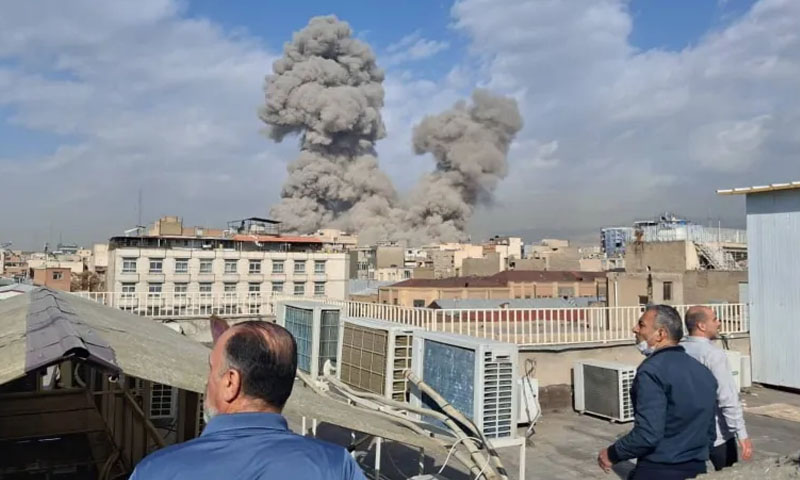
TEHRAN/DUBAI: The United States and Israel have launched coordinated strikes on multiple locations across Iran, including the capital, Tehran, in what US President Donald Trump described as “major combat operations.”
The attacks, part of a campaign he termed “massive and ongoing,” target Iran’s military, nuclear, and missile capabilities, amid a backdrop of stalled negotiations over Tehran’s nuclear and ballistic missile programmes.
The escalation comes eight months after a 12-day US-Israel conflict against Iran, and follows weeks of heightened threats from Trump, who has repeatedly warned of military action should diplomacy fail. Tehran has responded by firing missiles at northern Israel and at US military bases across the Gulf region. Casualty figures remain limited at present, though reports suggest both sides have suffered losses.
Strikes across Iran
At approximately 9:27am local time, Iran’s Fars news agency reported a series of powerful explosions in Tehran. Videos circulating on social media showed smoke rising from several locations across the capital, including University Street, the Jomhouri district, and near the Islamic Revolutionary Guard Corps (IRGC) headquarters. Explosions were also reported in northern Tehran’s Seyyed Khandan area, and across major cities including Kermanshah, Qom, Tabriz, Isfahan, Ilam, Karaj, and Lorestan province.
A US official confirmed to Al Jazeera that the strikes were part of a joint US-Israel military operation. In recent weeks, Washington deployed a significant fleet of fighter jets and warships to the region, its largest military buildup there since the Iraq War. The Department of Defense later named the operation “Operation Epic Fury,” marking the first public acknowledgement of the strikes.
Targets reportedly included Iran’s missile production facilities, key military installations, and leadership offices. The Associated Press reported that one strike in Tehran occurred near the offices of Supreme Leader Ali Khamenei.
US objectives
President Trump outlined the operation’s objectives as eliminating imminent threats posed by Iran, destroying its missile capabilities, neutralising its navy, and curbing Iran-backed armed groups across the region.
Trump also issued a stark warning to Iran’s military personnel: those who lay down their arms could receive amnesty, while refusal would result in “certain death.” He acknowledged that US forces could sustain casualties in what he described as a “multiday operation.” Analysts suggest the campaign is aimed at creating conditions for regime change in Tehran.
“When we are finished, take over your government. It will be yours to take. This will be probably your only chance for generations,” Trump said, signalling that the strikes were not only military but also political in intent.
Iranian retaliation
In response, Iran fired missiles toward northern Israel, triggering air-raid sirens and explosions in several locations. Iranian forces also launched missiles at US-linked facilities across the Gulf, including Al Udeid airbase, Qatar – home to US Central Command forward elements, air forces, and special operations units; Al-Salem airbase, Kuwait; Al Dhafra airbase, UAE – hosting US personnel; US Fifth Fleet headquarters, Bahrain; Riyadh, Saudi Arabia, and US bases in Jordan.
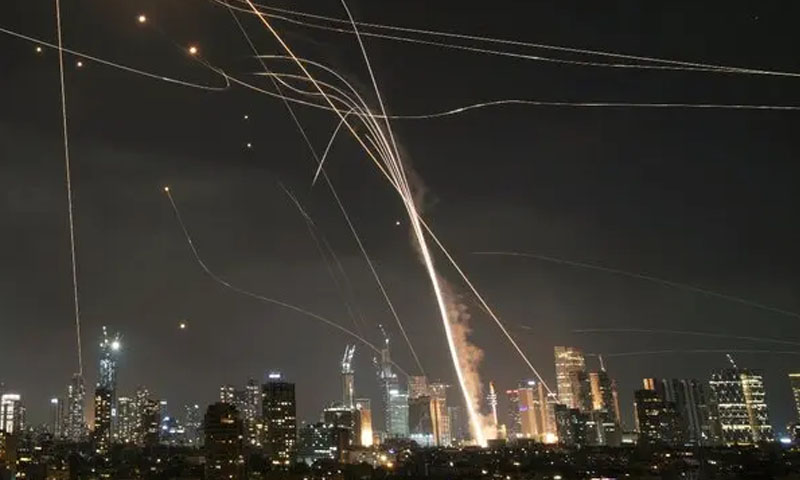
Ebrahim Azizi, head of the Iranian parliament’s National Security Commission, warned of a “crushing” response, writing on social media: “We warned you! Now you have started down a path whose end is no longer in your control.”
Leadership in Iran
The location of 86-year-old Supreme Leader Ali Khamenei is currently unclear, as he has not been seen publicly for several days. Authorities closed roads to his compound in downtown Tehran as explosions shook the city. Iran’s state-run IRNA quoted a source confirming that President Masoud Pezeshkian was unharmed.
Israeli position
Israel’s Prime Minister Benjamin Netanyahu said the military operation, code-named “Lion’s Roar,” “will continue as long as necessary.” He defended the strikes as pre-emptive measures to counter threats from Iran’s missile programme and regional proxy forces.
Regional impact
The strikes have shaken the Gulf region, home to major US military facilities and oil-rich monarchies. Explosions and sirens were reported across Riyadh, Abu Dhabi, Dubai, Doha, and Manama. In Abu Dhabi, one civilian was killed by falling debris, according to the UAE Ministry of Defence. UAE officials said their air defence systems successfully intercepted several Iranian missiles.
Qatar reported multiple blasts near the Al Udeid base, the largest US military facility in the region, and confirmed that incoming missiles were repelled. Saudi Arabia reiterated its right to defend its territory and warned of “all necessary measures” to protect citizens and residents.
Global reactions
Oman Foreign Minister Badr Albusaidi condemned the escalation, saying Muscat-mediated negotiations had been undermined and urging Washington not to escalate further.
Qatar described Iranian attacks as a “flagrant violation” of sovereignty, while reserving the right to respond under international law.
UAE condemned missile attacks that reportedly killed a Pakistani national, warning of “grave consequences” for repeated violations.
European Union Foreign policy chief Kaja Kallas called the situation “perilous,” urging protection of civilians and adherence to international law.
France President Emmanuel Macron said the conflict poses “grave consequences for international peace and security” and called for immediate de-escalation.
Russian Security Council Deputy Chairman Dmitry Medvedev criticised Washington, labelling negotiations with Iran a “cover operation.”
UK reiterated that Iran must not develop nuclear weapons and affirmed readiness to defend its interests.
Canadan Prime Minister Mark Carney expressed support for US efforts to prevent Iran from obtaining nuclear weapons and threatening international peace.
Background
US-Israel tensions with Iran have escalated over Tehran’s nuclear ambitions, regional influence, and ballistic missile programme. Iran has consistently denied any intent to build nuclear weapons. Israel, the only Middle Eastern nation with nuclear capabilities, and the US have repeatedly threatened force should Iran advance its programmes.
The current escalation follows recent progress in Geneva negotiations, mediated by Oman, where Iran reportedly agreed to zero uranium stockpiling under IAEA verification. Analysts warn that the combination of military strikes and political messaging could spark a wider regional conflict, with long-term implications for Middle East stability.
You May Also Like