- WEB DESK
- October 7, 2026
US, Iran launch new attacks as ceasefire comes under renewed strain
-

- Reuters
- June 11, 2026
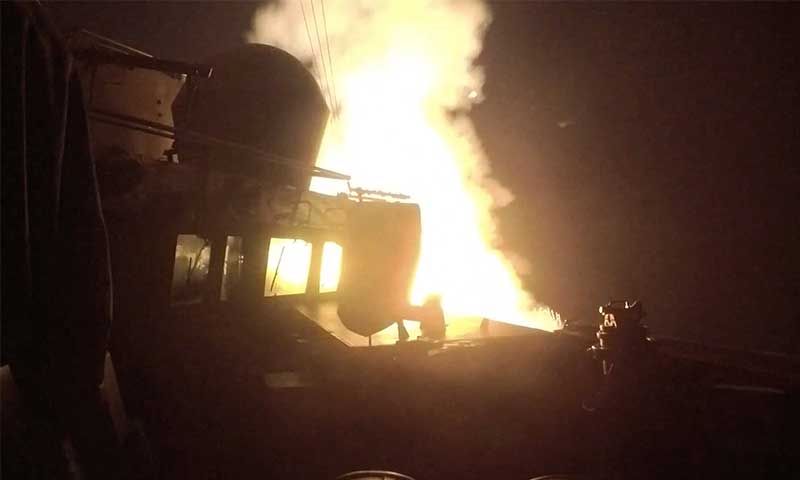
The United States and Iran exchanged another round of military attacks on Thursday, deepening a confrontation that has raised fears of a broader regional conflict and placed a tenuous ceasefire under severe strain.
The latest escalation follows a series of retaliatory actions triggered earlier this week when an American Apache helicopter was shot down near the Strait of Hormuz. Since then, both sides have carried out strikes against military targets, heightening concerns that diplomatic efforts to end the months-long war may be unraveling.
US President Donald Trump warned that further military action would follow unless Tehran swiftly agrees to a peace arrangement with Washington, signalling that the White House is prepared to continue applying military pressure despite ongoing negotiations.
US launches new wave of attacks
The US military said its overnight operation targeted Iranian military infrastructure, including surveillance systems, communication networks and air defence installations.
According to US Central Command, the strikes were conducted in response to what it described as continued Iranian aggression in the region. Military officials said the operation lasted several hours and concluded shortly after midnight local time in Tehran.
Speaking during a visit to Central Command headquarters in Florida, US Defence Secretary Pete Hegseth said the attacks were intended to strengthen Washington’s position both militarily and diplomatically.
He indicated that the administration hoped the operation would push Iran towards accepting a negotiated settlement, while making clear that additional military action remained an option if diplomacy failed.
Trump later echoed that message, saying the bombing campaign could resume if Iranian leaders refused to immediately sign an agreement with the United States.
Iran retaliates against US positions
Iran responded by launching strikes against multiple American military installations across the Gulf region.
The Islamic Revolutionary Guard Corps (IRGC) said it targeted 18 US military sites, including facilities in Kuwait and Bahrain, as well as the headquarters of the US Navy’s Fifth Fleet in Bahrain.
Iranian forces also claimed responsibility for another missile attack on the al-Azraq airbase in Jordan, marking the second consecutive night that the facility had come under fire. According to the IRGC, 12 ballistic missiles were launched towards the base.
Regional allies of Washington reported intercepting incoming threats. Kuwait’s military said its air defence systems were actively engaging hostile aerial targets, while Bahraini authorities stated that air defences successfully destroyed Iranian projectiles before they could reach their intended targets.
US officials have not reported significant damage from the attacks.
Dispute over Strait of Hormuz
The strategic Strait of Hormuz, a critical route for global energy shipments, continues to be a focal point of the conflict.
Iran’s military leadership warned that any vessel attempting to pass through the waterway could come under attack. State media claimed that Iranian forces had fired upon two American vessels and asserted that the strait had effectively been closed.
However, US Central Command rejected those claims, saying commercial shipping continued to move through the passage and denying reports that any American ships had been struck.
The waterway remains vital to international energy markets, carrying a substantial portion of the world’s oil and liquefied natural gas exports. Continued uncertainty around maritime traffic has fuelled concerns about global supply disruptions.
Oil markets react to growing uncertainty
The renewed exchange of attacks had an immediate impact on energy markets.
Oil prices climbed sharply after Trump’s warning that military operations could intensify. Crude benchmarks gained nearly $3 and continued rising during early Asian trading hours on Thursday as investors assessed the risk of further disruptions in Gulf energy exports.
The conflict has already affected global energy flows. Iran has restricted shipping through the Strait of Hormuz, while the United States has maintained pressure on Iranian ports, contributing to volatility in international markets.
Analysts warn that prolonged instability in the region could keep energy prices elevated and place additional strain on economies already grappling with inflationary pressures.
Civilian concerns and diplomatic deadlock
Iran accused the United States of striking water infrastructure serving several villages, alleging that reservoirs supplying drinking water to around 10 communities had been damaged.
Foreign Ministry spokesperson Esmaeil Baghei described the alleged attack as a deliberate violation of international law and human rights, rejecting suggestions that any damage was accidental.
The Pentagon has not publicly commented on the accusation.
Despite repeated claims by Trump that a negotiated settlement is within reach, there has been little visible progress in talks aimed at ending the conflict, which is now in its fourth month.
Washington insists that any agreement must guarantee that Iran cannot develop a nuclear weapon and must restore freedom of navigation through the Strait of Hormuz. Tehran, which denies seeking nuclear arms, has demanded sanctions relief, access to frozen financial assets and an end to Israeli military operations in Lebanon.
Fighting spills across the region
The wider regional conflict also showed no signs of easing.
In southern Lebanon, Israeli air strikes reportedly killed at least 13 people on Wednesday, according to Lebanese security sources. Meanwhile, Hezbollah announced new attacks against Israeli forces.
The Israeli military said warning sirens sounded in parts of northern Israel after projectiles landed near areas where Israeli troops are operating in southern Lebanon.
As military exchanges continue on multiple fronts, hopes for preserving the April ceasefire appear increasingly uncertain, raising the prospect of a deeper and more prolonged regional crisis.