- Web Desk
- Yesterday
US-Iran peace talks: What unfolded over past 72 hours in Pakistan’s capital?
-

- Web Desk Zahid Gishkori
- 4 Minutes ago
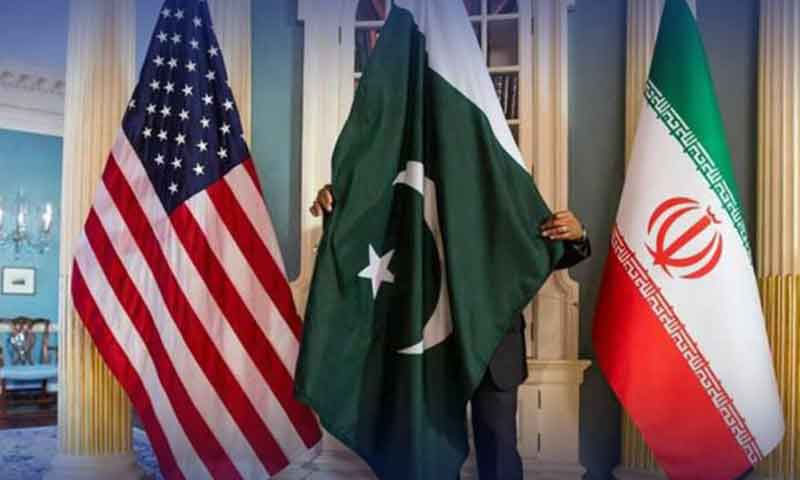
Pakistan’s capital Islamabad has become the centre of global attention as high-stakes talks between the United States and Iran unfold following weeks of conflict.
The developments come at a critical time, with senior officials from both countries arriving in Islamabad for negotiations aimed at ending the war. Multiple high-level delegations have been engaged in intense diplomatic activity over the past 72 hours.
As a reporter on the ground, I witnessed extraordinary security arrangements across the city, reflecting the significance of the moment. The talks follow a 40-day conflict during which the United States and Israel carried out joint strikes on Iran, leading to the assassination of Supreme Leader Ayatollah Ali Khamenei.
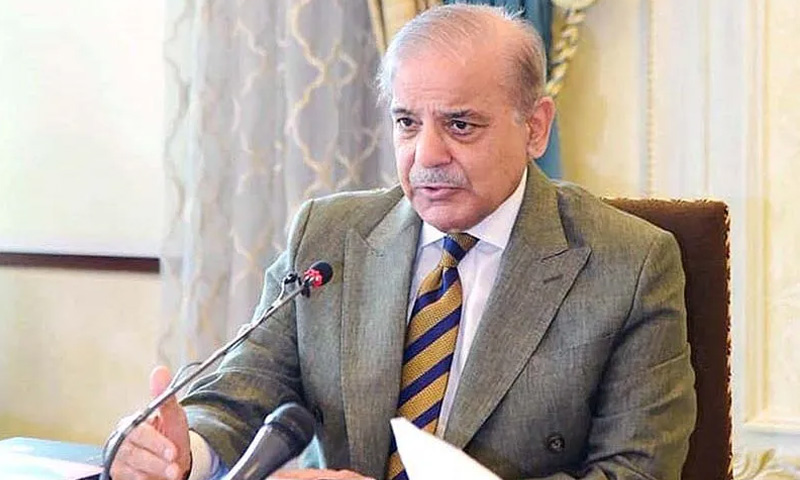
Pakistan Prime Minister Shehbaz Sharif played a key role in initiating diplomacy, first calling for a ceasefire and later inviting both sides to Islamabad for negotiations. Since then, a series of rapid developments has unfolded in the capital.
More than 100 international and over 200 local journalists have gathered in Islamabad to cover what are now being termed the “Islamabad Talks”. At least 200 officials from the United States, Iran and other countries are in the city, engaging in discussions on how to resolve the Middle East conflict.
The visit also marks a rare moment in Pakistan’s diplomatic history. It is the first time a serving US vice president has visited Pakistan while a civilian government is in power. Historically, most visits by US presidents—such as George Bush in 2006 and Bill Clinton in 2000 — took place during General Pervez Musharraf’s rule. Earlier visits by Richard Nixon, Lyndon Johnson and Dwight Eisenhower also occurred during military regimes. Former US Vice President Joe Biden visited Pakistan in 2011 during President Asif Ali Zardari’s tenure.
Analysts in Islamabad believe the Iran-US conflict has significantly altered the balance of power, not only in the Middle East but also globally. The war disrupted key energy routes, particularly the Strait of Hormuz, driving oil prices sharply higher and impacting economies worldwide.
The fragile ceasefire comes after weeks of violence that affected thousands of lives and destabilised global markets. Pakistan, already facing economic challenges, has been among the countries most affected by energy price shocks. However, the crisis has also placed Islamabad at the centre of global diplomacy.
Now, with American and Iranian delegations sitting across the table in Islamabad, expectations are high but uncertainty remains. The ceasefire, though holding for now, faces risks due to differing interpretations and ongoing tensions, including Israeli strikes in Lebanon.
In the past three days, conversations with diplomats, analysts and journalists reveal cautious optimism. While no one is certain the talks will succeed, there is a shared understanding that the stakes are extraordinarily high.
A successful outcome could lead to the reopening of the Strait of Hormuz, a critical maritime route through which nearly 20 per cent of global oil shipments passed before the conflict. Failure, however, could deepen instability in the region.
Some experts warn that if tensions escalate further and Pakistan is drawn into a broader conflict—particularly with neighbouring Iran—it could face a “nightmarish scenario”, dealing with multiple security challenges simultaneously.
Pakistan is therefore keen to see the talks succeed. Analysts say Islamabad holds a unique position, maintaining working relationships with the United States, Iran, Saudi Arabia and other Gulf countries.
Attention is also focused on Pakistan’s military leadership, particularly Field Marshal Syed Asim Munir, who is seen as playing a key role in facilitating the process.
At the same time, observers note that Islamabad is also looking to strengthen economic ties with Washington, including potential cooperation in critical mineral resources.
As negotiations continue, Islamabad remains at the heart of a diplomatic effort that could reshape regional dynamics and determine whether the current pause in conflict leads to lasting peace.
When and where are the talks taking place?
Pakistan, acting as a key mediator between Washington and Tehran, is hosting the high-stakes talks in Islamabad. The country maintains working relations with both sides, sharing a 900-kilometre border with Iran and not hosting US military bases—factors that enhance its credibility in Tehran’s eyes.
Prime Minister Shehbaz Sharif has hosted both delegations in Islamabad, where the negotiations formally began on Saturday morning. He held separate meetings with the US and Iranian sides, while Deputy Prime Minister and Foreign Minister Ishaq Dar has been overseeing the formal process.
Although the Foreign Office has shared limited official details, government sources said the talks began at around 11:45 a.m. local time on April 11 and could continue late into the night or extend into Sunday.
Journalists covering the negotiations say the process may stretch over several days, possibly even weeks, with some delegation members expected to stay on or return for further rounds.
Who is participating in the talks?
The US delegation is led by Vice President JD Vance, accompanied by President Donald Trump’s special envoy Steve Witkoff and adviser Jared Kushner.
Iran is represented by Parliament Speaker Mohammad Bagher Ghalibaf and Foreign Minister Abbas Araghchi.
It remains unclear whether representatives from other countries are formally participating, beyond Pakistan in its role as host and mediator.
What has happened so far?
Prime Minister Sharif has held separate meetings with both delegations, while senior Pakistani officials, including President Asif Ali Zardari and Field Marshal Asim Munir, have also engaged with visiting representatives.
It is still not officially confirmed whether both sides have sat together for direct negotiations at the Convention Centre or whether Pakistan is primarily acting as an intermediary, facilitating indirect talks.
However, there are unconfirmed reports that some level of direct engagement between US and Iranian officials may have begun.
Observers say any interaction between Vice President JD Vance and Iran’s parliamentary speaker would mark a significant development, given the absence of direct high-level contact in recent years.
Potential Obstacles and Outcomes
Many analysts believe the chances of an immediate final agreement remain low due to deep mistrust between the United States and Iran.
Israel’s continued attacks on Lebanon could emerge as a major obstacle, with the potential to derail the talks, given its role in the broader conflict. However, some experts say both sides appear fatigued after weeks of fighting and may be open to incremental progress—particularly on limiting nuclear tensions and restoring safe navigation through the Strait of Hormuz.
Islamabad Talks and Pakistan’s Stakes
Pakistan has significant economic and strategic stakes in the outcome of these negotiations.
The country’s economy relies heavily on remittances from more than 10 million overseas Pakistanis, around 80 per cent of whom are based in the Middle East, particularly in Saudi Arabia, the United Arab Emirates, Qatar, Bahrain and Kuwait. Any escalation of conflict in the Gulf could disrupt employment opportunities for these workers and reduce foreign exchange inflows.
Officials say sustained peace in the region would help strengthen Pakistan’s trade and economic ties, including with Iran. Islamabad is also keen to revive key energy projects such as the Iran-Pakistan gas pipeline to address its growing energy needs.
Experts note that a wider conflict could trigger a refugee influx into Pakistan, placing additional pressure on already stretched resources. At the same time, increased security requirements along the border would strain the national budget further.
For Pakistan, the crisis is not a distant conflict but a direct threat with potential domestic consequences. This explains Islamabad’s active role in pushing for dialogue and de-escalation.
International Community’s Expectations
At this stage, many analysts believe the most realistic outcome is a commitment from both sides to continue negotiations rather than achieve an immediate comprehensive agreement.
If the ceasefire holds and tensions ease, it would be seen as a significant diplomatic success. However, a lasting peace deal is expected to require a prolonged and complex negotiation process.
During the conflict, Pakistan played a key diplomatic role, leveraging its relationships with both Washington and Tehran to help reduce tensions. Its geographic position and balanced foreign policy enabled it to act as a bridge between the two sides.
Pakistan has also offered Islamabad as a neutral venue for dialogue and, in coordination with China, proposed a framework aimed at restoring navigation in the Strait of Hormuz and supporting a durable ceasefire.
At the height of the crisis, fears of a wider regional or even global conflict were widespread. Diplomats say Pakistan’s mediation efforts contributed to lowering those risks, including helping secure a temporary two-week ceasefire.
As negotiations continue, the international community is closely watching whether Islamabad’s diplomatic push can translate into sustained progress toward peace in the Middle East.
Zahid Gishkori is Editor Investigations at HUM News
You May Also Like