- Reuters
- October 4, 2026
US-Iran tensions escalate after clashes near Hormuz
-

- Zafar Ali
- May 8, 2026
WASHINGTON/TEHRAN: US Secretary of State Marco Rubio said on Friday the United States would not allow Iran to control the Strait of Hormuz, warning Tehran against threatening international waterways after fresh military tensions between the two countries.
Speaking to reporters during a visit to Italy, Rubio said US naval forces had intercepted dozens of Iranian tankers and accused Tehran of firing on US assets in international waters, prompting what he described as a defensive American response.
“Iran will not be allowed to control the administration of the Strait of Hormuz under any circumstances,” Rubio said, adding that any attack on U.S. forces would be met with a “strong and decisive response”.
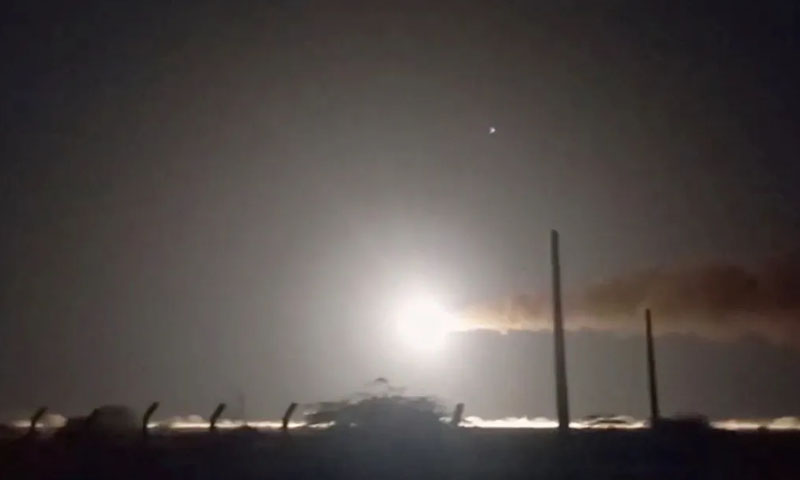
The comments came amid heightened tensions in the Gulf region following overnight military exchanges between U.S. and Iranian forces and continued clashes near the strategic Strait of Hormuz, a vital global oil shipping route.
Rubio said Washington was still awaiting Tehran’s response to proposals aimed at ending the conflict and restarting negotiations.
“We hope Iran chooses a serious path toward negotiations,” he said. “A response should have been received today, but so far nothing has come from Tehran.”
He said a confrontation between US and Iranian forces a day earlier was unrelated to what he referred to as “Operation Epic Fury”, insisting the latest military action was purely defensive.
Rubio accused Iran of claiming authority over an international maritime corridor, something Washington would not accept.
“If missiles are fired at the United States, we will respond,” he said. “Anyone threatening American forces will face consequences.”
The US secretary of state also said Washington was working to prevent Iran from obtaining nuclear weapons, adding that no country wanted Tehran to possess such capabilities.
On Lebanon, Rubio said the United States was focused on cutting financial support networks for Hezbollah through coordination with the Lebanese government, ruling out direct negotiations with the armed group.
“We are engaged with the Lebanese government, not Hezbollah directly,” he said.
Rubio also described a meeting with Pope Leo XIV at the Vatican as constructive, saying the two sides discussed several international issues in detail.
Meanwhile, Iranian Foreign Minister Abbas Araghchi signalled no easing in tensions, accusing Washington of undermining diplomatic efforts through military escalation.
“Whenever diplomatic solutions begin to make progress, the United States launches dangerous military adventurism,” Araghchi wrote in a post on X.
He questioned whether Washington was being pushed into conflict by “sabotage” from Israel, saying such actions risked dragging the United States into “another quagmire”.
“Regardless of the reason, the result is always the same: Iranians never bow to pressure,” he said.
Araghchi also rejected a reported CIA assessment regarding Iran’s missile stockpiles, saying Tehran’s missile and launcher capabilities had increased rather than declined.
“Our missile reserves and launcher capabilities are not down by 75 per cent since March 31 — they are at 120 per cent,” he claimed.
The latest escalation follows overnight U.S. strikes on Iranian military installations and continuing confrontations involving naval forces near the Strait of Hormuz, raising fears of broader regional instability and potential disruption to global energy supplies.
You May Also Like