- WEB DESK
- October 6, 2026
US, Iran trade fresh strikes, fuelling Middle East tensions
-

- WEB DESK
- June 28, 2026
CAIRO/WASHINGTON: The fragile interim peace deal between Iran and the United States, signed less than two weeks ago to end their four-month-old war, is on the brink of total collapse as both nations exchange heavy military blows and fierce recriminations in the Gulf.
The latest wave of escalation triggered early on Sunday when Iran launched a barrage of missiles and drones targeting US military installations in Kuwait and Bahrain. The strikes came shortly after US President Donald Trump issued a stern warning on social media, suggesting Washington might “militarily complete the job.”
Escalation in Gulf: Missiles, Drones, and Warnings
The military flare-up began within an hour of President Trump’s social media post, where he warned of severe consequences if diplomatic avenues failed.
“There may come a point when we are no longer able to be reasonable, and will be forced to militarily complete the job that we very successfully started,” Trump posted. “If that happens, the Islamic Republic of Iran will no longer exist!”
Following the statement, the Kuwaiti army confirmed its air defence systems were actively intercepting “hostile” missile and drone targets. Simultaneously, emergency sirens echoed across Bahrain.
Iran’s Islamic Revolutionary Guard Corps (IRGC) claimed responsibility for the operations, stating its navy and air forces targeted American regional bases in retaliation for recent US strikes.
According to Iran’s state-run Press TV, the IRGC accused the US of breaching the ceasefire, warning that the attacks “will result in the complete halt of all diplomatic processes” and that American bases “will experience hell in the coming days.”
A US official, speaking to Reuters, confirmed the attacks on American facilities but noted there were no initial reports of US casualties or significant damage, adding that the situation remains fluid. Hours later, a second wave of alarms sounded in Bahrain. The Bahraini Foreign Ministry strongly condemned the strikes as a repeated violation of its sovereignty and called for an urgent UN Security Council session to hold Tehran accountable.
Battle for Strait of Hormuz
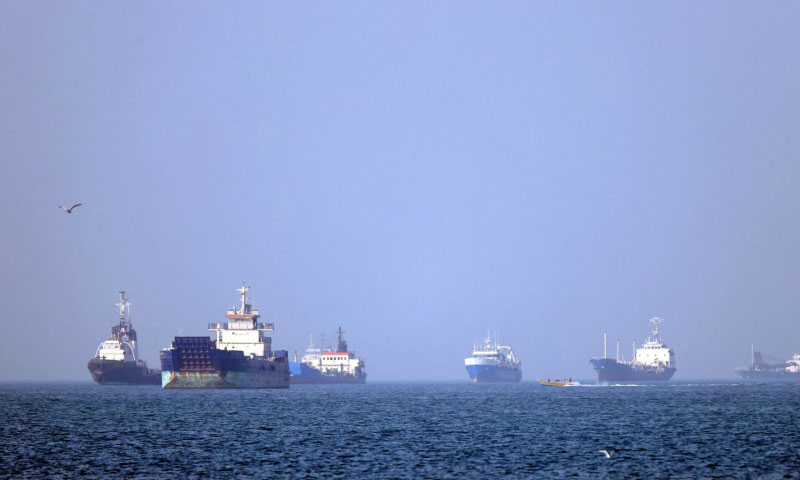
The current flare-up follows an incident on Saturday when a Panama-flagged tanker was struck by an Iranian drone in the Strait of Hormuz — the world’s most critical energy transit route.
In response, US Central Command (CENTCOM) launched fresh airstrikes against Iranian military infrastructure, including surveillance networks, communications, air defences, drone storage, and mine-laying facilities.
“Iran was given a chance to honor the ceasefire agreement but elected not to,” CENTCOM stated, framing the intervention as a direct response to ongoing aggression against commercial shipping.
Iranian state broadcaster IRIB reported explosions in the southern city of Sirik. Responding to the US actions, the IRGC stated:
“America’s blind shots at Sirik will not resolve our dominance over the Strait of Hormuz. But our shots at violators will remind the rest of the vessels of the clear passage route.”
Shipping Route Standoff
The 14-point interim agreement was initially brokered to halt hostilities—which began on February 28—and reopen the blockaded Strait of Hormuz, where one-fifth of global oil and liquefied natural gas (LNG) supplies transit.
While mediated talks held in Switzerland a week ago between US Vice President JD Vance and Iran’s Parliamentary Speaker Mohammad Baqer Qalibaf initially led to Washington waiving certain sanctions, geopolitical friction over maritime routes has stalled progress:
Washington is promoting a southern shipping lane running along the coast of Oman to ensure free transit.
Tehran aims to assert complete control over the strait, demanding vessels utilize a northern route through its territorial waters, with the ultimate goal of charging transit fees.
The temporary reopening of the strait over the last two weeks had allowed hundreds of blockaded ships to leave, causing global oil prices to tumble close to pre-war levels before this latest disruption.
Lebanon Friction Point
Beyond the immediate Gulf theater, the conflict continues to impact regional proxies. Israel announced on Sunday that its forces had struck Iran-backed Hezbollah militants and neutralized a rocket launcher in the Nabatieh region of southern Lebanon.
Tehran has fiercely accused Washington of violating the peace pact by failing to sustain a ceasefire in Lebanon. Israel invaded southern Lebanon in March to target Hezbollah forces.
Although Israel is not an official signatory to the US-Iran interim deal, it has engaged in separate, US-brokered truces with Lebanon—the latest signed on Friday. However, these agreements remain highly volatile:
Israel maintains it will not withdraw from the Lebanese territories it has seized during the conflict.
Hezbollah refuses to disarm or cease hostilities as long as Israeli troops remain stationed on Lebanese soil.