- Web Desk
- 14 Minutes ago
US-Iran war: KP govt bans unnecessary official, ceremonial visits to limit fuel uses
-

- Web
- 2 Minutes ago
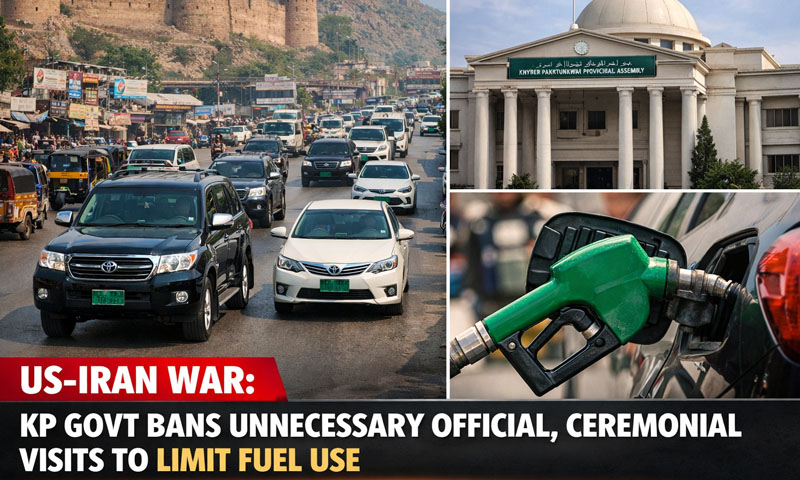
PESHAWAR: Khyber Pakhtunkhwa (KP) government on Saturday announced a complete ban on unnecessary official visits to make maximum attempt on reducing officials vehicles and petroleum use in the province.
The decision by the KP government follows a notification earlier issued by the federal government, which brought an immediate increase in the fuel prices in Pakistan. Pakistan has raised petrol and diesel prices by 55 rupees per litre after a sharp surge in global oil markets.
In its notification, the KP government said government offices have already been directed to ensure limited use of fuel, while adding that official vehicles will be used only for essential and unavoidable government duties. Specifying those instructions, the provincial finance department directed that the fuel consumption should be restricted to emergency and essential official matters only.
In another notification, the government has also notified all the provincial cabinet members to participate in the ministerial meeting to be held on Monday. With the meeting agenda yet to come forward, the meeting may mainly focus on the plans of the government amid the surge in fuel prices affecting everyday life, amid the ongoing US-Iran tensions.
Meanwhile, Finance Adviser Muzammil Aslam has strongly criticised the Rs55 increase in per-litre petrol prices that the federal government decided. This move would further burden already struggling citizens, the advisor warned.
Further criticising the government’s decision, Aslam said that the increase in the prices of petroleum products has come into force while existing taxes and the petroleum development levy remain the same. The development levy on petroleum products had exceeded Rs100 per litre, adding that the new prices had pushed fuel rates to record levels. Petrol prices per litr has risen to Rs321 while diesel per litre now costs Rs335, which he described as the highest prices in the country’s history. The steep increase would create serious difficulties for low-income households already facing economic hardship, the statement added.
He added that poverty in the country had reached around 45 per cent, while unemployment was at its highest level in 21 years. The adviser also questioned the government’s pricing strategy, noting that global oil prices were currently around $80 per barrel.
“If international oil prices rise to $120 per barrel, will the government increase petrol prices to Rs500 per litre?” he asked.
You May Also Like