
- Web Desk
- 1 Hour ago
US leads in total nighttime luminosity, China and India follow
-

- Web
- 2 Minutes ago
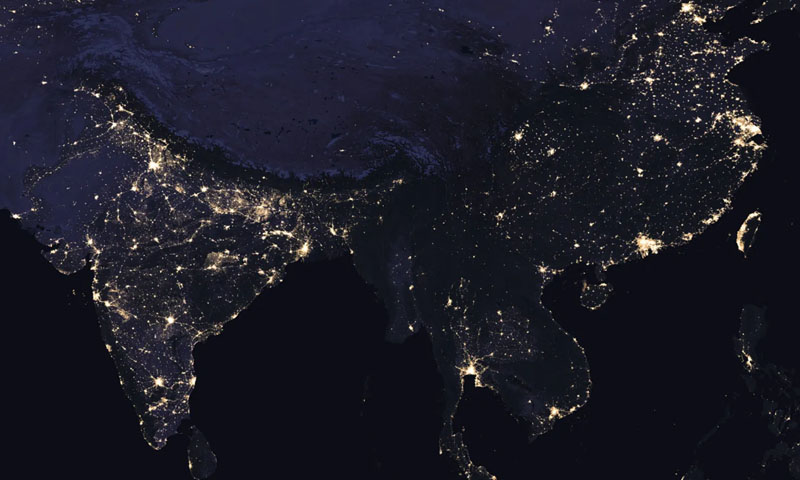
CALIFORNIA: Satellite data shows that the United States tops the world in total nighttime light, followed by China, India, Canada, and Brazil. The high luminosity reflects extensive urbanization, infrastructure expansion, and widespread access to electricity, making the US the brightest nation on Earth at night.
Between 2014 and 2022, the US saw a 6 per cent net increase in nighttime brightness, though this growth was uneven across regions. The West Coast brightened significantly due to population growth and thriving tech economies, while parts of the East Coast and Midwest dimmed. Factors driving this included population shifts away from older urban centers, declines in manufacturing hubs, and adoption of energy-efficient city lighting programs in cities like Washington, DC, and Chicago.
China and India, ranking second and third globally, also contributed to the worldwide increase in nighttime light. Globally, nighttime brightness grew by 16 per cent over the same period, but patterns were patchy. Emerging economies, particularly in sub-Saharan Africa and Southeast Asia, saw dramatic brightening. Countries such as Somalia, Burundi, Cambodia, Ghana, Guinea, and Rwanda experienced rapid increases as rural electrification and urban development brought electricity to previously dark regions.
In contrast, some regions experienced dimming. Nations like Ukraine, Lebanon, Yemen, and Afghanistan lost significant light due to conflict and infrastructure collapse, while prolonged economic crises caused declines in Haiti and Venezuela. Europe recorded a 4 per cent net decrease in nighttime brightness, largely due to energy-efficient LED streetlights, dark-sky initiatives, and government regulations aimed at reducing light pollution, with France cited as a global leader in these efforts.
The study, published in Nature and based on over a million daily satellite images processed by NASA, shows that Earth’s nightscape is highly dynamic, constantly expanding, contracting, and shifting. While global nighttime light reflects human development and electrification, experts warn that increasing illumination also affects ecosystems, animal migrations, and human circadian rhythms.
You May Also Like