
- Reuters
- October 6, 2026
US media claims Chinese missile likely downed American F-15E fighter jet over Iran
-

- Sadia Basharat
- May 30, 2026
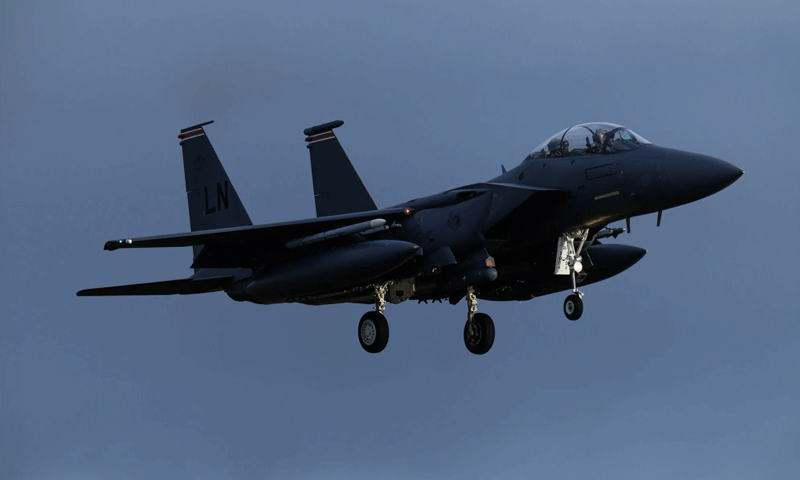
WEB DESK: A United States F-15E Strike Eagle fighter jet downed over southwestern Iran last month was likely targeted by a Chinese-manufactured shoulder-fired missile, a prominent American media outlet claimed on Saturday.
The disclosure has raised fresh concerns in Washington regarding the extent of Beijing’s technological and military footprint in the ongoing regional conflict.
According to a report by NBC News, US intelligence assessments suggest that the dual-role fighter aircraft was brought down by a man-portable air-defence system (MANPAD) sourced from China.
The revelation comes amid intense scrutiny over the proliferation of advanced anti-aircraft weaponry in the theatre of operations.
Advanced radar capabilities linked to Beijing
In addition to the shoulder-fired ordnance, US intelligence officials reportedly believe that China may have supplied Tehran with a YLC-8B long-range early-warning radar system.
This highly sophisticated, counter-stealth radar capability is designed to detect modern low-observable aircraft at extended ranges, potentially providing Iranian air defence units with early situational awareness during the initial stages of the hostilities.
The integration of the YLC-8B system into Iran’s defensive network is viewed by defence experts as a critical factor that may have compromised Western aerial superiority.
The radar operates on bands specifically optimized to track stealth and conventional airframes alike, significantly reducing the reaction time available to coalition pilots navigating contested airspace over western and southwestern Iran.
Geopolitical repercussions for Washington and Beijing
The implications of the NBC report extend far beyond the immediate tactical losses on the battlefield, threatening to further complicate the already strained bilateral relations between Washington and Beijing.
While China has historically maintained that its defense exports are strictly regulated and aligned with international law, the presence of such hardware in an active combat zone involving American casualties is expected to trigger intense diplomatic friction.
Diplomatic sources indicate that the findings will likely prompt renewed pressure from the US administration for stricter international oversight on Chinese arms transfers.
As forensic investigations into the wreckage continue, the incident underscores the shifting dynamics of modern warfare, where regional conflicts are increasingly influenced by the quiet introduction of next-generation electronic warfare and air-defense technologies from global powers.
You May Also Like