- Aasiya Niaz
- 10 Minutes ago
US strikes 2,000 targets in Iran; Tehran claims 160 American soldiers killed
-

- Web Desk
- 2 Minutes ago
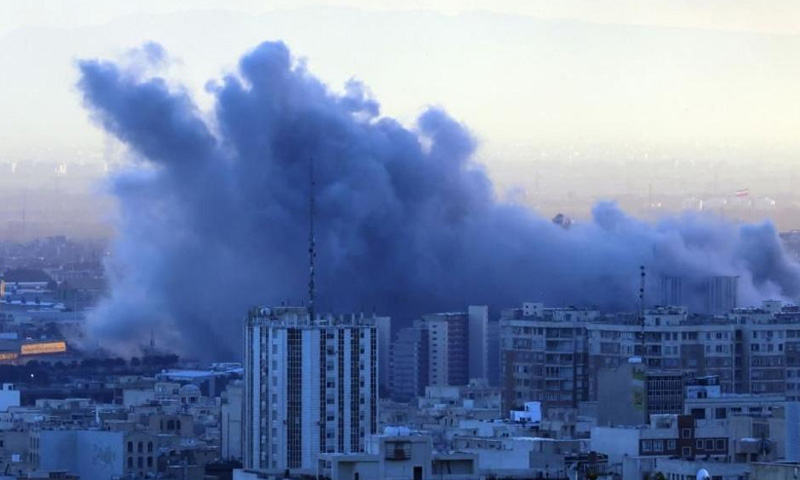
The conflict between the United States and Iran has intensified sharply, with US military officials saying American forces have struck nearly 2,000 targets inside Iran – and Tehran countering with sweeping claims of heavy US casualties that cannot be independently verified.
According to the United States Central Command (CENTCOM), US forces have systematically attacked about 2,000 military and strategic locations across Iran, destroying air defense batteries, missile launchers, command centers and naval assets, including 17 Iranian ships and a submarine. CENTCOM says the strikes have “seriously degraded” Iran’s ability to project force.
US officials also assert that Iran’s naval presence in the Arabian Gulf, the Strait of Hormuz and the Gulf of Oman has been neutralized, and that American forces are ready to escort commercial tankers through the crucial shipping chokepoint amid global energy disruptions.
TEHRAN DENOUNCES US CLAIMS, CITES HIGH US CASUALTIES
In stark contrast to US statements, Iran’s Revolutionary Guards and state media have claimed that US military bases across the Middle East have been hit, resulting in significant US losses – including assertions that as many as 160 US soldiers have been killed and hundreds wounded. Tehran also says it targeted US naval assets in the Indian Ocean. Independent verification of these casualty figures is not available.
Iran’s military response has been massive: officials report launching more than 500 ballistic missiles and over 2,000 unmanned aerial vehicles (drones) at US and allied positions across the Gulf region in retaliation for the American and Israeli strikes.
US LEADERSHIP SIGNALS WIDER CAMPAIGN
US Secretary of State Marco Rubio reiterated that military operations would continue “until the objectives are achieved,” underscoring Washington’s stance that Iran must never develop nuclear weapons under any circumstances. US President Donald Trump has echoed that policy direction and justified the offensive as a necessary action to blunt threats from Tehran and its regional proxies.
Meanwhile, the Pentagon has publicly confirmed the deaths of US service members, identifying several soldiers killed in drone attacks on bases in the Gulf region – though official US casualty numbers are far lower than Tehran’s claims.
REGIONAL TURMOIL AND GLOBAL DIPLOMATIC PUSHES
The conflict has triggered a broader regional crisis. Iranian missiles and drones have struck multiple Gulf states, including targets housing US forces, prompting evacuations and heightened alerts across the region. Global oil prices have surged as shipping through the Strait of Hormuz – a conduit for around 20 per cent of the world’s petroleum shipments – faces severe disruption.
Russia and China have issued diplomatic criticisms of the US-led offensive, calling for de‑escalation, while Oman has renewed calls for ceasefire talks and diplomatic “off‑ramps” to end hostilities.
WHAT’S NEXT?
Analysts warn that without urgent diplomatic interventions, the conflict could widen further, drawing in regional proxies and potentially destabilising neighbouring countries. Humanitarian concerns are mounting as civilian casualties and displacement continue on both sides of the confrontation, with calls growing for immediate international mediation.
You May Also Like