- Aasiya Niaz
- 23 Minutes ago
Violence erupts in Bangladesh as Osman Hadi’s body set to arrive today
-

- Web Desk
- Dec 19, 2025
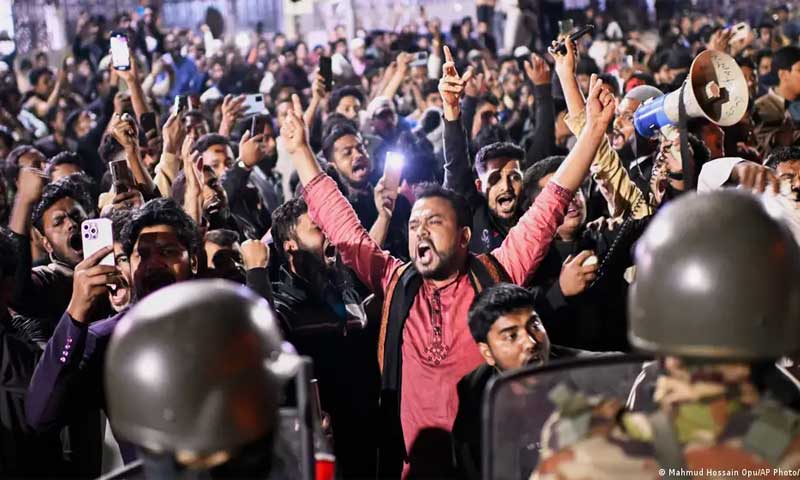
Bangladesh’s capital, Dhaka, was plunged into chaos on Thursday as violent protests erupted following the death of prominent youth activist Sharif Osman Hadi. The 32-year-old leader, a central figure in the 2024 mass uprising that toppled former Prime Minister Sheikh Hasina, succumbed to injuries in a Singapore hospital after being shot in the head by unidentified assailants on December 12. News of his death sparked immediate outrage, with thousands taking to the streets demanding the arrest of his killers. Hadi’s body will be repatriated to Bangladesh today and his funeral prayer (Janazah) is scheduled to be held after the Zuhr (noon) prayers on Saturday, December 20.
The protests rapidly escalated into widespread unrest. Mobs targeted media outlets perceived as hostile to Hadi’s movement, storming and setting fire to the offices of two leading newspapers: the Bengali-language Prothom Alo and the English-language Daily Star. Journalists and staff were trapped inside the burning buildings, requiring rescue by firefighters using ladders. The violence spread beyond the capital, with reports of demonstrations in Chattogram, Khulna, and Rajshahi, where protesters used a bulldozer to demolish a regional office of Hasina’s Awami League party.

A Controversial Figure’s Assassination
Sharif Osman Hadi was a senior leader of the student protest group Inqilab Mancha and a declared candidate for the upcoming February 2026 parliamentary elections. His political stance was markedly anti-India, a nation where the ousted Sheikh Hasina currently resides in self-imposed exile. This position made him a polarizing figure and, according to his own recent statements, a target. In the weeks preceding the attack, Hadi had publicly alleged receiving death threats, including threats of violence against his family.

The attack itself was brazen. Hadi was riding in a rickshaw in Dhaka when he was shot by masked assailants on a motorcycle. Bangladeshi authorities announced they have identified both the shooter and the driver, alleging they have since fled across the border into India. A substantial reward has been offered for information leading to their capture. The interim administration head, Muhammad Yunus, condemned the killing as a premeditated act by a “powerful network” intended to destabilize the forthcoming national election.
International Response and a Nation in Mourning
The geopolitical tensions underpinning the crisis were visibly manifest during the protests. The residence of India’s deputy ambassador to Bangladesh was surrounded by hundreds of demonstrators before police dispersed the crowd with tear gas. The targeting of the newspaper offices was also fueled by accusations that the publications served Indian interests, highlighting the deep-seated animosities and suspicions that have lingered since the 2024 political upheaval.
In response to the national trauma, interim leader Muhammad Yunus addressed the nation, declaring Hadi’s death an “irreparable loss” and announcing a day of official mourning. He called for special prayers at mosques and urged citizens to maintain calm, a plea that did little to quell the immediate fury on the streets. The Singaporean government confirmed it is assisting with the repatriation of Hadi’s body.
The violent aftermath of Hadi’s death underscores the fragile and volatile state of Bangladeshi politics. With a pivotal election just months away, the assassination of a key opposition figure has exposed raw nerves, unresolved grievances from the 2024 revolution, and the potent risk of further instability. The nation now watches to see if the investigation yields results or if the streets will continue to simmer with rage.
You May Also Like