Wall Street Journal critiques Modi’s weak economic reforms
-

- Web Desk
- Jan 16, 2026
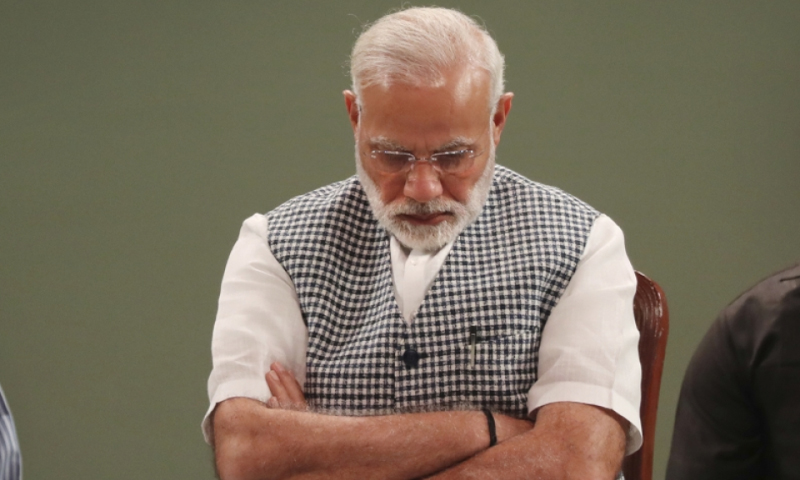
WEB DESK: The Wall Street Journal has sharply criticised the Indian government for what it describes as weak and inconsistent economic reforms under Prime Minister Narendra Modi. The report argued that the administration has failed to present a clear vision for a free-market economy, leaving structural issues unresolved and exposing vulnerabilities in India’s regulated economic framework.
The criticism comes in the context of rising trade tensions with the United States, which imposed tariffs of up to 50 percent on Indian goods in August 2025, one of the highest tariff rates ever applied to a major economy. Economic experts quoted by the journal say these tariffs highlighted the lack of boldness in India’s economic reforms and revealed the fragility of its regulatory systems.
According to the report, Modi-era reforms have remained partial, inconsistent, and delayed. Banking sector reforms were introduced only after a crisis, while the implementation of the Goods and Services Tax (GST) has been described as flawed and more complicated than international standards. Labour reforms saw minimal changes, and key sectors such as insurance, nuclear energy, and power continue to face bureaucratic hurdles, inefficiency, and financial instability.
The Wall Street Journal also noted that privatisation of loss-making state enterprises has largely stalled, agricultural reforms were rolled back under political pressure, and trade protectionist policies have hindered competitiveness. Analysts argue that India has relied on cosmetic or partial reforms rather than systemic economic overhaul.
The report concluded that India urgently needs comprehensive and decisive economic reforms to strengthen growth, improve competitiveness, and reduce dependence on partial, symbolic measures.
You May Also Like