- Talha Saeed
- September 3, 2026
What are foreign bonds and why is Pakistan looking to issue more?
-

- WEB DESK
- September 3, 2026
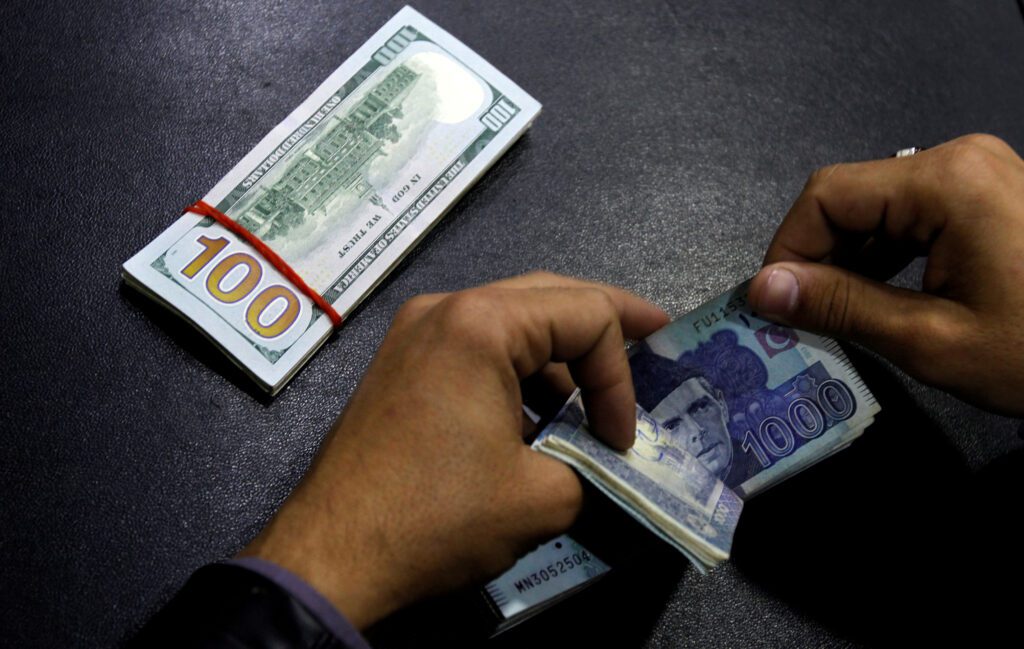
Pakistan just landed one of the biggest Eurobond deals in its history, a record $3 billion, the largest single global bond sale the country has ever pulled off. Investors lined up for it, offering nearly $6 billion, almost double what was on the table, according to Mettis Global.
The deal is part of a broader plan by Pakistan to diversify its sources of external financing. Finance Minister Muhammad Aurangzeb has said the government wants to make greater use of commercial financing and international capital markets while changing the composition of the country’s external creditors. The plan includes possible new issues in several markets and currencies.
But what exactly are foreign bonds, how do they work, and why is Pakistan looking to rely on them more?
What are foreign bonds?
In simple terms, foreign or international bonds allow a government or company to raise money from investors outside its home market.
The borrower issues a bond promising to repay the principal after a specified period, usually with interest. Investors buy the bonds because they expect to receive interest payments and eventually get their original investment back.
For a country such as Pakistan, international bond markets provide access to large pools of investors and allow the government to raise money in different markets and currencies. Pakistan’s plans, as outlined by Aurangzeb, include further Eurobonds, US dollar-denominated bonds, Panda bonds and a rupee-linked, dollar-settled bond.
These are all forms of borrowing and, unlike grants, have to be repaid.
What is a Eurobond?
A Eurobond is an international bond issued outside the borrower’s domestic market. Despite its name, a Eurobond does not necessarily have to be denominated in euros.
Pakistan has traditionally used the Eurobond market to raise US dollar financing from international investors. Its latest $3 billion issue was also dollar-denominated.
The cost of such borrowing depends heavily on how investors assess the country’s creditworthiness. The greater the perceived risk, the higher the return investors generally demand.
Why does Pakistan want more international borrowing?
Pakistan has traditionally relied heavily on bilateral lenders such as China and Saudi Arabia, as well as multilateral institutions including the International Monetary Fund, World Bank and Asian Development Bank.
The government’s current strategy is to diversify that creditor base by increasing the role of commercial lenders and international investors.
In an interview with Reuters, Aurangzeb said the objective was to replace some bilateral borrowing with commercial financing rather than increase the country’s overall external debt.
“Ideally what we want to do is to see if we can replace some of the bilateral through commercial,” Aurangzeb said. “We do not intend to increase the size of our external debt.”
In other words, the government says it wants to change where Pakistan borrows from rather than simply how much it borrows.
That could give Islamabad more flexibility by reducing its dependence on a relatively limited group of bilateral creditors.
What are Panda bonds?
Panda bonds are bonds issued by foreign borrowers in China’s domestic bond market and denominated in Chinese yuan.
Pakistan entered that market for the first time in May 2026, raising $250 million through its debut Panda bond. The issue was supported by the Asian Development Bank and the Asian Infrastructure Investment Bank, which backed a large majority of the issue.
Pakistan subsequently received approval for up to $1 billion equivalent in Panda bond financing, allowing it to potentially raise more funds from China’s domestic capital market.
The move gives Pakistan another source of financing while also expanding its access to Chinese investors.
What other bonds is Pakistan considering?
Aurangzeb had also said Pakistan was planning to explore several types of international bond issues, including further Panda bonds in China, Eurobonds, US dollar-denominated bonds, and a first rupee-linked, dollar-settled bond.
The government had not yet decided the size of each planned issue, while the FY2027 budget also envisaged $2.82 billion in commercial and Eurobond financing, a figure that shows commercial borrowing from international markets is expected to play a role in Pakistan’s external financing plans for the year.
How does this fit into Pakistan’s wider debt strategy?
The government’s stated aim is to diversify Pakistan’s creditor base. That matters because relying on a limited group of lenders can leave a country more exposed to the terms and timing of those financing arrangements. Commercial borrowing provides another route to raise funds, although it also comes with market-related costs and risks.
Aurangzeb pointed to Pakistan’s repayment of $3.4 billion in bilateral UAE deposits in May as part of this broader shift, noting that Pakistan had simultaneously obtained financing from commercial banks in the UAE, an example, he said, of the change in creditor profile that Islamabad wants to formalise.
What has happened in 2026 so far?
Pakistan’s bond strategy has developed in stages:
April 2026: A day after receiving $2 billion in financial assistance from Saudi Arabia, the government announced that Pakistan had raised $500 million through a Eurobond in the international capital market, marking its return to the market after a four-year gap.
May 2026: Pakistan made its debut in China’s domestic bond market, raising $250 million through a Panda bond, and separately repaid $3.4 billion in bilateral UAE deposits while tapping UAE commercial banks for financing.
September 2026: Pakistan secured $3 billion in a two-tranche Eurobond deal.
Why does the cost of borrowing matter?
Foreign bonds are not free money. Investors generally demand a return that reflects the risks they believe they are taking, so the cost of issuing bonds for Pakistan depends heavily on how investors view the country’s economic and financial position. This deal is expected to benefit Pakistan’s credit rating, which currently stands at ‘B’ according to S&P Global.
This is one reason the government’s decision to diversify its borrowing sources does not automatically mean every planned bond will be issued immediately. The June announcement described the planned issues, but the sizes and exact timing had not been finalised.
What does Pakistan want to achieve?
The broad objective is diversification. Rather than depending as heavily on bilateral financing, Pakistan wants to increase access to commercial lenders and international investors. The strategy also gives Islamabad access to different financial markets, the Panda bond opens a route into China’s capital market, while Eurobonds and dollar-denominated bonds provide broader access to international investors.
At the same time, the government has said this shift should not result in an increase in the overall stock of external debt. For now, Pakistan’s 2026 bond strategy therefore appears to be less about simply borrowing more, and more about changing where its external financing comes from. The next step will depend on market conditions, the cost of borrowing, and the government’s decisions on the size and timing of its planned issues.
You May Also Like