- WEB DESK
- September 30, 2026
What emergency and governor’s rule would mean for KP as debate intensifies
-

- Zoya Anwer
- September 30, 2026
Speculation has grown in recent weeks about whether the federal government could invoke emergency powers or Governor’s Rule in Khyber Pakhtunkhwa (KP), amid concerns over the province’s deteriorating security situation. The debate has raised questions over what the two constitutional mechanisms actually entail, how they differ, and what precedent exists for their use in Pakistan’s history.
PTI Khyber Pakhtunkhwa Information Secretary Shaukat Yousafzai has voiced concerns in a letter to the party chairman Barrister Gohar that the long march, postponed from September 26 to October 4, should be called off given the looming possibility of emergency rule in the province. KP Chief Minister Sohail Afridi, however, has dismissed the letter’s concerns, appearing quite gung-ho in his address and seemingly unperturbed by the discussions.
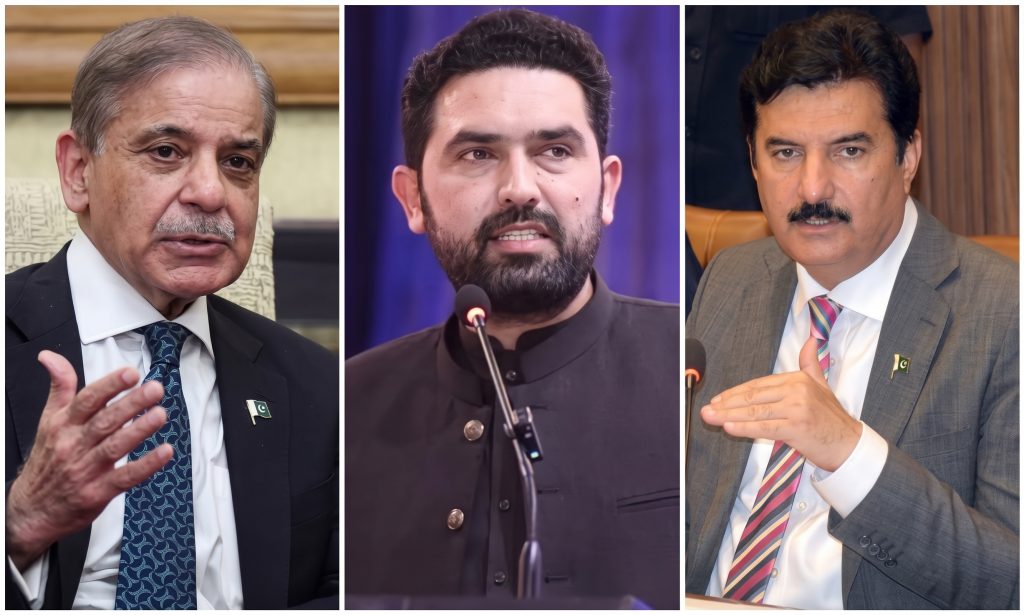
Constitutional lawyer Qadir Fazli, speaking to Hum Digital, laid out the formal distinctions between the two provisions. Constitutional lawyer Reema Omar has separately addressed how the two have actually played out in practice, speaking on Geo News.
What Article 232 covers
Pakistan’s Constitution does not create a single, generic “state of emergency.” Part X, covering Articles 232 to 237, sets out separate mechanisms for a national or territorial emergency under Article 232, failure of constitutional machinery in a province under Article 234, commonly called Governor’s Rule, and a financial emergency under Article 235.
Article 232 deals with a grave emergency in which the security of Pakistan, or any part of it, is threatened by war, external aggression, or internal disturbance beyond a provincial government’s power to control. “It gives the power of proclaiming an emergency either in the case of war or internal disturbance,” Fazli said, but stressed the provision is “not an exhaustive list.”
“It could be external aggression, it could be war, it could be internal disturbance which is beyond the power of a provincial government to control,” he said.
Applying the provision to the current situation, Fazli said the scale of terrorist activity in Khyber Pakhtunkhwa and Balochistan “might constitute an internal disturbance which is so great that it is beyond the capability of the provincial government to control.”
The threshold for invoking Article 232 is considerably higher than that for ordinary law-and-order situations. The power to issue a Proclamation of Emergency belongs formally to the President, subject to parliamentary safeguards. Fazli explained that a state of emergency can come about in one of two ways: “at the request of the provincial government,” where the assembly itself passes a resolution seeking emergency powers, or unilaterally, where the President acts on a report from the Governor that the situation is beyond the provincial executive’s control, in which case the proclamation must be ratified by both houses of Parliament within 10 days.
Fazli pushed back on the characterisation of these powers as equivalent to martial law. “These are civilian powers which are inculcated in the Constitution,” he said, citing the 2009 disqualification of then Punjab chief minister Shehbaz Sharif as an example of such provisions being invoked outside a dictatorship.
Governor’s rule under Article 234
Fazli distinguished Article 232 from Article 234, “which is colloquially… Governor Rule,” under which the President, acting on a report from a province’s Governor that the provincial government can no longer effectively exercise its constitutional mandate, can either assume provincial functions himself or direct the Governor to exercise them on his behalf.
The trigger is fundamentally different from Article 232 — it applies when the President is satisfied, after receiving the Governor’s report, that the government of the province cannot be carried on in accordance with the Constitution, institutional breakdown rather than security. The President may also declare that the powers of the provincial assembly shall be exercisable by, or under the authority of, Parliament, representing a substantial temporary shift of authority from the province towards the centre. Article 234 provides for the Governor exercising functions on the President’s behalf, modifying the normal relationship between the Governor and the provincial cabinet and chief minister under Article 105.
Governor’s Rule is also constitutionally limited in duration. A proclamation initially remains in force for two months, and can be extended twice more, by up to two months each time, but only with the approval of a joint sitting of Parliament for each extension, meaning it cannot exceed six months without repeated parliamentary renewal.
Scope, autonomy and judicial review
Fazli said Article 232 “can apply to either the whole of Pakistan or a province or even a specific area”, meaning the president can declare an emergency in a particular district or city without it covering an entire province. He said a further effect concerns provincial autonomy: during a state of emergency, “the parliament, the federal government, gets the power to legislate on provincial subjects” that would ordinarily fall under provincial jurisdiction following the 18th Amendment. “Declaring a state of emergency in the whole province would kind of be like the equivalent of suspending… the 18th Amendment,” Fazli said, calling this “an angle that has not yet been considered in its fullest” in the current debate.
Separately, Article 236 bars the courts from hearing challenges to a Governor’s Rule proclamation once it has been imposed, leaving parliamentary approval as the principal check on its use, since judicial review is largely unavailable while it remains in force. No equivalent bar applies to an Article 232 emergency.
Fundamental rights and Article 149
Fazli said a particular concern for PTI was that Article 232 allows for the suspension of certain constitutional rights. “Fundamental rights can be restricted, or their enforcement through a court of law can be curtailed,” he said, in contrast to Article 234, where “fundamental rights are not automatically suspended. The high court retains its powers.”
Separately, Article 233 creates a specific framework concerning rights relating to movement, assembly, association, speech and property during an emergency, permitting suspension of the right to move courts for enforcement of specified fundamental rights, though it would be inaccurate to say an emergency automatically suspends all fundamental rights outright.
Fazli also pointed to Article 149, under which a provincial government must not exercise its powers in a manner that impedes or prejudices federal authority. Where it does, he said, the federal government can give directions to the province on how its executive authority should be exercised, so as not to threaten “the peace and tranquillity and economic life” of Pakistan or any part of it, a power the federation retains even after the 18th Amendment’s devolution of powers.
How the provisions have played out in practice
Reema Omar has cautioned that a great deal of misinformation surrounds these provisions, and that clarifying them is essential before any debate over their implementation can proceed. “We can only get to the question of their implementation once we understand why these provisions exist, what they say, on what grounds, and by whom and for how long they can be used,” she said.
Reema Omar said many are surprised that, despite Pakistan being a federation with autonomous provinces, the executive can still acquire such sweeping powers. In her reading, Pakistan’s Constitution, like India’s, draws substantially on the colonial-era 1935 Government of India Act, and while some provincial autonomy has since been granted, the federal government and Parliament can still assume significant powers otherwise exercised by a provincial government, provided Parliament grants that decision legitimacy, a scheme she said remains unchanged even after the 18th Amendment, despite criticism that such centralised power sits uneasily with genuine federalism.
Reema also cautioned against treating the two mechanisms as entirely separate in practice. She said it is a common misconception that Article 232 is simply “emergency” while Article 234 is a wholly different thing called “Governor’s Rule.” Emergency provisions under Article 232 can also result in a governor being handed the powers of the provincial government; she cited Sindh’s 1998 emergency, where powers went to the governor under Article 232, not Article 234. Which body ends up holding provincial powers is a decision the federal government makes in either case, she said, meaning both provisions can, in practice, result in a governor exercising power, even though only one carries that name colloquially.
Where the two diverge sharply, she said, is duration. An Article 232 emergency is not time-bound: if Parliament continues to approve it, it can be extended indefinitely, with no constitutional limit. “This is a frightening thing,” she said, in contrast to Article 234’s six-month ceiling.
On judicial review, Reema was sceptical in practice. “I don’t recall the last time Article 232 or 234 was invoked and a court called it unconstitutional and struck it down,” she said. She pointed to two precedents: Punjab’s 2009 Governor’s Rule, which ended not because a court ruled it unconstitutional but because the order disqualifying Shehbaz Sharif was stayed and he was restored as chief minister; and Balochistan’s Governor’s Rule in 2013, where courts similarly did not intervene, and where, she said, many in fact wanted the measure imposed given the law-and-order situation at the time. She distinguished these constitutional mechanisms from supra-constitutional emergencies such as the one imposed by General Pervez Musharraf, who she said suspended the Constitution itself rather than acting under it, “a different matter altogether.” Within Articles 232 and 234 specifically, she said she could not recall the last 15 to 20 years producing a case where courts struck down their use, and that given the perception that Pakistan’s federal constitutional court is substantially under executive influence, expectations of judicial intervention should be tempered — her own assessment rather than an established fact.
Reema said the central legal question worth debating is whether KP’s situation genuinely meets the threshold for Article 232: whether the province faces a threat to Pakistan from external factors it cannot control, or whether the provincial government is instead failing to function under the Constitution, meriting Article 234 intervention instead. She noted provincial assembly consent is required only where internal disturbance is the stated ground; for war or external aggression, it is not.
The political calculus for PTI and the government
Asked where this leaves PTI, Reema said the party should bear in mind there may not be a strict legal barrier to these provisions being used against it, but law and constitution are not the only considerations; ground realities matter too. She noted KP today is not Balochistan in 2013, and that using any emergency provision now would require both PTI and the federal government to weigh how people would react and whether it would add to national instability. She said PTI should recognise the Constitution does envision the centre assuming provincial governance in certain circumstances, just as the government needs to weigh whether exercising such powers would be counterproductive, potentially destabilising the province to the point of losing control of it altogether. “These are all practical, strategic considerations,” she said, “but the Constitution as it stands still empowers the centre considerably over the provinces”, meaning all sides should proceed carefully rather than overplaying their position simply by virtue of being in government. “I think the Constitution itself will give you that indication,” she said.
The broader picture
Taken together, the two mechanisms address fundamentally different constitutional problems: Article 232 responds to a grave threat to the security of Pakistan or part of it, while Article 234 responds to a breakdown of constitutional government within a specific province. Both require the President’s formal authority and are subject to parliamentary controls, but diverge sharply on duration, Article 232 carrying no fixed ceiling against Article 234’s six-month cap, as well as on judicial review and their effect on fundamental rights. Historically, as Reema’s account of Punjab in 2009 and Balochistan in 2013 illustrates, courts have rarely intervened once either provision has been invoked, leaving Parliament, rather than the judiciary, as the primary practical check, distinctions and precedents likely to shape how any federal move against the KP government is judged, both politically and legally, should the debate progress further.
You May Also Like