- Web Desk
- 8 Hours ago
Where wood meets code: Interwood is polishing chairs and rewriting industry
-

- Syeda Masooma
- Feb 09, 2026
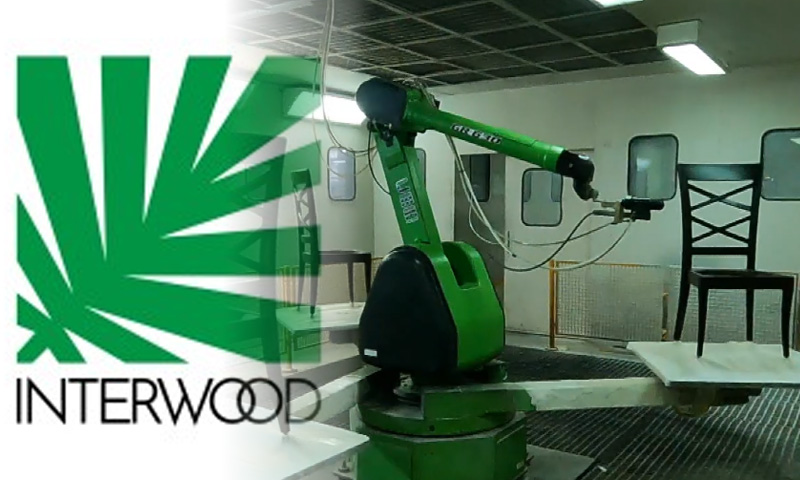
The smell of timber never really leaves Interwood’s factory floor in Lahore. It clings to the air even now, as robotic arms glide with near-meditative precision, polishing chairs at a pace no human hand could sustain. It is an incongruous scene in a country anxious about unemployment: machines humming softly where carpenters once stood, technology advancing in a labour-rich economy. Yet to understand why Interwood looks the way it does today, you have to go back to a man who knew nothing about business, very little about wood, and everything about starting over – Interwood Founder and Chairman Farooq Malik.
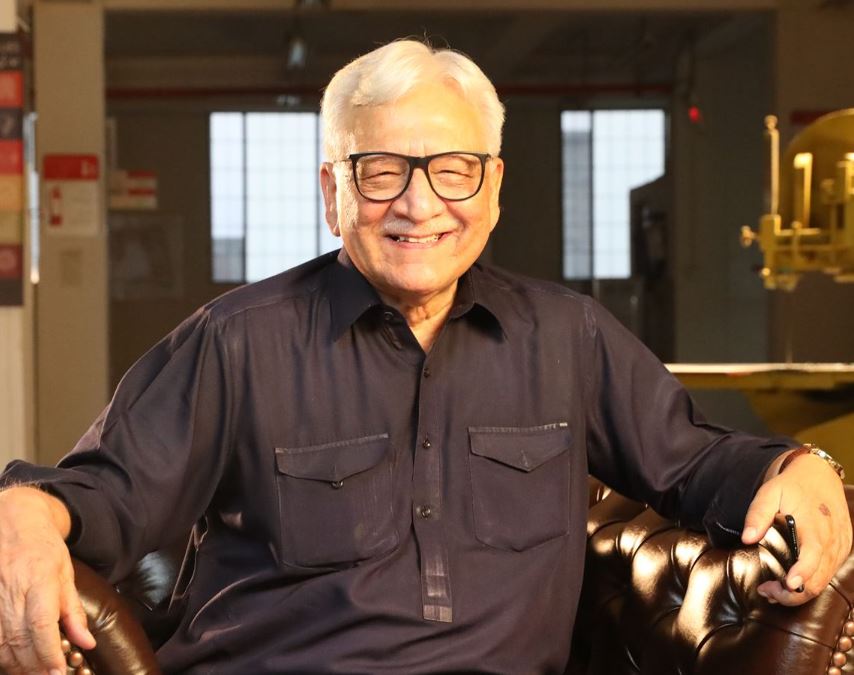
He did not inherit a family trade or a ready-made workshop. He was a government servant, the first in his family to step outside the security of public service. When he left his job to start a business with a friend, there was no grand vision of an industrial furniture giant. They began modestly, producing TV cabinets for a handful of corporate clients. It was a narrow model, and he knew it. If those companies stopped buying, the finished cabinets would be worthless; scrap wood with no alternate market.
That early vulnerability planted the first seed of diversification. Slowly, the factory expanded its range, experimenting with different types of furniture and moving away from dependence on a single product line. Then, in 1974, while he was out of the country, disaster struck. The factory caught fire. By the time he heard the news, everything was gone – machinery, stock, and even his personal degrees and documents.
“I started again from the ashes,” he says, without sentimentality.
The fire, devastating as it was, brought with it two unexpected blessings. The first was that his unreliable business partner disappeared, never to return. The second was the opportunity to rebuild properly. This time, the factory was designed the right way, with better planning and infrastructure. Even as the ashes were still warm, he was in the process of setting up a Sui gas installation – a sign, perhaps, that he was already thinking ahead.
What followed was something rare in Pakistani business folklore: trust.
Creditors came, not to demand repayment, but to offer condolences. He braced himself for the worst.
“I thought they’d ask for their money,” he recalls. “They didn’t. They said I could take more, and that they trusted me to pay them back.”
The bank echoed the sentiment. His credit history, they said, was solid. Collateral could be arranged later. That confidence – intangible but powerful – became the backbone of the company’s second beginning.
Inside the factory, however, another problem was festering. The 10 to 15 carpenters he employed worked entirely by hand. They demanded advances, resisted change, and operated in ways he could not fully understand. He realised, uncomfortably, that he didn’t actually know how woodworking was supposed to work.
“So I started reading,” he says. “And I realised we were living in the 14th century.”
The revelation was almost comic in its simplicity. In modern woodworking, he learnt, using nails was considered a crime. Precision, joints, finishes – everything was governed by systems and standards he had never seen. There was no internet then, no YouTube tutorials or online forums. He wrote letters. He sent faxes. He subscribed to magazines from abroad.
One day, a reply arrived from an Italian company claiming they sold carving machines. He dismissed it instantly. “I thought Italians are liars,” he says with a laugh. “Carving is done by hand.”
The letter mentioned an exhibition in Hanover, Germany. Curiosity won. He went. Even after watching the machines work, he remained skeptical. He asked to see them operating inside a real factory. The Italians invited him to Milan.
What he found there changed everything. He was received with warmth and enthusiasm, and for the first time, he saw industrial woodworking as it truly was – efficient, repeatable, and scalable. That is where his real education began: from books, from exhibitions, and from observation. Money was scarce, so progress was slow. He would earn a little, then buy one machine. Then another. Piece by piece, Interwood mechanised.
Decades later, the machines have evolved into robots, and the question he is asked most often is about people. His own story is built on relationships – creditors who trusted him, manufacturers who taught him, institutions that supported him. What happens to that human element when automation takes over?
“You cannot function without modernisation,” he says flatly. “You cannot fight a Kalashnikov with a sword.” For him, the debate is not philosophical. It is existential. Industries that refuse to modernise simply disappear. Romance, he believes, has clouded the conversation around handmade furniture.
“The romance is more imaginary than real,” he says. “Woodwork is like any other business.”
What many refer to as traditional craftsmanship, he argues, is essentially a cottage industry – fragmented, unscalable, and incapable of growth. In Pakistan, he says, a true woodwork industry barely exists. A handful of companies use machinery; the rest rely on scattered individuals working by hand, unable to standardise or expand.
Technology, he insists, does not make furniture more expensive. It does the opposite. Interwood imports its polish from Germany and uses machines that cost a small fortune. Yet the end product lasts far longer than most handmade furniture. Uniform application, precise curing, and reduced material waste bring costs down over time.
“If we polish one chair manually, it takes a week,” he says. “The automated system gives us 100 chairs a day.”
Quality improves. Material use drops. A robotic arm does not tire, does not spray unevenly, does not improvise. The savings, he says, are passed on to customers – otherwise the business would not survive.
Still, many Pakistanis continue to rely on neighbourhood carpenters. The reasons, he believes, are deeply cultural. There is trust, or the illusion of it, rooted in familiarity. The carpenter who worked for your father and grandfather must be honest. In reality, he says, customers have no way of verifying wood quality. Commission-based sourcing, poor seasoning, and inconsistent standards are common. Proper seasoning facilities are expensive, and few have them.
Then there is taste. Massive beds with elaborate carvings, designed for sprawling homes that no longer exist. “These are 14th-century tastes,” he says. Modern houses are smaller. The furniture does not fit, physically or functionally.
Looking ahead, Interwood’s factory is already wired with technology, particularly in office furniture. Internet of Things applications exist where they make sense. But novelty for its own sake has no place here. Products that cannot be mass-produced, he says, cannot sustain a business.
Environmental standards are another non-negotiable. The company only sources from suppliers already compliant with global protocols, conscious of carbon footprints and long-term impact.
Government support, however, remains elusive. Pakistan’s industrial base, he notes, has shrunk dramatically in recent years. Automation, often blamed for unemployment, is a false scapegoat. “If automation caused unemployment, it wouldn’t exist anywhere in the world,” he says.
The real challenge now is purchasing power. With inflation squeezing households, furniture has slipped far down the list of priorities. “Food, clothing, housing come first,” he says. “By the time you get to furniture, there’s no money left.”
The future, then, lies beyond Pakistan’s borders. Exports are the next chapter.
Back on the factory floor, wood continues its quiet journey – cut, shaped, polished, perfected – guided not just by robots, but by a philosophy forged in fire, letters written by hand, and a stubborn refusal to stay in the past. In the grain of every finished piece is the story of a man who chose machines not to replace people, but to build something that could endure.
You May Also Like