- Web Desk
- 1 Hour ago
White House urges Iran to reach a deal
-

- Web Desk
- Feb 19, 2026
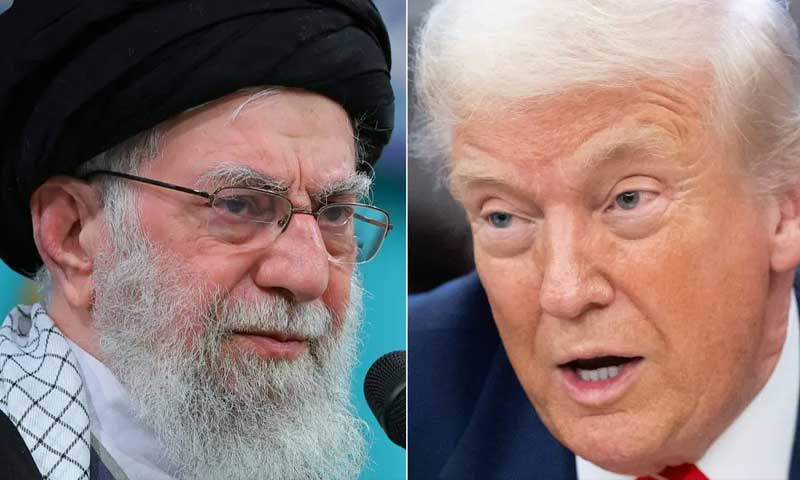
WEB DESK: The White House has called on Iran to engage in serious negotiations with the United States, suggesting that Tehran would be “very wise” to reach an agreement, as President Donald Trump renewed suggestions of potential military strikes amid rising tensions over Iran’s nuclear programme.
According to AFP, White House Press Secretary Karoline Leavitt stressed that diplomacy remained the administration’s preferred path, but delivered a stark warning to reporters on Wednesday: “Iran would be very wise to make a deal with President Trump and with his administration.” She referenced previous U.S. actions, including strikes reportedly targeting Iranian nuclear facilities, while underlining that military options remain on the table should talks fail.
Progress in Geneva talks amid warnings from both sides
The remarks coincided with the resumption of indirect negotiations between the U.S. and Iran, mediated by Oman, in Geneva on Tuesday. Iranian Foreign Minister Abbas Araghchi described the discussions as constructive, noting that the two sides had agreed on “guiding principles” to frame future talks. He added that Tehran is currently drafting a coherent framework to advance the negotiations. Araghchi also spoke by phone with International Atomic Energy Agency (IAEA) Director General Rafael Grossi, reaffirming Iran’s focus on progressing towards a potential agreement.
Iranian President Masoud Pezeshkian insisted that his country did not seek war. “From the day I took office, I have believed that war must be set aside,” he said, while cautioning against perceived U.S. pressure. “But if they are going to try to impose their will on us, humiliate us and demand that we bow our heads at any cost, should we accept that?”
On the U.S. side, Vice President JD Vance noted that, although some progress had been made, Iran had yet to fully acknowledge Washington’s key “red lines” in the negotiations.
Trump signals military options as U.S. forces mass in the Middle East
Trump escalated the pressure on his Truth Social platform, hinting at possible military action and linking it to wider strategic concerns. He specifically warned British Prime Minister Keir Starmer against plans to cede sovereignty of the Chagos Islands in the Indian Ocean to Mauritius, arguing that the U.S.-UK joint airbase on Diego Garcia might be required if Iran refuses a deal. “Should Iran decide not to make a deal, it may be necessary for the United States to use Diego Garcia… in order to eradicate a potential attack by a highly unstable and dangerous regime,” Trump wrote.
Reports suggest that the U.S. military has deployed substantial forces across the Middle East, including aircraft carriers, destroyers and additional air power, in what has been described as one of the largest deployments since the 2003 invasion of Iraq. CNN and CBS cited sources indicating that the U.S. could be poised to launch strikes against Iran as early as this weekend, though Trump has yet to make a final decision. The Wall Street Journal reported that Trump has reviewed military options “designed to maximise damage,” including targeted strikes that could aim to eliminate key Iranian leaders and potentially destabilise the government, according to unnamed U.S. officials.
This latest round of talks follows a fragile period after a 12-day conflict last June, when Israel launched strikes on Iran, prompting brief U.S. involvement in bombing Iranian nuclear sites. Negotiations had stalled but have resumed amid Trump’s repeated threats, tied to Iran’s domestic crackdown on protests and its nuclear activities.
Both sides have expressed a desire to avoid full-scale war, yet the combination of military build-up, public warnings and ongoing diplomacy leaves the situation highly volatile. Iran maintains that its nuclear programme is peaceful and denies pursuing weapons, while the U.S. insists on strict limits and verification to prevent any potential breakout capability.
As indirect talks continue through Omani channels, the coming days and Iran’s expected submission of a detailed proposal could prove decisive in determining whether diplomacy prevails or the region edges closer to renewed conflict.
You May Also Like